What to check before choosing
Start with the nutrition panel and caffeine statement for the exact variant; then consider how and when you will drink it.
| Priority | What to check | Your needs |
|---|
| Listed sugars |
Compare sugars per 100ml and per serving on the pack. Check energy on the same serving basis rather than relying on a no-added-sugar name. |
I want a cola-style drink with little or no sugar listed for the amount I will actually drink. |
| Caffeine |
Look for an explicit Caffeine-Free or No Caffeine variant and check its ingredients. Standard Coca-Cola Zero Sugar and Pepsi Max list caffeine flavouring. |
If I avoid caffeine in the afternoon, I need the caffeine-free version, not simply a zero-sugar one. |
| Acidity |
Consider how often you sip fizzy cola between meals. NHS oral-health guidance says diet fizzy drinks can still be acidic and wear enamel. |
For a drink I sip frequently, I would consider water instead of assuming that removing sugar also removes the acidity concern. |
| Pack format |
Compare the number and size of cans with the stated bottle size. Recheck the exact variant when moving between pack formats. |
A can may suit one afternoon snack; a larger bottle or multipack suits a different storage and serving routine. |
Brand and own-label references
These examples identify variants and label details to compare; a brand name on its own does not tell you whether a cola contains caffeine.
Coca-Cola
Coca-Cola Great Britain lists 0g sugars and 0.3 kcal per 100ml for Coca-Cola Zero Sugar.
- A labelled zero-sugar option for shoppers who want this Coca-Cola variant.
- Its ingredients list caffeine flavouring and sweeteners; the product also declares a source of phenylalanine.
Pepsi
Pepsi UK lists both standard Pepsi Max and a separately named Pepsi Max Caffeine-Free.
- Both product pages list 0g sugars per 330ml; the Caffeine-Free variant is described as containing no caffeine.
- Standard Pepsi Max lists caffeine flavouring. Check which variant is on the pack.
Tesco
Tesco lists distinct standard and caffeine-free own-label cola variants.
- Tesco Caffeine Free Diet Cola is described as a no-added-sugar, caffeine-free drink; its listing gives sugars as under 0.1g per 100g.
- Tesco Diet Cola and Every Day Value Sugar Free Cola are described as containing caffeine. Tesco advises reading the pack label because recipes can change.
Sainsbury's
Sainsbury's category listing includes its Cola Zero and Diet Cola alongside branded sugar-free options.
- The named own-label variants give shoppers additional products to compare by pack and label.
- Check each product’s own nutrition panel, ingredients and caffeine statement; a category listing does not establish those details.
Cola options on Joybuy
These canned cola multipacks include standard zero-sugar variants containing caffeine and separately named caffeine-free variants. Choose by the exact drink and pack size, not by the brand name alone.
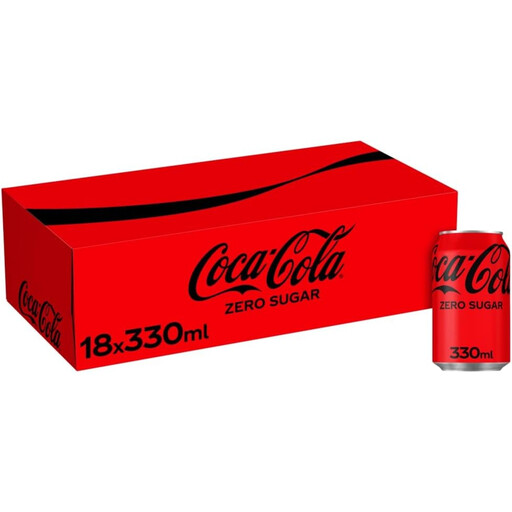 Image unavailable
Coca-Cola Zero Sugar 18 x 330ml
An 18-can pack for individual afternoon servings when caffeine is acceptable. The listed nutrition is 0g sugars and 1 kcal per 330ml; its ingredients include caffeine, and the product declares a source of phenylalanine.
View on Joybuy
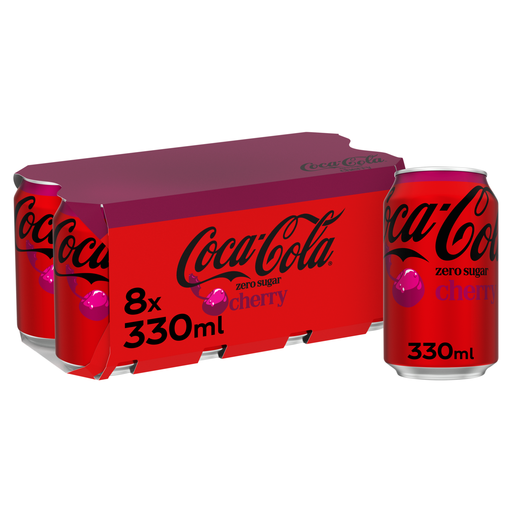 Image unavailable
Coca-Cola Zero Cherry 8 x 330ml
A cherry-flavoured cola in an eight-can pack for those who want that flavour and accept caffeine. Its listed nutrition is 0g sugars and 0.6 kcal per 100ml; it contains caffeine and declares a source of phenylalanine.
View on Joybuy
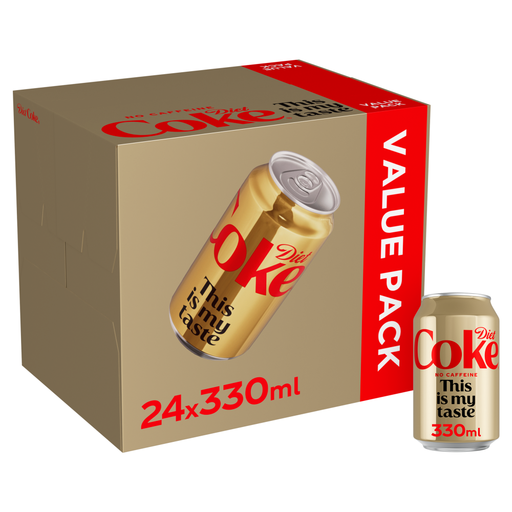 Image unavailable
Diet Coke No Caffeine 24 x 330ml
A caffeine-free choice in a 24-can pack. The listed nutrition is 0g sugars and 1 kcal per 330ml; the product contains sweeteners and declares a source of phenylalanine.
View on Joybuy
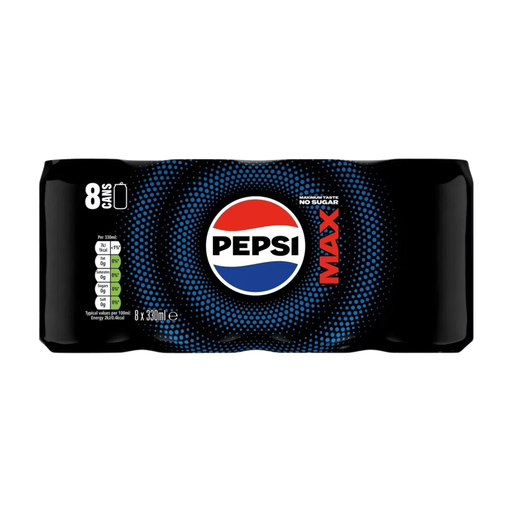 Image unavailable
Pepsi Max No Sugar 8 x 330ml
An eight-can option for shoppers choosing standard Pepsi Max and accepting caffeine. The listed nutrition is 0g sugars and 1 kcal per 330ml; its ingredients include caffeine, and the product declares a source of phenylalanine.
View on Joybuy
 Image unavailable
Pepsi Max Caffeine Free 24 x 330ml
A 24-can Pepsi Max variant explicitly described as caffeine-free, for an afternoon cola without caffeine. The listed nutrition is 0g sugars and 2 kcal per 330ml; the product declares a source of phenylalanine.
View on Joybuy
Frequently asked questions
Does no added sugar mean a cola has 0g sugars or no calories?
No. Check both sugars and energy on the exact pack’s nutrition panel. Coca-Cola Great Britain lists 0g sugars for Coca-Cola Zero Sugar, while Tesco lists under 0.1g sugars per 100g for its Caffeine Free Diet Cola; the products also have their own energy values.
Which afternoon cola options are labelled caffeine-free?
Pepsi Max Caffeine-Free, Diet Coke No Caffeine and Tesco Caffeine Free Diet Cola are explicitly identified as caffeine-free. Standard Coca-Cola Zero Sugar and Pepsi Max list caffeine flavouring, so check the variant as well as the brand.
Is no-added-sugar fizzy cola tooth-neutral?
No. NHS oral-health guidance says diet fizzy drinks without sugar can still be acidic and wear enamel. If you sip a drink frequently between meals, that concern remains when choosing a sugar-free cola.
How should I compare an own-label cola with a branded one?
Compare sugars for the same serving size, then check caffeine status, ingredients and pack format. Tesco’s standard Diet Cola contains caffeine, for example, while its separately named Caffeine Free Diet Cola does not; read the current pack label because recipes can change.


