Cola drinkers cutting back on sugar
If you want to replace a sugary breakfast cola, compare the sugars figures per 100ml and per serving. A front-of-pack phrase such as ‘no added sugar’ does not replace the nutrition panel.


For a weekday-breakfast cola, start with a zero-sugar or no-added-sugar option and check the sugars figure on the exact pack. Choose a specifically caffeine-free variant if you avoid caffeine; whichever cola you choose, the NHS notes that acidic fizzy drinks are associated with dental erosion even when they contain no sugar.
If you want to replace a sugary breakfast cola, compare the sugars figures per 100ml and per serving. A front-of-pack phrase such as ‘no added sugar’ does not replace the nutrition panel.
If caffeine does not suit your morning, look for an explicitly caffeine-free cola. ‘Diet’ and ‘zero sugar’ describe sugar content, not necessarily caffeine content.
If several people share the drink, a larger bottle may be convenient. For occasional breakfasts, compare that with individual cans and check the bottle’s instructions for use after opening.
Check sugars and caffeine on the exact variant first, then consider its ingredients, the fizzy-drink trade-off and whether the pack fits how often you drink cola.
| Priority | What to check | Your needs |
|---|---|---|
| Sugars | Read sugars per 100ml and per serving on the exact pack. Compare the nutrition panel rather than assuming ‘no added sugar’ and ‘zero sugar’ give identical figures. | I want to swap a sugary breakfast cola for one whose sugar content I can check clearly. |
| Caffeine | Look for an explicit ‘caffeine free’ or ‘no caffeine’ designation. Standard Pepsi MAX lists flavourings including caffeine, while Pepsi MAX No Caffeine is described by Pepsi UK as containing none. | If I avoid caffeine in the morning, a sugar claim alone will not settle my choice. |
| Sweeteners | Read the full ingredient list and any phenylalanine statement on the current pack. Pepsi UK lists aspartame in standard Pepsi MAX; ingredients need checking by variant. | I need to know which sweeteners are in the cola, particularly if a phenylalanine warning matters to me. |
| Fizzy-drink exposure | Consider whether cola is an occasional drink or part of every breakfast. The NHS associates carbonated drinks with dental erosion because of their acid content, regardless of sugar content. | When dental erosion is my concern, I would rather choose a non-fizzy breakfast drink than rely on a zero-sugar label. |
| Pack format | Compare can volume and pack count with the amount you expect to use. For a shared bottle, check its storage and after-opening instructions. | A single can suits the mornings when I want a defined serving; a household bottle only makes sense if we will use it after opening. |
Standard zero-sugar colas can still contain caffeine. Pepsi UK lists caffeine-containing flavourings in Pepsi MAX, while its separate No Caffeine variant is labelled accordingly.
If you avoid caffeine, choose a variant explicitly marked caffeine free or no caffeine and check its current label.
A sugar claim does not identify the sweeteners. Standard Pepsi MAX, for example, lists aspartame; product labels may also carry a phenylalanine statement relevant to people with PKU.
Check the exact variant’s ingredients and warning statement. If you have PKU, follow the advice of your clinical team when assessing suitability.
The NHS associates carbonated drinks with dental erosion because of their acid content, whether they contain sugar or sweeteners.
Use a zero-sugar cola as a sugar-content swap, not as a reason to disregard the acidity of a fizzy breakfast drink.
A 2-litre bottle may be more drink than one person expects to use across occasional breakfasts.
Compare it with individual cans, and read the bottle’s storage instructions before deciding.
An unfinished opened bottle can mean wasted drink.
Coca-Cola GB presents Coca-Cola Zero Sugar and a separate Coca-Cola Zero Sugar Caffeine Free variant for shoppers who want different caffeine options.
Pepsi UK describes Pepsi MAX as a no-sugar cola and Pepsi MAX No Caffeine as a separate no-sugar, no-caffeine variant.
Tesco Diet Cola is a supermarket own-label option listed in a 2-litre bottle.
These options cover caffeine-free and caffeinated zero-sugar colas in individual cans. Compare the can size, pack count and ingredient information for the variant you intend to buy.
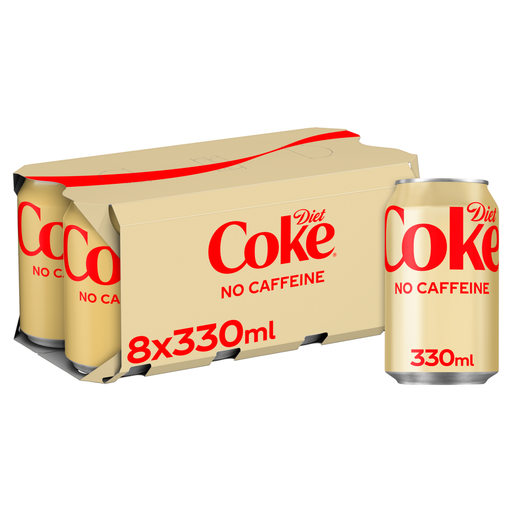 No image available
An eight-pack of individual 330ml cans for someone seeking a zero-sugar cola without caffeine. The listed ingredients include aspartame and carry a phenylalanine statement; check the current pack if these matter to you.
 No image available
This 24-pack offers 330ml cans of a cola labelled zero sugar and caffeine free. Its listed ingredients include aspartame, with a phenylalanine statement to check on the current pack.
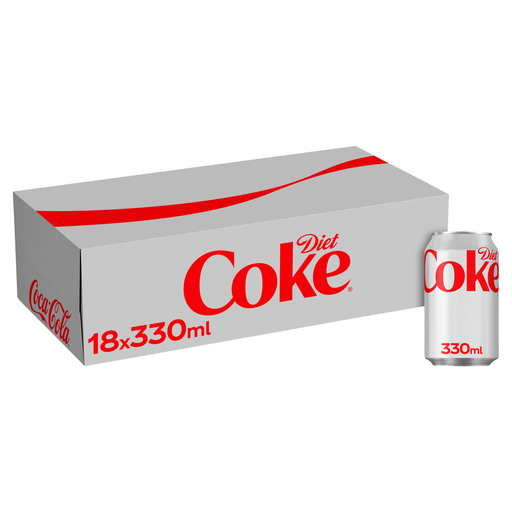 No image available
This 18-pack provides individual 330ml cans with zero sugars stated in the listed nutrition information. It contains caffeine-containing flavourings and carries a phenylalanine statement, so it is not the caffeine-free choice.
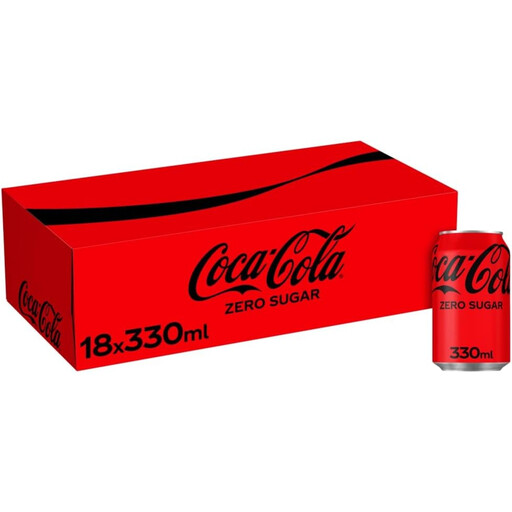 No image available
The listed nutrition information states 0g sugars per 100ml, and the pack contains 18 individual 330ml cans. This variant contains caffeine and carries a phenylalanine statement; check the current label if either matters to you.
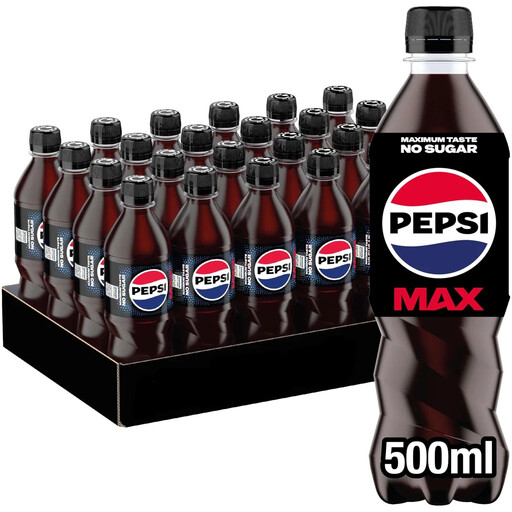 No image available
This 24-pack has 550ml cans, a larger individual format than the 330ml options above, with 0g sugars per 100ml in its listed nutrition information. It contains caffeine-containing flavourings and carries a phenylalanine statement.
Do not assume the phrases give identical nutrition figures. Read sugars per 100ml and per serving on the exact cola pack; Tesco describes its Diet Cola as no added sugar, while zero-sugar products should still be checked against their own nutrition panels.
Choose a variant explicitly labelled caffeine free or no caffeine and check that it also meets your sugar preference. Coca-Cola GB describes Coca-Cola Zero Sugar Caffeine Free as having no sugar or caffeine, and Pepsi UK describes Pepsi MAX No Caffeine as having neither; standard Pepsi MAX lists caffeine-containing flavourings.
Check the exact product’s sweeteners and phenylalanine statement, and follow your clinical team’s advice on suitability. Standard Pepsi MAX lists aspartame, and the relevant Joybuy cola listings above identify phenylalanine statements on their packs.
No sugar does not remove the acidity consideration. The NHS associates carbonated drinks with dental erosion because of their acid content, whether they contain sugar or sweeteners; choose a non-fizzy drink if that is your main breakfast concern.
Choose individual cans when you want a defined serving or drink cola only occasionally; a larger bottle may suit a household expecting to use it after opening. Compare the stated can volumes with the bottle size and follow the bottle’s storage instructions.