Hosts serving several guests
If you are making jugs of cordial, compare the dilution instruction and stated servings as well as bottle size. Two bottles of the same size need not make the same amount of prepared drink.


For a larger Bonfire Night gathering, compare each cordial’s stated dilution and servings per bottle: Tesco Groceries lists 40 servings for Robinsons Double Concentrate Orange, while the Sainsbury’s lime example lists 20. If lime flavour or a stated fruit-juice percentage matters more to you, compare those products on their own terms. “No added sugar” does not mean sugar-free or sweetener-free, so check the prepared-drink nutrition, ingredients and warnings on the bottle you will serve.
If you are making jugs of cordial, compare the dilution instruction and stated servings as well as bottle size. Two bottles of the same size need not make the same amount of prepared drink.
You may want the no-added-sugar label while still choosing between different sweeteners and fruit flavours. Read the nutrition information for the drink as prepared rather than assuming the label means it contains no sugars.
Check each flavour’s current ingredient and allergy information before serving it. Some examples listed by UK retailers contain sulphites, and products containing aspartame may carry a source-of-phenylalanine warning; a warning on one variant does not establish the ingredients of another.
For a gathering, settle the flavour and number of servings you need, then check the prepared drink and ingredient label for the exact bottle.
| Priority | What to check | Your needs |
|---|---|---|
| Servings | Compare bottle size with the labelled dilution ratio and serving count. Tesco Groceries lists 40 servings at 1 part concentrate to 9 parts water for Robinsons Double Concentrate Orange; Sainsbury’s lists 20 at 1 to 4 for its Lime Cordial. | I’m making drinks for several guests and need to know how many glasses this particular bottle is intended to make. |
| Sugars and nutrition | Check whether values describe the concentrate or a diluted serving, and compare like-sized prepared servings. A no-added-sugar label does not establish that the drink is sugar-free. | I want a no-added-sugar drink but still want to see the sugars in what I will actually pour. |
| Flavour and fruit | Read the flavour and stated juice percentage for the exact product. Sainsbury’s lists 30% lime juice from concentrate for its Lime Cordial; Marks & Spencer describes its Apple and Elderflower High Juice as 50% fruit juice. | For this gathering, I’d rather choose a particular fruit flavour than pick solely by the number of servings. |
| Ingredients and warnings | Check the named sweeteners, sulphites and any source-of-phenylalanine warning on the current pack. Do not assume that flavours or variants from the same brand share an ingredient list. | Someone I’m serving may need to check a particular ingredient, so I need the details for the bottle in hand. |
| Serving and storage | Follow the product’s dilution and age-related instructions. Check its after-opening storage directions if the bottle may be left over. | I’m serving different ages or expect to use the cordial after Bonfire Night, so preparation and storage instructions matter. |
Fruit-based cordials can contain naturally occurring sugars, and the examples use different sweeteners. The Advertising Standards Authority explains that the GB “no added sugars” claim concerns what has been added for sweetening; it does not say that the finished drink contains no sugars.
Read the nutrition information for the diluted drink and the ingredient list. Use “sugar-free” only if the exact product makes and supports that separate claim.
Tesco Groceries lists 40 servings and a 1:9 dilution for Robinsons Double Concentrate Orange 1L, whereas Sainsbury’s lists 20 servings and a 1:4 dilution for its Lime Cordial 1L. Equal bottle volumes therefore do not tell you how many prepared servings these examples provide.
Use the serving count and dilution instruction on the bottle you choose when planning jugs for guests.
Several of the retailer examples list sulphites, and Tesco Groceries’ Robinsons Double Concentrate Orange listing carries a source-of-phenylalanine warning. The Food Standards Agency identifies sulphites as a possible risk for people with a relevant sensitivity.
Check the physical bottle before serving someone with an ingredient restriction, and check any alternative just as carefully.
A cordial intended for only a few drinks may remain open after the gathering. Waitrose & Partners says its Belvoir Lemon & Lime example should be refrigerated after opening and used within three weeks.
Read the storage instructions for the bottle you buy and consider whether its format fits when you expect to use it.
These retailer-listed products illustrate different flavours, dilution instructions and ingredients; their details should not be assumed to apply across a brand’s range.
Tesco Groceries lists Robinsons Double Concentrate Orange No Added Sugar 1L as an orange squash with 40 servings at a 1:9 dilution.
Sainsbury’s lists its No Added Sugar Lime Cordial 1L with 30% lime juice from concentrate and a 1:4 dilution instruction.
Marks & Spencer describes its Apple and Elderflower High Juice as a no-added-sugar squash made with 50% fruit juice.
Waitrose & Partners lists its No Added Sugar Lime Juice Cordial with 30% lime juice from concentrate and suggests 1 part cordial to 4 parts water.
Waitrose & Partners lists Belvoir Lemon & Lime No Added Sugar Cordial in a 500ml bottle, sweetened with steviol glycosides.
These no-added-sugar squash options offer orange, blackcurrant or pineapple-and-passion-fruit flavours to dilute for guests. Compare each product’s own instructions and ingredients rather than applying serving figures from a similarly named retailer product.
 No image available
An orange squash to dilute for guests. The Joybuy product information states 3 kcal per 250ml diluted serving and lists sucralose, acesulfame K and sulphites. It says the drink is not suitable for children under 36 months. Check the bottle’s dilution and serving count before planning quantities.
 No image available
A blackcurrant option for making diluted drinks. The product information lists 18% blackcurrant juice from concentrate and instructs you to mix 1 part squash with at least 4 parts water. It also lists aspartame, acesulfame K, sucralose and sodium bisulphite, and says it is not recommended for children under 3. Check the pack’s serving count and the basis of its nutrition values before comparing prepared drinks.
 No image available
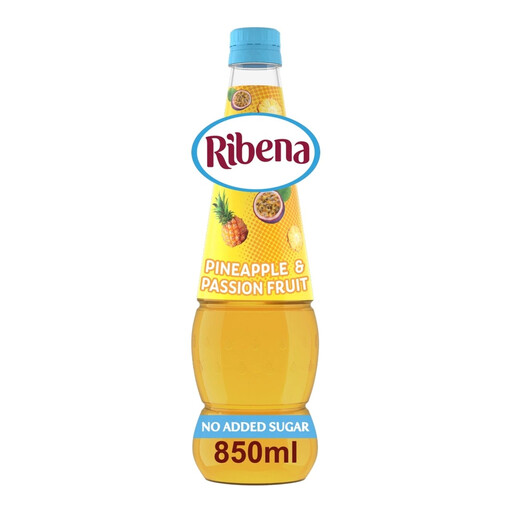
A pineapple-and-passion-fruit squash for guests who prefer those flavours. The product information lists 9% pineapple juice and 1% passion fruit juice, along with aspartame and acesulfame K. It lists sulphites and carries a source-of-phenylalanine warning. Its stated 0.2g sugars per 100ml is for the undiluted squash, not a prepared glass; check the bottle when deciding how much to dilute and serve.
No. The Advertising Standards Authority explains the conditions for a “no added sugars” claim in Great Britain, but the claim does not establish that a drink has no naturally occurring sugars. Waitrose & Partners explicitly says its No Added Sugar Lime Juice Cordial contains naturally occurring sugars, so check nutrition for the diluted drink.
No. The retailer examples list different sweeteners, including sucralose, aspartame, saccharin and steviol glycosides. Check the exact bottle: even similarly named orange squashes can have different stated ingredient lists.
Check the current bottle’s ingredients and allergy information before serving it, and do the same for any alternative. The Food Standards Agency identifies sulphur dioxide and sulphites as a possible risk for people with a relevant sensitivity; several cordial examples here list sulphites or a related ingredient.
Follow the age and dilution instructions on the exact bottle. Marks & Spencer says its Apple and Elderflower High Juice is not suitable for babies and calls for extra water for older children; those instructions should not be assumed to apply to another product.
Follow that bottle’s after-opening instructions rather than applying one cordial’s storage period to another. Waitrose & Partners says its Belvoir Lemon & Lime No Added Sugar Cordial should be refrigerated after opening and used within three weeks.