Families changing a lunchbox drink
If you are replacing a sugary drink, compare the sugars in a prepared serving rather than relying on the no-added-sugar wording alone. The pupil also needs to like the drink at its stated dilution.


A no-added-sugar cordial can work for a secondary-school packed lunch if the pupil likes it diluted as directed and the school permits it; water is another option. Compare sugars per prepared serving, then check sweeteners, allergens and the current bottle label. “No added sugar” does not mean sugar-free or sweetener-free.
If you are replacing a sugary drink, compare the sugars in a prepared serving rather than relying on the no-added-sugar wording alone. The pupil also needs to like the drink at its stated dilution.
Sweeteners and allergen declarations differ between cordials. Check the current bottle for ingredients relevant to the pupil rather than treating another flavour or brand as interchangeable.
Check the secondary school’s published rules for drinks brought from home before packing diluted cordial.
Start with the prepared drink, then check whether its ingredients and mixing instructions fit the lunch routine.
| Priority | What to check | Your needs |
|---|---|---|
| Sugars in the drink | Read “of which sugars” for a diluted serving and note the serving size. Tesco Groceries lists 0g per prepared 250ml for Robinsons Double Concentrate Orange, 0.8g for Vimto No Added Sugar Squash and 1.1g for Belvoir Farm Sicilian Lemon & Lime, each at its stated dilution. | I’m replacing a sugary lunchbox drink and want to compare what goes into the bottle, not just the claim on the concentrate. |
| Ingredients | Check the exact product’s sweeteners and allergen statement. Tesco Groceries lists sulphites for the cited Robinsons Orange product and barley for the cited Vimto product; these details do not apply to every variant. | A particular ingredient may matter in our household, so I need to check the bottle we actually buy. |
| Preparation | Follow the label’s concentrate-to-water ratio and check storage instructions after opening. The cited Robinsons Orange product specifies 1 part concentrate to 9 parts water; Vimto specifies 1 to 4, according to Tesco Groceries. | I want a drink that is straightforward to mix consistently in a reusable school bottle. |
Fruit ingredients can contribute sugars, and the cited no-added-sugar products use different sweeteners.
Read the ingredients and compare “of which sugars” for a serving prepared at the label’s dilution.
Using more concentrate changes the drink, so the stated nutrition for a diluted serving no longer describes what is in the school bottle.
Measure to the label’s ratio and choose a flavour the pupil likes at that strength.
Allergen and sweetener details matter for individual dietary requirements and can differ between products.
Check the current label whenever you change the product or flavour, including its allergen and phenylalanine information where applicable.
These examples illustrate why the exact product label matters; they are not a list of products stocked by Joybuy.
Robinsons Double Concentrate Orange No Added Sugar is one diluted-squash example.
Vimto No Added Sugar Squash is a mixed-fruit alternative.
Belvoir Farm offers fruit-flavoured no-added-sugar cordials, including Sicilian Lemon & Lime.
Waitrose & Partners lists own-label no-added-sugar high-juice drinks alongside branded squash.
An M&S cordial needs a product-by-product check against a no-added-sugar requirement.
These no-added-sugar squash options offer different flavours and bottle formats for preparing a school drink. Check each current label for dilution, prepared-serving nutrition and ingredients before choosing.
 No image available
An orange squash to consider if the pupil likes a diluted citrus drink. Follow the bottle’s mixing directions and check its current ingredient and allergen information.
 No image available
A blackcurrant option for a pupil who prefers that flavour. Check sugars for the prepared drink rather than comparing an undiluted figure with another product’s diluted serving, and review the current allergen label.
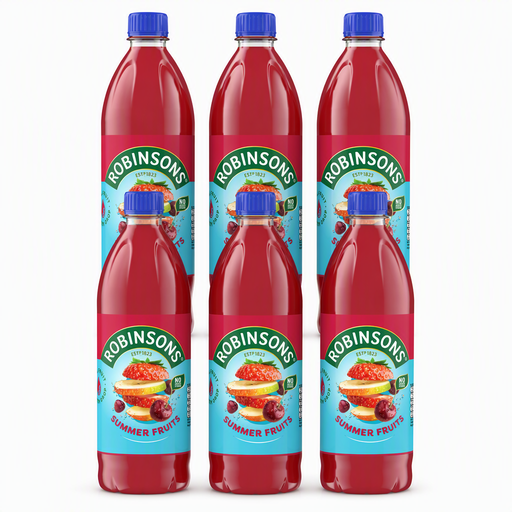 No image available
A six-bottle summer-fruits pack for repeated lunch preparation. Check the dilution and storage directions on each bottle, along with its current sweetener and allergen information.
 No image available
A pineapple-and-passion-fruit flavour option. Check the bottle’s dilution directions and sugars per prepared serving, as well as its current ingredient and allergen information.
 No image available
A lemon squash option for a pupil who prefers that flavour. Use the label’s dilution directions and check prepared-serving sugars and any phenylalanine information relevant to the pupil.
No. A no-added-sugar cordial can still contain sugars from its ingredients. Compare “of which sugars” for the prepared drink at the stated dilution.
Not necessarily. Tesco Groceries lists aspartame and saccharin in the cited Robinsons Orange squash, sucralose and acesulfame K in the cited Vimto squash, and steviol glycosides in Belvoir Farm Sicilian Lemon & Lime. Check the exact bottle if a particular sweetener matters.
Check the individual school’s packed-lunch or drinks policy. The Department for Education’s school-food guidance describes requirements for food and drink provided by state-funded schools in England; that scope does not establish a rule for every drink brought from home.
Follow the ratio on the product you use. Tesco Groceries specifies 1 part concentrate to 9 parts water for the cited Robinsons Orange squash and 1 to 4 for Vimto No Added Sugar Squash, so their prepared-serving figures assume different mixing instructions.
Read the current bottle’s ingredients, allergen declaration and any relevant phenylalanine warning. Tesco Groceries lists sulphites for the cited Robinsons Orange product and barley for the cited Vimto product; do not assume another variant has the same ingredients.