If you want a drink with no sugars, check for 0 g sugars per 100 ml on the nutrition panel: ‘no added sugars’ does not necessarily mean the finished drink contains none. When you plan to sleep after a night shift, an explicitly caffeine-free option such as Pepsi Max Caffeine Free or Coca-Cola Zero Sugar Caffeine Free addresses both checks. For a fruit flavour, compare the figures carefully: Tesco lists 0.4 g sugars per 100 ml for Fanta Orange Zero.
Who might prefer each option?
Workers planning to sleep after their shift
If a fizzy drink is part of your shift snack and sleep is next, check caffeine as well as sugars. NHS night-shift guidance advises minimising caffeine in the evening; an explicitly caffeine-free label makes the drink easier to identify.
Cola drinkers looking for 0 g sugars
Pepsi UK lists 0 g sugars per 100 ml for both Pepsi Max and Pepsi Max Caffeine Free, but only the latter is the caffeine-free version. Coca-Cola Great Britain also lists 0 g sugars per 100 ml for Coca-Cola Zero Sugar Caffeine Free.
People choosing a fruit flavour instead of cola
Flavour and sugar figure are separate decisions. Tesco lists 0 g sugars per 100 ml for Sprite Zero Sugar, while its Fanta Orange Zero listing gives 0.4 g per 100 ml and includes orange juice from concentrate.
What should you check for a night shift?
Start with the sugar figure you actually want, then check caffeine against your planned sleep time and read the ingredients for anything you avoid.
| Priority |
What to check |
Your needs |
| Sugars |
Read ‘of which sugars’ per 100 ml, not just the front label. The Advertising Standards Authority explained in 2025 that a ‘no added sugars’ claim concerns ingredients added for sweetening; it does not guarantee 0 g sugars in the finished drink. |
If I want strictly 0 g sugars, I need that figure on the nutrition panel. Tesco lists 0.4 g per 100 ml for Fanta Orange Zero. |
| Caffeine |
Look for an explicit caffeine-free designation and check the ingredients. Pepsi UK lists caffeine in standard Pepsi Max but describes Pepsi Max Caffeine Free as having none. |
With sleep planned after my shift, I would choose a drink clearly labelled caffeine free rather than assume a zero-sugar claim covers caffeine too. |
| Sweeteners |
Read the ingredient list for particular sweeteners. GOV.UK states that drinks naming aspartame in the ingredients must carry phenylalanine wording. |
If I avoid a sweetener or need to account for phenylalanine, the full ingredients and warning matter more to me than the sugar claim alone. |
| Flavour |
Compare the exact varieties, not just the flavour category: Tesco lists 0 g sugars per 100 ml for Sprite Zero Sugar and 0.4 g for Fanta Orange Zero, which contains 4% orange juice from concentrate. |
I might prefer lemon-lime or orange to cola, but I still want the chosen drink’s own sugar figure before picking it. |
Which label mistakes matter?
-
Reading ‘no added sugars’ as ‘0 g sugars’
A no-added-sugars claim does not establish the amount of sugars in the finished drink. Tesco’s Fanta Orange Zero listing, for example, gives 0.4 g sugars per 100 ml.
Decide whether your requirement is no sugars added or a nutrition-panel figure of 0 g per 100 ml, then check the relevant wording.
-
Assuming zero-sugar cola is caffeine free
Pepsi UK lists caffeine in standard Pepsi Max, whereas Pepsi Max Caffeine Free is a separate variety. NHS night-shift guidance advises minimising caffeine in the evening.
If you are choosing a drink close to planned sleep, look for an explicit caffeine-free designation on the exact variety.
-
Skipping the sweetener information
Tesco lists aspartame among Sprite Zero Sugar’s sweeteners. GOV.UK says phenylalanine wording is required when aspartame is named in a drink’s ingredients.
Read the current pack’s ingredient list and warning if a particular sweetener or phenylalanine matters to your choice.
Which branded drinks illustrate the choices?
Coca-Cola
Coca-Cola Zero Sugar Caffeine Free is a cola option for someone checking both sugars and caffeine before a post-shift drink.
- Coca-Cola Great Britain lists 0 g sugars per 100 ml and describes this variety as caffeine free.
- Check the current pack’s ingredients if you avoid particular sweeteners.
Pepsi
Pepsi Max and Pepsi Max Caffeine Free offer different caffeine choices within the cola range.
- Pepsi UK lists 0 g sugars per 100 ml for both varieties and describes Pepsi Max Caffeine Free as having no caffeine.
- Standard Pepsi Max lists caffeine in its flavourings, so check which variety you have picked when sleep is approaching.
Sprite
Sprite Zero Sugar provides a lemon-lime alternative to cola with a listed sugar figure.
- Tesco lists 0 g sugars per 100 ml for Sprite Zero Sugar.
- Tesco lists aspartame, acesulfame-K and sucralose among its sweeteners. If caffeine avoidance is essential, check the current pack for an explicit caffeine-free statement.
Fanta
Fanta Orange Zero offers an orange-flavour option when a small listed sugar amount is acceptable.
- Tesco lists 4% orange juice from concentrate in Fanta Orange Zero.
- Its Tesco nutrition listing gives 0.4 g sugars per 100 ml, not 0 g.
Dr Pepper
Dr Pepper Zero is another flavour to consider when caffeine is acceptable.
- ASDA lists 0 g sugars per 100 ml for Dr Pepper Zero.
- The ASDA listing includes caffeine in the flavourings and states that the drink contains a source of phenylalanine.
Joybuy fizzy drinks for night shifts
These cola and 7UP multipacks offer different flavours and caffeine-labelled choices for a shift drink. Compare the exact pack’s sugar figure, ingredients and caffeine information with what you need before planned sleep.
 No image available
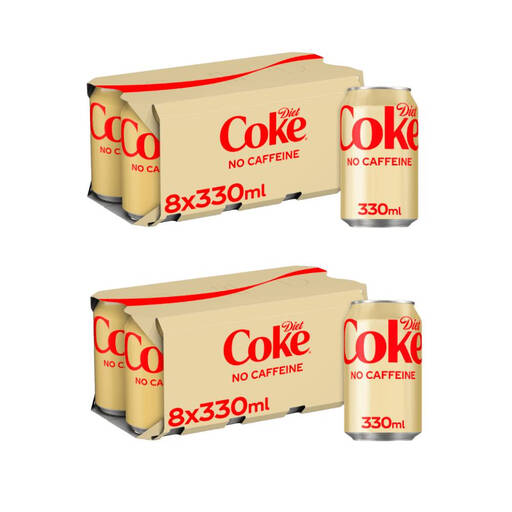
Diet Coke Caffeine Free 2 x 8 x 330 ml
For a cola near planned sleep, this explicitly caffeine-free variety is worth considering. The pack is labelled 2 x 8 x 330 ml; check its nutrition panel and ingredients if you require a particular sugar figure or avoid a sweetener.
View on Joybuy
 No image available
7 Up Lemonade Zero 24 x 330 ml
This lemonade-labelled 24 x 330 ml pack is a non-cola choice for shift snacks. Check the pack’s sugars per 100 ml, ingredients and caffeine information if any of those determines your choice.
View on Joybuy
 No image available
Pepsi Max Caffeine Free 24 x 330 ml
This caffeine-free cola is an option when you plan to sleep after your shift. Pepsi UK lists 0 g sugars per 100 ml for Pepsi Max Caffeine Free; this pack contains 24 x 330 ml cans. Check the current pack’s sweeteners if they matter to you.
View on Joybuy
 No image available
7UP Zero 24 x 330 ml
This 24-can, 330 ml format gives you individual drinks to take on shift. If 0 g sugars or caffeine avoidance is a firm requirement, confirm the figures and wording on this variety’s pack.
View on Joybuy
 No image available
Pepsi Max 24 x 330 ml
Pepsi UK lists 0 g sugars per 100 ml for standard Pepsi Max, but its ingredients include caffeine. This 24 x 330 ml cola pack is therefore a different choice from the caffeine-free variety when timing a drink around sleep.
View on Joybuy
Questions about sugar and caffeine
Does ‘no added sugars’ mean 0 g sugars?
No. The Advertising Standards Authority explains that a ‘no added sugars’ claim in Great Britain concerns sugars and other foods added for sweetening; sugars can still be present in the finished drink. If you want 0 g, check ‘of which sugars’ per 100 ml on the nutrition panel.
What should I choose if I plan to sleep after my shift?
If you want to avoid caffeine, choose a variety explicitly labelled caffeine free rather than relying on a zero-sugar label. Pepsi Max Caffeine Free and Coca-Cola Zero Sugar Caffeine Free are cola examples; NHS night-shift guidance advises minimising caffeine in the evening.
Why does a drink mention phenylalanine?
GOV.UK says a phenylalanine statement is required when aspartame is named in a drink’s ingredients. Read the ingredient list and warning on the exact pack if you need to account for either.
Does Fanta Orange Zero list 0 g sugars?
No. Tesco lists 0.4 g sugars per 100 ml for Fanta Orange Zero and includes orange juice from concentrate in its ingredients. Choose by that nutrition figure if a strict 0 g-per-100-ml requirement matters to you.


