Workers avoiding added sugars
If no added sugars is a requirement, check the claim and ingredients on the particular can. A sugar-free name alone does not establish that it meets the separate no-added-sugars condition.


For a canteen that requires no added sugars, check the exact pack claim and ingredients before treating a ‘sugar-free’ or ‘zero sugar’ energy drink as a match: UK nutrition-claim rules set different conditions for those terms. Then compare caffeine in the whole can and consider other caffeine consumed that day; Red Bull lists 80 mg in a 250 ml Sugarfree can, while Monster lists 160 mg in a 500 ml Zero Sugar can, but those figures do not establish the no-added-sugars claim for either pack.
If no added sugars is a requirement, check the claim and ingredients on the particular can. A sugar-free name alone does not establish that it meets the separate no-added-sugars condition.
Compare caffeine in the amount you would drink at lunch, not just the figure per 100 ml. Red Bull lists 80 mg per 250 ml Sugarfree can; Monster lists 160 mg per 500 ml Zero Sugar can. These are different products, and each pack’s claim still needs checking.
Record the pack claim, ingredients and caffeine per can for each product being considered. For sites in England, the Department of Health and Social Care has announced a restriction on sales of high-caffeine energy drinks to under-16s from April 2027; check the rules in force when setting an age-sale process.
Check whether a drink meets the canteen’s sugar-claim requirement before comparing serving sizes, caffeine and other ingredients.
| Priority | What to check | Your needs |
|---|---|---|
| No-added-sugars claim | Check the exact claim and ingredients on the current pack. Under the UK rules published on legislation.gov.uk, a no-added-sugars claim excludes added mono- or disaccharides and other foods used for sweetening; a sugar-free claim instead concerns sugar content of no more than 0.5 g per 100 g or 100 ml. | I need the drink to meet a no-added-sugars requirement, not merely to carry a sugar-free or zero-sugar description. |
| Caffeine per can | Read the caffeine figure for the full can and consider coffee, tea and other caffeine consumed that day. Red Bull lists 80 mg per 250 ml Sugarfree can; Monster lists 160 mg per 500 ml Zero Sugar can. | A smaller lunch-time serving may matter if I am also having other caffeinated drinks. I would compare the actual cans on offer rather than assume these two examples represent every variant. |
| Sweeteners and drink type | Read the ingredient list for named sweeteners. Check the exact product and its caffeine information before treating a zero-sugar soft drink as an alternative to an energy drink. | I may want to avoid a particular sweetener, or I may simply want a soft drink rather than a caffeinated energy drink. |
| People using the canteen | Check product cautions and offer drinks other than energy drinks. The NHS advises no more than 200 mg of caffeine a day during pregnancy, counting all sources. For age-sale procedures, check the rules applicable to the canteen’s location. | I need the drinks on offer to work for people who limit or avoid caffeine, not just those choosing between can sizes. |
The claims answer different questions: the UK sugar-free condition sets a sugar-content threshold, while the no-added-sugars condition concerns what was added for sweetening.
For a no-added-sugars canteen rule, check the exact claim and ingredient list of each current pack before listing it under that description.
A larger can can mean a different total serving. Red Bull lists 80 mg in a 250 ml Sugarfree can, while Monster lists 160 mg in a 500 ml Zero Sugar can.
Show caffeine per can for the products stocked, alongside can size, so someone choosing lunch can compare the amount they intend to drink.
A drink’s sugar claim does not remove its caffeine. The NHS advises limiting caffeine from all sources to no more than 200 mg a day during pregnancy; that includes drinks consumed outside the lunch break.
Keep other drink choices available and avoid presenting an energy drink as suitable for everyone.
The Department of Health and Social Care has announced an England restriction on sales of high-caffeine energy drinks to under-16s from April 2027. An announcement about a future start does not establish the rule currently in force at a particular canteen.
Check the current position and the rules for the canteen’s nation before setting staff or vending-machine procedures.
These brand examples help distinguish sugar descriptions, caffeine servings and drink types; they do not establish that every product in a range meets a no-added-sugars requirement.
Red Bull lists 80 mg caffeine per 250 ml can of Red Bull Sugarfree, making it a specific smaller-can example for a caffeine-per-serving comparison.
Monster lists 160 mg caffeine per 500 ml can for its Zero Sugar product. Tesco separately describes a 500 ml Monster Ultra product as zero sugar.
Lucozade describes its Zero range as zero-sugar soft drinks, which may be relevant when a worker wants a refreshment drink instead of choosing an energy drink.
Relentless describes its White Citrus energy drink as containing sugar and sweetener, so that product does not fit a no-added-sugars selection.
These are sugar-free or zero-sugar energy-drink options in different can sizes and pack formats. Check each current pack’s no-added-sugars claim and ingredients before stocking it to meet that specific canteen requirement.
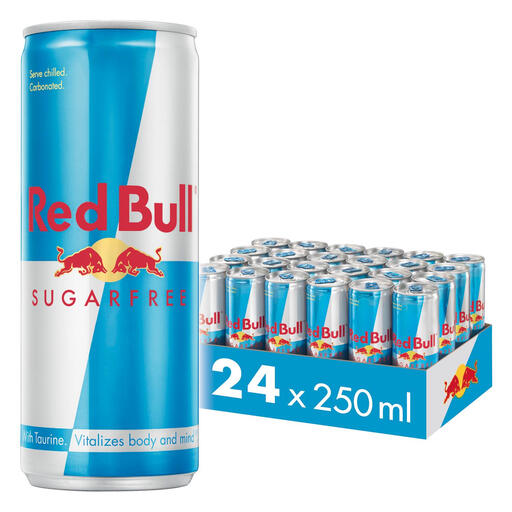 Image unavailable
The 250 ml can offers a smaller serving for a lunch-time comparison. Red Bull lists 80 mg caffeine per can; the bundle contains 24 cans. Check the current pack’s claim and ingredients before stocking it as a no-added-sugars drink.
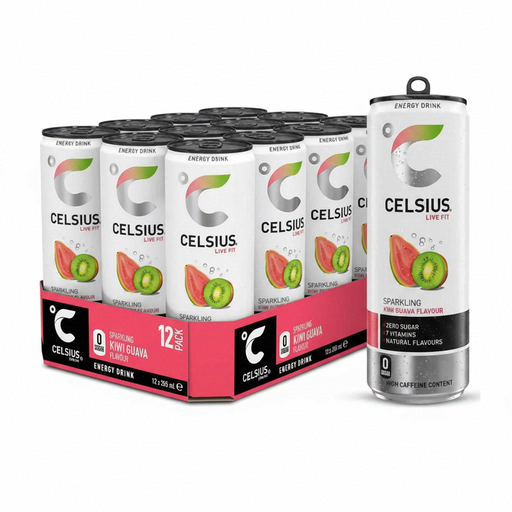 Image unavailable
The 355 ml can is another serving size to consider for lunch; the bundle contains 12 cans. Read the current can for its caffeine per serving, ingredients and exact sugar claim before deciding whether it meets the canteen requirement.
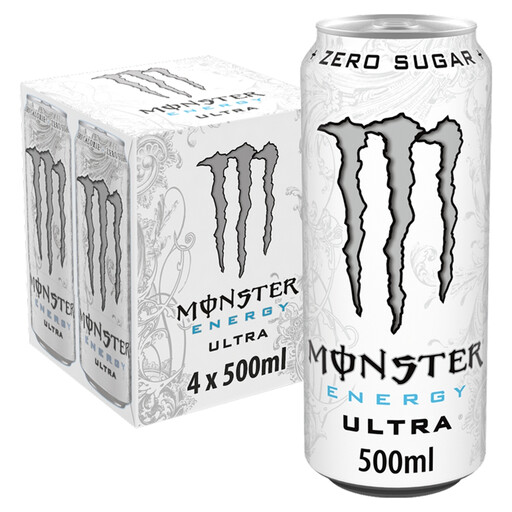 Image unavailable
The 500 ml can suits someone comparing larger servings; the bundle contains four cans. Check this Ultra variant’s caffeine per can, ingredients and exact pack claim. Do not use the caffeine figure for Monster’s separate Zero Sugar product as this can’s specification.
No. Under the UK nutrition-claim conditions published on legislation.gov.uk, sugar-free means no more than 0.5 g of sugars per 100 g or 100 ml; no added sugars instead concerns added sugars and other foods used for sweetening. Check the exact claim and ingredients on the drink being considered.
Compare caffeine per can when someone is likely to drink the whole can, and consider caffeine from other sources that day. Red Bull lists 80 mg per 250 ml Sugarfree can, while Monster lists 160 mg per 500 ml Zero Sugar can; check the particular variant being stocked rather than applying either figure across a range.
Count caffeine from all sources: the NHS advises no more than 200 mg a day during pregnancy. Check the particular can’s caffeine amount alongside any tea, coffee or other caffeinated products consumed that day; a canteen can also offer drinks other than energy drinks.
Do not treat the announced future restriction as a current rule. The Department of Health and Social Care has announced an England restriction on sales of high-caffeine energy drinks to under-16s from April 2027. Check the legal position in force and the canteen’s location when setting sales procedures.