Households choosing familiar flavours
Cola, lemon-lime and fruit-flavoured options let household members choose the tastes they want while checking the sugars declaration on each pack.


For a first food shop, choose fizzy drinks by flavour, pack size and whether anyone wants to avoid caffeine: zero-sugar cola, lemon-lime and fruit-flavoured options meet different preferences. Check the exact pack before buying, as no added sugar does not necessarily mean no sugars, and a zero-sugar label does not mean caffeine-free.
A mixed first-shop basket can cover different flavours and caffeine preferences without treating every no-added-sugar drink as the same choice.
Cola, lemon-lime and fruit-flavoured options let household members choose the tastes they want while checking the sugars declaration on each pack.
Standard zero-sugar colas and separately labelled caffeine-free versions are different products. Check the exact variant rather than relying on its sugar claim.
A larger bottle, such as Tesco No Added Sugar Cloudy Lemonade 2L, may suit a shared fridge. Check its storage instructions and whether the household will use that size.
Start with the flavours people will drink, then compare the exact labels and pack formats.
| Priority | What to check | Your needs |
|---|---|---|
| Sugars | Read the sugars figure per 100ml as well as the front-of-pack claim. No added sugar does not necessarily mean 0g sugars. | I want to compare drinks on the same basis. Tesco lists 0.2g sugars per 100ml for its No Added Sugar Cloudy Lemonade. |
| Flavour | Choose between cola, lemon-lime and fruit flavours; check the exact variety, not just the brand. | Some of us prefer cola, while others would rather have citrus or fruit-flavoured fizz. |
| Caffeine | Look for an explicitly caffeine-free variant and check the ingredients on the pack. Zero sugar alone does not establish caffeine status. | If caffeine avoidance matters in my household, I need the specifically labelled version, such as Pepsi MAX Caffeine-Free. |
| Ingredients | Check the listed sweeteners and any phenylalanine statement on the exact product. Do not assume a sugar-free drink is unsweetened. | I want to know which sweeteners are in the drinks I put in the basket. |
| Pack size | Compare the number and size of cans with a shared bottle. Check storage instructions for a bottle once opened. | Would individual cans work better for us, or will we use a larger bottle after opening it? |
| Acidity | Read the ingredients for acids. The NHS notes that carbonated drinks are associated with dental erosion because of their acid content, regardless of sugar or sweetener status. | I do not want to assume that removing sugar also removes every consideration associated with fizzy drinks. |
A drink can contain sugars from its ingredients: Tesco lists 0.2g sugars per 100ml for its No Added Sugar Cloudy Lemonade.
Read the nutrition declaration per 100ml alongside the claim on the front of the pack.
Coca-Cola GB and Pepsi UK list caffeine in their standard Coca-Cola Zero Sugar and Pepsi MAX products. Both brands also identify separate caffeine-free variants.
Choose a pack explicitly labelled caffeine-free when that distinction matters.
The NHS associates carbonated drinks with dental erosion due to their acid content, irrespective of whether they contain sugar or sweeteners.
Keep that distinction in mind when deciding which drinks to stock for regular use.
A shared bottle is a different format from individual cans, particularly after it has been opened.
Check the pack’s storage instructions and choose a size that fits how the household will use it.
These examples help distinguish product lines and flavours; each pack’s label remains the reference for the variety you choose.
A cola option with standard Zero Sugar and a separately named Zero Caffeine Zero Sugar variant.
A cola choice with standard Pepsi MAX and a separately labelled Caffeine-Free version.
Sprite Zero provides a lemon-lime alternative to cola.
Fruit-flavoured Zero varieties offer a different taste from cola or lemon-lime.
Dr Pepper Zero is an option for shoppers who prefer its distinctive flavour to conventional cola.
Tesco No Added Sugar Cloudy Lemonade offers a lemon-flavoured option in a 2L shared bottle.
These can multipacks cover cola, a specifically caffeine-free cola, lemon-lime and apple flavours for a first food shop.
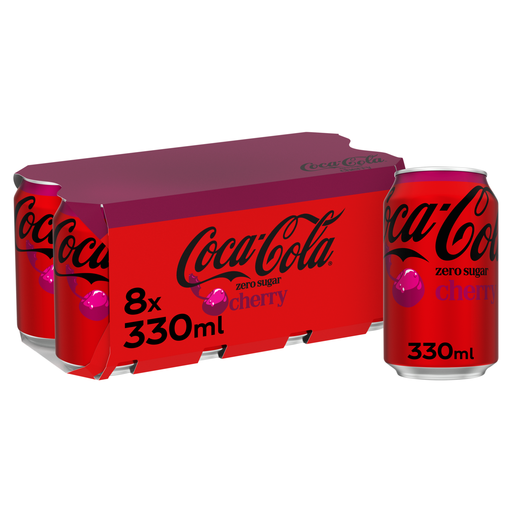 No image available
A cherry-cola choice in an eight-can pack. If caffeine or a phenylalanine statement matters to your household, check this variant’s label before choosing it.
 No image available
A specifically named caffeine-free cola for households choosing that variant rather than standard Pepsi MAX. The pack contains 24 cans of 330ml; check its sweeteners and phenylalanine statement if relevant.
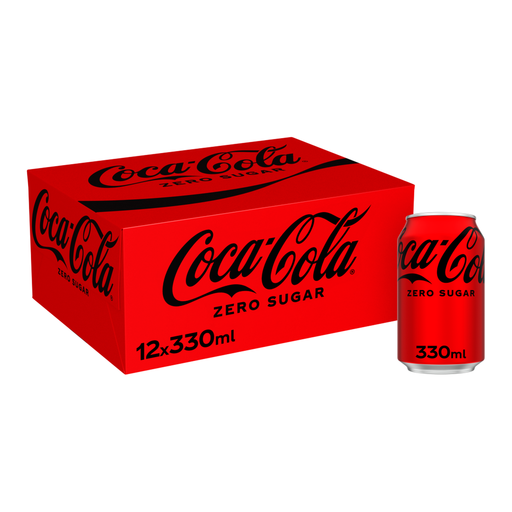 No image available
A standard cola-flavoured option in a 12-can pack, with 330ml per can. This is not the separately named Zero Caffeine variant; check the label if caffeine or a phenylalanine statement matters.
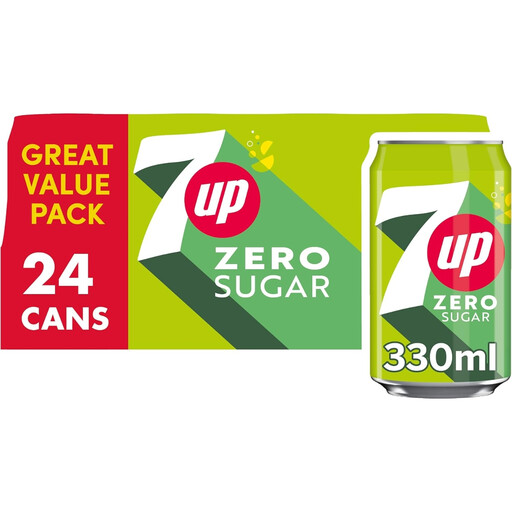 No image available
A lemon-lime alternative to cola in a 24-can pack, with 330ml per can. Check the exact pack’s sweeteners and phenylalanine statement if those ingredients affect your choice.
 No image available
An apple-flavoured choice in a 24-can pack, with 330ml per can. Check the exact pack label for caffeine status if avoiding caffeine matters, and review its ingredients for apple juice and sweeteners.
No. A no-added-sugar drink can still contain sugars from its ingredients. Tesco lists 0.2g sugars per 100ml for its No Added Sugar Cloudy Lemonade, so compare the nutrition declaration per 100ml.
Not necessarily. Coca-Cola GB and Pepsi UK list caffeine in standard Coca-Cola Zero Sugar and Pepsi MAX, while identifying separate Zero Caffeine and Caffeine-Free variants. Check the full name and ingredients on the pack you choose.
No. The NHS associates carbonated drinks with dental erosion due to their acid content, regardless of whether they contain sugar or sweeteners. Consider that distinction when choosing drinks for regular household use.
Read the ingredients and any phenylalanine statement on the exact pack. Sweetener ingredients can differ between drinks and variants, so a zero-sugar name alone does not tell you which sweeteners a product contains.
Choose the format your household is likely to use: cans provide individual portions, while a larger bottle can be shared. Compare the stated pack sizes and check a bottle’s storage instructions for after opening.