For a hard run lasting longer than an hour, plan for carbohydrate-containing fuel rather than relying on a zero-sugar fizzy drink. The British Dietetic Association says carbohydrate during exercise can enhance performance in that situation, while Coca-Cola GB and Pepsi UK list 0g carbohydrate per 100ml for their named zero-sugar colas. Away from a run, a no-added-sugar drink may suit a preference for fizz with less sugar, but check the nutrition panel: no added sugar does not necessarily mean 0g sugars.
Who is this choice for?
Runners planning fuel for longer sessions
If you are choosing what to take on a hard run lasting more than an hour, distinguish a drink you enjoy from one that supplies carbohydrate. The British Dietetic Association says carbohydrate during exercise can enhance performance in this situation; the named zero-sugar drinks below do not serve that fuelling role.
Runners choosing a fizzy drink between sessions
If your aim is to have a fizzy drink while reducing sugar, compare the exact variety’s sugars and carbohydrate per 100ml. A no-added-sugar claim can appear on a drink that still contains some sugar from its ingredients.
Runners checking caffeine or sweeteners
If you avoid caffeine or need to check for aspartame or phenylalanine, read the ingredients and declarations on the exact pack. A zero-sugar label alone does not answer those questions.
What should you check before choosing?
Decide whether the drink is intended as running fuel or simply as a fizzy drink at another time. Then compare the exact pack’s nutrition panel and ingredients.
| Priority | What to check | Your needs |
|---|
| Fuel for a long run |
Check carbohydrate per serving and whether your wider food-and-drink plan covers the session. The British Dietetic Association says carbohydrate during hard exercise lasting longer than an hour can enhance performance; Coca-Cola GB and Pepsi UK list 0g carbohydrate per 100ml for Coca-Cola Zero Sugar and Pepsi Max. |
I need carbohydrate-containing fuel for a hard, longer run, not just a fizzy drink with a sweet taste. |
| Sugars on the label |
Compare sugars and carbohydrate per 100ml, then consider the amount you intend to drink. Tesco Groceries lists 0.4g sugars per 100ml for its no-added-sugar Fruit Fusion Zero, which contains fruit juices from concentrate. |
For a drink away from training, I want to know what is in this variety rather than assuming no added sugar means zero sugar. |
| Caffeine and sweeteners |
Read the ingredients and any phenylalanine declaration on the exact pack. Pepsi UK lists caffeine flavouring and aspartame for Pepsi Max; Coca-Cola GB identifies a separate caffeine-free Coca-Cola Zero Sugar variety. |
If I am avoiding caffeine or checking ingredients because of phenylketonuria (PKU), the precise variety matters more to me than the front-of-pack sugar claim. |
| Acidity |
Check the ingredients for acids, and do not equate sugar-free with tooth-neutral. The NHS associates carbonated drinks with dental erosion because of their acid content, whether or not they contain sugar. |
I may choose fizz for its flavour, but I still want to account for acidity when deciding when to drink it. |
Common buying mistakes
-
Using zero-sugar fizz as the only long-run fuel
A drink can supply fluid without supplying the carbohydrate relevant to a hard run lasting longer than an hour. The British Dietetic Association says carbohydrate intake during such exercise can enhance performance, while the named zero-sugar colas from Coca-Cola GB and Pepsi UK each list 0g carbohydrate per 100ml.
Practise a carbohydrate-containing food-and-drink plan for longer runs; choose zero-sugar fizz when carbohydrate delivery is not the purpose.
-
Reading no added sugar as zero sugar
Tesco Groceries describes Fruit Fusion Zero as no added sugar, yet lists fruit juices from concentrate and 0.4g sugars per 100ml. The two label descriptions do not tell you the same thing.
Compare sugars and carbohydrate on the nutrition panel of the exact drink you intend to buy.
-
Overlooking acidity, caffeine or aspartame
The NHS associates acidic carbonated drinks with dental erosion regardless of sugar content. Caffeine and aspartame also appear in the stated ingredients of some, but not all, named varieties.
Read the exact pack’s ingredients and declarations, particularly if you avoid caffeine or need to check for phenylalanine.
Brand and range references
These examples show why the exact variety and nutrition panel matter; a brand name alone does not establish carbohydrate, caffeine or sugar content.
Coca-Cola
Coca-Cola GB lists Coca-Cola Zero Sugar and a separate caffeine-free Zero Sugar variety.
- Coca-Cola GB lists 0g carbohydrate and 0g sugars per 100ml for Coca-Cola Zero Sugar.
- The standard variety lists caffeine flavouring; choose the specifically labelled caffeine-free variety if avoiding caffeine. Neither variety supplies carbohydrate on the stated panels.
Pepsi
Pepsi Max is a zero-sugar cola variety.
- Pepsi UK lists 0g carbohydrate and 0g sugars per 100ml for Pepsi Max.
- Its stated ingredients include caffeine flavouring and aspartame; its 0g carbohydrate figure means it is not a carbohydrate fuel.
Sprite
Sprite Zero Sugar provides a lemon-lime option rather than a cola flavour.
- Coca-Cola GB lists 0g carbohydrate and 0g sugars per 100ml for Sprite Zero.
- The stated ingredients include acids and sweeteners. It does not supply carbohydrate for a long-run fuelling plan.
Fanta
Tesco Groceries lists Fanta Zero Orange and Fanta Zero Fruit Twist among its sugar-free fizzy drinks.
- The listed varieties offer fruit-flavoured alternatives to cola.
- Check the chosen pack’s sugars, carbohydrate and ingredients before deciding whether it fits your intended use.
Dr Pepper
Dr Pepper Zero is a zero-sugar variety with a different flavour profile from cola or lemon-lime drinks.
- Coca-Cola GB lists 0g carbohydrate and 0g sugars per 100ml for Dr Pepper Zero.
- Its stated ingredients include acids, sweeteners and caffeine flavouring; it is not a carbohydrate fuel.
Tesco
Tesco’s own-label examples include No Added Sugar Cream Soda and Fruit Fusion Zero.
- Tesco Groceries lists 0g carbohydrate and 0g sugars per 100ml for No Added Sugar Cream Soda.
- Fruit Fusion Zero instead lists 0.4g carbohydrate and 0.4g sugars per 100ml. Compare varieties rather than treating their front-of-pack claims as equivalent.
Joybuy fizzy-drink options
These are fizzy-drink options to consider when flavour or avoiding sugar is the aim, rather than carbohydrate fuel for a long run. Check each exact pack for the ingredients and nutrition details relevant to you.
 No image available
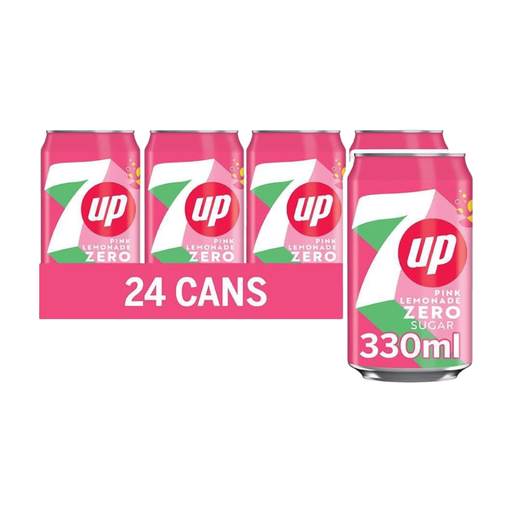
7 Up Lemonade Zero, 24 × 330ml
A lemonade option for when you want fizz rather than running fuel. The pack contains 24 × 330ml; check its nutrition panel and ingredients for carbohydrate, caffeine and sweeteners.
 No image available
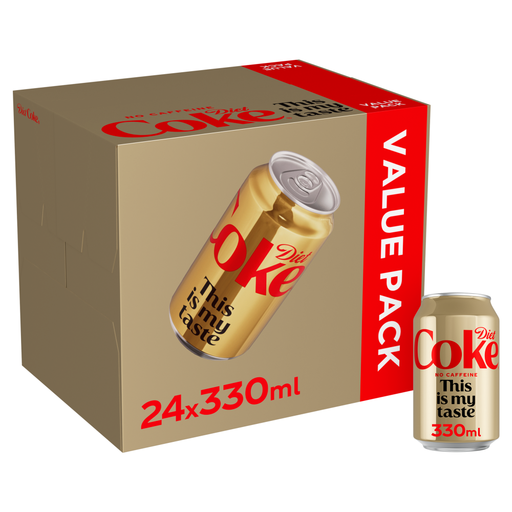
Diet Coke No Caffeine, 24 × 330ml
A cola option to consider when avoiding caffeine outside your running-fuel plan. The pack contains 24 × 330ml; check the exact nutrition panel and ingredients before choosing it for any other requirement.
 No image available
Pepsi Max, 24 × 330ml
A zero-sugar cola for an occasion when carbohydrate fuelling is not the aim. Pepsi UK lists 0g carbohydrate and 0g sugars per 100ml for Pepsi Max, with caffeine flavouring and aspartame in its ingredients. This pack contains 24 × 330ml.
 No image available
Coca-Cola Zero Sugar, 24 × 330ml
A zero-sugar cola to consider away from a carbohydrate-fuelling session. Coca-Cola GB lists 0g carbohydrate and 0g sugars per 100ml for this variety; its stated ingredients include caffeine flavouring. This pack contains 24 × 330ml.
 No image available
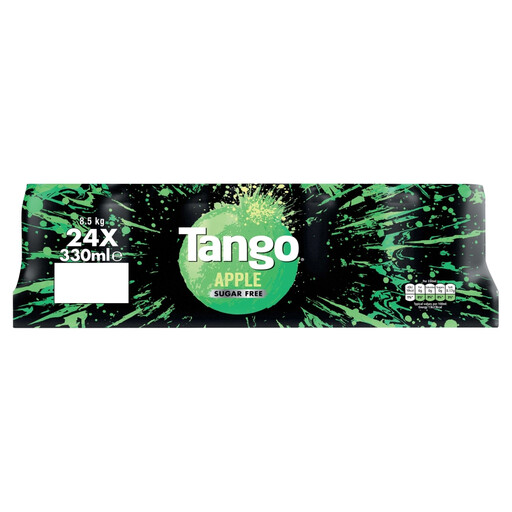
Tango Apple Sugar-Free, 24 × 330ml
An apple-flavoured, sugar-free fizzy drink for occasions when you are not choosing running fuel. The pack contains 24 × 330ml; check carbohydrate as well as sugars on the exact nutrition panel, since sugar-free does not by itself specify the carbohydrate value.
Frequently asked questions
Can a no-added-sugar fizzy drink fuel a long marathon-training run?
Do not rely on the no-added-sugar label to identify running fuel: check how much carbohydrate the drink actually supplies. For hard exercise lasting longer than an hour, the British Dietetic Association says carbohydrate intake during exercise can enhance performance. Coca-Cola GB and Pepsi UK list 0g carbohydrate per 100ml for their named zero-sugar colas, so those drinks do not replace a carbohydrate-containing fuelling plan.
Does no added sugar mean a drink has zero sugar?
No. A drink can contain sugars from its ingredients without sugar being added separately. Tesco Groceries describes Fruit Fusion Zero as no added sugar, lists fruit juices from concentrate and gives 0.4g sugars per 100ml; check the nutrition panel of the variety you choose.
Can sugar-free fizzy drinks still affect teeth?
Yes. The NHS associates carbonated drinks with dental erosion because of their acid content, whether they contain sugar or sweeteners. A sugar-free claim does not mean the drink is free from acidity.


