For a train meal, check the exact drink’s sugars per 100ml before choosing a flavour and pack size. If you want to avoid caffeine, choose a variant explicitly labelled caffeine free; a standard zero-sugar cola is a different choice. Sugar-free fizzy drinks can still be acidic, so water is worth taking if you expect to drink throughout the journey.
Who is choosing a drink?
Travellers checking sugar
If you are packing food for the train and want to avoid sugar in your fizzy drink, compare the total sugars per 100ml on the exact variant. The NHS includes sugar-free and no-added-sugar drinks among alternatives to sugary fizzy drinks.
Cola drinkers avoiding caffeine
Zero sugar does not mean caffeine free. Coca-Cola Great Britain lists a separate Coca-Cola Zero Sugar Caffeine Free variant, while standard Coca-Cola Zero Sugar lists caffeine flavouring.
Travellers who prefer a non-cola flavour
Lemon-and-lime and fruit-flavoured options offer a different taste for a train meal. Check the particular Zero or sugar-free variant rather than relying on the flavour or brand name.
What should you check?
Start with the nutrition panel, then choose the caffeine status, ingredients and container that fit how you will drink it on the train.
| Priority | What to check | Your needs |
|---|
| Sugars |
Read total sugars per 100ml for the exact variant. Coca-Cola Great Britain lists 0g for Sprite Zero but 4.4g for standard Sprite. |
I want to know what is in the can I pack, rather than assume every drink with the same brand name has the same sugar content. |
| Caffeine |
Look for an explicit caffeine-free label and check the ingredients. Coca-Cola Great Britain distinguishes its caffeine-free Zero Sugar cola from the standard variant, which lists caffeine flavouring. |
For a later journey, I may want cola flavour without choosing a caffeinated variant by mistake. |
| Ingredients |
Check the sweeteners and any phenylalanine statement on the selected pack. Coca-Cola Great Britain, Pepsi UK and Coca-Cola Great Britain’s Sprite page list such statements for some zero-sugar drinks. |
If a particular ingredient or pack warning matters to me, I need to check this drink, not another product in the range. |
| How you will drink it |
Consider whether the drink is for the meal or for sipping throughout the journey. The NHS notes that acidic carbonated drinks are associated with dental erosion regardless of sugar content. |
I would take water as well if I expect to want a drink between meals on a long trip. |
| Pack format |
Check the container size, whether it reseals and how many you need to carry. Pepsi UK identifies a 330ml can as one serving of Pepsi Max; an opened can cannot be resealed. |
A can works if I will finish it with my food. If I need to put an opened drink back in my bag, I would look for a resealable bottle. |
Common buying mistakes
-
Picking by brand name instead of variant
Coca-Cola Great Britain lists 4.4g sugars per 100ml for standard Sprite and 0g for Sprite Zero. Similar packaging or flavour does not make their nutrition values interchangeable.
Read the front of the selected pack and its nutrition panel before putting it in your bag.
-
Assuming zero sugar means caffeine free
Coca-Cola Great Britain and Pepsi UK list caffeine in standard Coca-Cola Zero Sugar and Pepsi Max. Caffeine-free colas are separately named variants.
If you need to avoid caffeine, choose an explicitly caffeine-free variant and check its ingredients.
-
Sipping one fizzy drink throughout the journey
The NHS associates acidic carbonated drinks with dental erosion even when they contain no sugar.
Consider having the fizzy drink with your meal and taking water for drinking between meals.
-
Choosing a pack that is awkward after opening
A multipack means carrying more cans than you may need, while an opened can cannot be resealed for the rest of the journey.
Choose the amount you expect to use, or check for a resealable bottle if you need to keep some for later.
Brand and range references
These examples show why the exact variant matters; a brand name alone does not establish sugar or caffeine content.
Coca-Cola
Coca-Cola Great Britain describes standard Coca-Cola Zero Sugar and Coca-Cola Zero Sugar Caffeine Free as separate cola variants.
- Both official nutrition panels list 0g sugars per 100ml; the caffeine-free variant is also described as having no caffeine.
- Standard Coca-Cola Zero Sugar lists caffeine flavouring. Check sweeteners and pack warnings on the variant you choose.
Pepsi
Pepsi Max is a zero-sugar cola; Pepsi UK also describes a separate Pepsi Max Caffeine-Free product.
- Pepsi UK lists 0g sugars per 100ml and per 330ml can for Pepsi Max.
- Standard Pepsi Max lists caffeine and sweeteners. Select the caffeine-free variant explicitly if that distinction matters.
Sprite
Sprite Zero is a lemon-and-lime alternative to cola, distinct from standard Sprite.
- Coca-Cola Great Britain lists 0g sugars per 100ml for Sprite Zero.
- Its official page lists acids, sweeteners and a phenylalanine statement; standard Sprite has a different sugars value.
Fanta
Tesco Groceries lists Fanta Zero Orange and Fanta Zero Fruit Twist as fruit-flavoured options.
- The Tesco listing includes both variants in 8 × 330ml can formats.
- Check the nutrition panel and ingredients on the exact variant before choosing it.
Dr Pepper
Tesco Groceries lists Dr Pepper Zero as another fizzy-drink flavour option.
- The Tesco listing shows a 2L bottle and an 8 × 330ml can format.
- Check the selected pack’s total sugars, caffeine information and ingredients.
Tesco
Tesco Groceries lists own-label No Added Sugar and Zero drinks in several flavours.
- Listed options include No Added Sugar Cream Soda, Lemon & Lime Zero, Orange Zero and No Added Sugar Ginger Beer.
- A no-added-sugar name does not replace checking total sugars, caffeine and ingredients on the chosen pack.
Joybuy drinks for a train meal
These multipacks include caffeine-free and standard cola, plus lemon-and-lime and apple-flavoured options. A 330ml can can be taken with a train meal; check the individual pack for any ingredient or caffeine requirement that matters to you.
 No image available
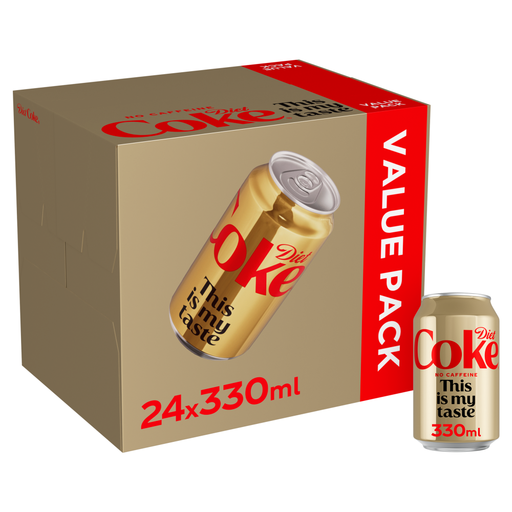
Diet Coke No Caffeine, 24 × 330ml
A caffeine-free cola option in individual cans for a train meal. Check the selected pack’s sugars per 100ml, ingredients and any phenylalanine warning.
View on Joybuy
 No image available
Pepsi Max Caffeine Free, 24 × 330ml
For cola flavour without caffeine, this variant comes in individual cans. Pepsi UK lists 0g sugars per 100ml for Pepsi Max Caffeine-Free; check the pack’s ingredients and any phenylalanine warning.
View on Joybuy
 No image available
Coca-Cola Zero Sugar, 24 × 330ml
A cola choice when caffeine is acceptable, supplied as individual cans. Coca-Cola Great Britain lists 0g sugars per 100ml for this variant, along with caffeine flavouring and a phenylalanine statement.
View on Joybuy
 No image available
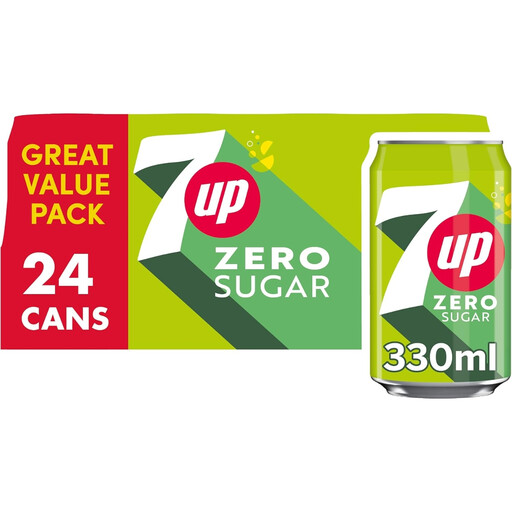
7UP Zero, 24 × 330ml
A lemon-and-lime alternative to cola in individual cans. Check the selected pack’s sugars per 100ml, caffeine information, ingredients and any phenylalanine warning.
View on Joybuy
 No image available
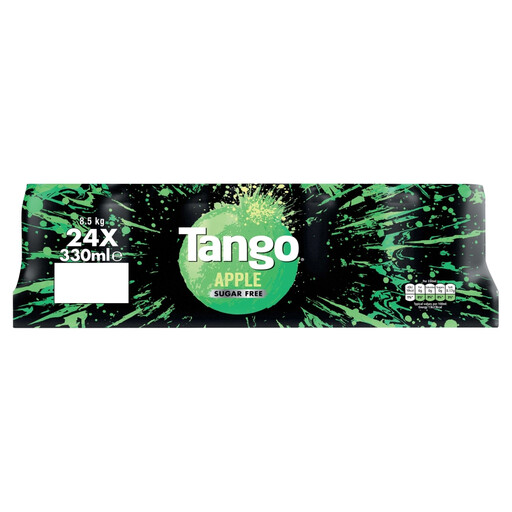
Tango Apple Sugar-Free, 24 × 330ml
An apple-flavoured option in individual cans for a train meal. If you also need to avoid caffeine, check the exact pack for its caffeine status before choosing it.
View on Joybuy
Frequently asked questions
Does no added sugar mean zero total sugars?
No. The wording does not tell you the drink’s total sugars value. Read sugars per 100ml on the nutrition panel of the exact product you plan to pack.
Can I assume a zero-sugar cola is caffeine free?
No. Coca-Cola Great Britain lists caffeine flavouring in standard Coca-Cola Zero Sugar, and Pepsi UK lists caffeine in standard Pepsi Max. Choose a variant explicitly labelled caffeine free if you need to avoid it.
Why should I check for a phenylalanine statement?
Some drinks containing aspartame carry this statement. Official pages for Coca-Cola Zero Sugar, Pepsi Max and Sprite Zero list sweeteners and a phenylalanine warning; check the particular pack if the warning is relevant to you.
Does sugar-free mean a fizzy drink is harmless to teeth?
No. The NHS notes that acidic carbonated drinks are associated with dental erosion whether or not they contain sugar. If you expect to drink between meals during a long journey, consider taking water as well.
Is a can or bottle more practical with train food?
A can works if you expect to finish it with the meal. If you need to put an opened drink back in your bag, check for a resealable bottle and choose a size you are comfortable carrying.


