Carers replacing a sugary fizzy drink
If the aim is to change what is served with an after-school snack, compare total sugars per 100ml and per serving. A ‘no added sugar’ claim alone does not give the finished drink’s sugar value.


For an after-school fizzy drink, check the ‘of which sugars’ figure and ingredients rather than relying on ‘no added sugar’: the Advertising Standards Authority explains that the claim concerns added sugars, not necessarily the drink’s total sugars. If avoiding caffeine matters, choose a variant explicitly labelled caffeine-free; standard Pepsi Max and Dr Pepper Zero list caffeine. For the everyday drink, Cambridgeshire Community Services NHS Trust advises water instead of fizzy drinks, including sugar-free versions.
If the aim is to change what is served with an after-school snack, compare total sugars per 100ml and per serving. A ‘no added sugar’ claim alone does not give the finished drink’s sugar value.
A zero-sugar cola is not necessarily caffeine-free. Check the exact variant: Pepsi Max No Caffeine and Coca-Cola Zero Sugar Caffeine Free are labelled caffeine-free, while standard Pepsi Max and Dr Pepper Zero list caffeine.
If a fizzy drink is becoming part of the daily routine, the choice is about more than its sugar label. Cambridgeshire Community Services NHS Trust advises replacing fizzy drinks, including sugar-free ones, with water.
Start with the nutrition panel, then check the exact variant’s ingredients and how often the drink would be served.
| Priority | What to check | Your needs |
|---|---|---|
| Total sugars | Read ‘of which sugars’ per 100ml and per serving. Check the exact pack even when the front says ‘no added sugar’: the Advertising Standards Authority distinguishes the claim from the finished drink’s total sugars. | I’m swapping a sugary fizzy drink and want to know how much sugar the drink I’ll serve actually contains. |
| Caffeine | Look for an explicit caffeine-free label and check the ingredients. Standard and caffeine-free variants within a brand are separate products. | Caffeine is something I want to avoid after school, so a zero-sugar label on its own is not enough. |
| Serving and ingredients | Compare the can or bottle size with the nutrition values per serving. Read sweetener and ingredient statements on the purchased variant, including any phenylalanine notice relevant to your household. | I want to understand the drink in the portion I’m serving, not just its front-of-pack description. |
| Everyday routine | Consider whether this is an occasional flavoured drink or the regular snack-time drink. Cambridgeshire Community Services NHS Trust advises water instead of fizzy drinks, including sugar-free ones. | For an everyday drink after school, I’d choose water rather than make a sugar-free fizzy drink the default. |
The claim concerns what was added; total sugars can still appear in the nutrition panel. The Fanta Zero Orange listing, for example, says ‘zero sugar added’ and identifies naturally occurring sugars.
Check ‘of which sugars’ per 100ml and per serving before choosing.
Standard Pepsi Max and Dr Pepper Zero list caffeine, while caffeine-free cola variants are labelled separately.
When caffeine avoidance matters, check both the full variant name and the ingredients on the pack you buy.
A zero-sugar label does not make a fizzy drink equivalent to water as a regular choice. Cambridgeshire Community Services NHS Trust advises replacing even sugar-free fizzy drinks with water.
Keep water as the routine after-school drink and choose a fizzy drink for an occasional preference.
Department of Health and Social Care guidance on HFSS retail promotions concerns businesses selling to England. Department for Education guidance separately addresses food and drink provided in state-funded schools in England; neither makes a front-of-pack claim a school eligibility decision.
For a privately bought after-school drink, check its label and ingredients. If a school supplies the drink, ask the provider which rules and policy apply.
A brand name is not enough to establish sugar or caffeine content: the labelled variant is what matters.
Coca-Cola Zero Sugar Caffeine Free is the relevant cola variant when both sugar and caffeine are being checked.
Pepsi Max No Caffeine and standard Pepsi Max answer different caffeine requirements.
Sprite Zero offers a lemon-and-lime alternative when cola flavour is not wanted.
Fanta Zero Orange illustrates why ‘zero sugar added’ and total sugars need separate checks.
Dr Pepper Zero is a zero-sugar option to consider only if caffeine is acceptable.
These canned options cover caffeine-free and caffeine-containing colas, plus a caffeine-free lemon-and-lime drink. Compare their sugar values and exact variant labels for an occasional after-school fizzy drink.
 No image available
For a cola-style drink when avoiding caffeine matters. The listing states 0g sugars per 100ml and no caffeine; the pack contains 24 cans of 330ml. It carries a source-of-phenylalanine notice, so check the pack if that affects your choice.
 No image available
For a cola preference when caffeine is acceptable. The listing reports 0g sugars per 100ml, lists caffeine in the ingredients and specifies 24 cans of 330ml. Check its source-of-phenylalanine notice if relevant to your household.
 No image available
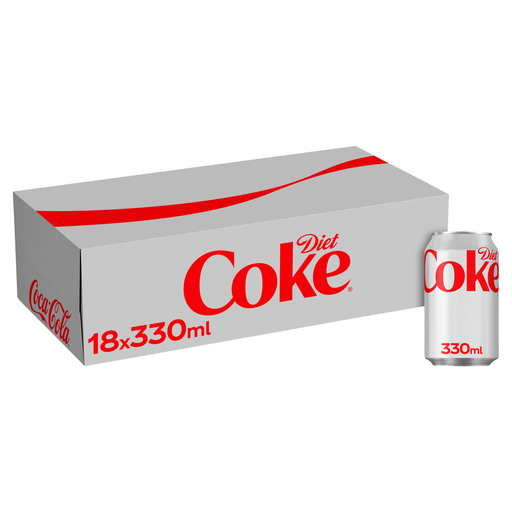
For a cola option when caffeine is acceptable and an 18-can pack suits the household. The listing states 0g sugars per 100ml, identifies caffeine and specifies 330ml cans. It also carries a source-of-phenylalanine notice.
 No image available
For a cola preference when caffeine is acceptable; this is not the separately labelled caffeine-free variant. The listing reports 0g sugars per 100ml, lists caffeine and specifies 24 cans of 330ml. Check its source-of-phenylalanine notice if relevant.
 No image available
For a lemon-and-lime flavour instead of cola when caffeine avoidance matters. The listing states 0g sugars per 100ml and no caffeine; the pack contains 24 cans of 330ml. It also carries a source-of-phenylalanine notice.
No. The Advertising Standards Authority explains that the claim concerns added sugars, not the finished drink’s total sugars. Check ‘of which sugars’ on the nutrition panel; the Fanta Zero Orange listing says ‘zero sugar added’ while identifying naturally occurring sugars.
Not necessarily. Standard Pepsi Max and Dr Pepper Zero list caffeine, whereas Pepsi Max No Caffeine and Coca-Cola Zero Sugar Caffeine Free are labelled caffeine-free. Check the full name and ingredients of the exact pack.
Cambridgeshire Community Services NHS Trust advises water instead of fizzy drinks, including sugar-free versions, as the regular choice. A lower-sugar fizzy drink can be considered as an occasional alternative to a sugary one without making it the daily default.
No. Department for Education guidance addresses food and drink provided in state-funded schools in England; a packaging claim does not establish whether a drink meets the applicable requirements. If a school supplies it, ask the provider about its current rules and policy rather than applying England’s retail HFSS promotion guidance to a school meal.