Festival campers with kettle-only breakfast access
Choose an oat format that can be prepared safely with boiling water and minimal washing-up, rather than a sachet that assumes access to a microwave or separate bowl.


Choose a hot-water pot when a microwave or bowl may not be available; choose plain or no-added-sugar sachets when controlling ingredients and sweeteners matters more than all-in-one convenience. Treat “no added sugar” as a recipe claim rather than proof of zero total sugars, and compare ingredients, allergens and nutrition information before packing.
Choose an oat format that can be prepared safely with boiling water and minimal washing-up, rather than a sachet that assumes access to a microwave or separate bowl.
Look for recipes without sugars added as ingredients, then compare total sugars and preparation ingredients because milk, fruit and naturally occurring sugars can still appear in the nutrition panel.
Compare dairy, soy, gluten-free wording and precautionary allergen statements rather than assuming all oats or all gluten-free-labelled products meet the same dietary requirements.
Start with the preparation method, then compare the ingredient list and nutrition panel on the same basis. The NHS notes that pre-packed food labels give nutrition information per 100g or per portion.
| Priority | What to check | Your needs |
|---|---|---|
| No-added-sugar wording | Read the ingredient list and the “of which sugars” figure. Compare dry products or prepared servings on the same basis, especially where milk is added. | I want to avoid sugars added as ingredients, without assuming that naturally occurring sugars from milk or fruit are absent. |
| Preparation method | Check whether boiling water alone is allowed, whether a bowl is needed and how long the product must stand. Do not assume microwave instructions work with kettle water. | My breakfast needs to work with a campsite kettle or hot-water station and little washing-up. |
| Allergen and gluten-free information | Look for an explicit gluten-free label where required, then check ingredients and may-contain statements for milk, soy, nuts, wheat and barley. | I need the exact pack to match my gluten-free, allergy or intolerance requirements rather than relying on the fact that it contains oats. |
| Portion and recipe | Compare the stated serving size and any declared protein or fibre information. Different pack sizes and recipes are not directly comparable without checking the serving basis. | I want to choose between a lighter plain sachet and a larger portable option without assuming all instant oats are alike. |
A recipe without added sugars can still contain sugars from milk, fruit or other ingredients. For example, Quaker Simply Apple lists different sugars values for its dry sachet and its serving prepared with semi-skimmed milk.
Compare ingredients and total sugars per 100g first, then check the prepared-serving basis. Plain oats may be preferable if you also want to avoid sweeteners and fruit ingredients.
The checked Quaker Simply Apple sachet specifies microwave preparation, while porridge pots have separate boiling-water instructions. The wrong format can leave you without a usable breakfast.
Confirm the preparation method before buying. Pack a just-add-boiling-water pot for kettle-only conditions, or bring a bowl and choose a product whose label explicitly allows water preparation.
Products differ in gluten-free claims, ingredients and precautionary statements. The checked Moma sachet is labelled gluten free, while the checked M&S Traditional Porridge is not suitable for coeliacs.
Where gluten-free status is required, choose an explicitly labelled product and separately check milk, soy, nut, wheat, barley and cross-contact information on the current pack.
Food recipes, allergen information and availability can change, and a product page may not reflect what is on the shelf when you shop.
Confirm stock, current ingredients, allergen advice and preparation instructions on the pack at the point of purchase, particularly where an allergy, coeliac requirement or strict no-added-sugar preference is involved.
Relevant for microwave sachets and portable hot-water porridge pots, including a no-added-sugar flavoured sachet and a higher-protein no-added-sugar pot.
Relevant for a no-added-sugar, gluten-free instant sachet that can be made with water rather than relying on a microwave.
Relevant for a plain, sugar-free oat sachet with a short ingredient list and flexibility to add your own toppings.
Relevant as a UK own-label reference for portioned porridge sachets and conventional oats.
Joybuy product options for festival instant-oat breakfasts, including a larger instant-oat bag and a portioned plain-oat format.
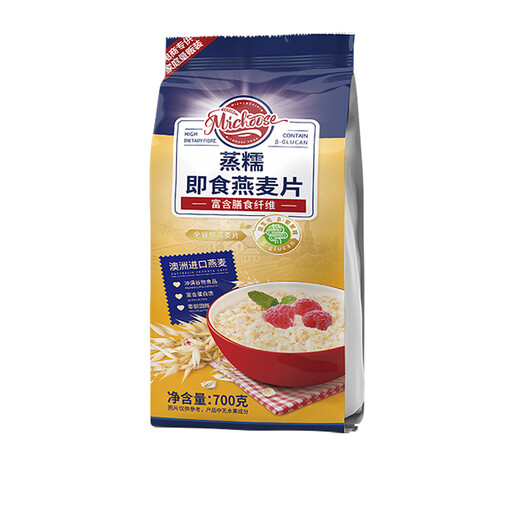 No image available
Consider this larger bag if you can portion your breakfast yourself during the festival.
The 700g format is not described as individually portioned, so bring a scoop, bowl and a way to reseal it. Check the nutrition panel and allergen information on the current pack if no-added-sugar, gluten-free or allergy suitability is important.
 No image available
A portioned plain-oat option for shoppers planning individual festival breakfasts.
The supplied instructions specify microwave preparation, so do not rely on kettle water alone unless the current pack confirms it. The supplied nutrition information lists 0.4g sugars per 38.5g dry sachet; preparation with semi-skimmed milk is listed as 12g sugars per prepared serving.
No. It means sugars have not been added as ingredients, but naturally occurring sugars may still be present. Compare the ingredients list and the “of which sugars” value, using the same dry-product or prepared-serving basis when comparing options.
Choose a porridge pot explicitly designed for boiling water. The checked Quaker Original Pot directs users to add boiling water to its internal line and stand it for one minute; do not assume a microwave sachet can be made the same way unless its instructions confirm this.
No. Choose a product specifically labelled gluten free where this is required, and check each pack. The Food Standards Agency states that food labelled gluten free must contain no more than 20mg/kg gluten, while oats remain an allergen in their own right.
Read the current pack’s ingredients and precautionary statement every time you buy. Check for cereals containing gluten as well as milk, soy, nuts, wheat and barley where relevant; the checked products have different ingredients and cross-contact statements.