What should you check before buying?
Start with whether the ride needs carbohydrate fuel; then compare the drink’s nutrition panel, ingredients and format.
| Priority | What to check | Your needs |
|---|
| Ride fuelling |
Check ride duration and your carbohydrate plan. British Cycling advises 30–60 g of carbohydrate per hour for sessions over 90 minutes; compare that with the drink’s stated carbohydrate per serving. |
For a longer ride, I need to plan carbohydrate food or drink separately rather than count on no-added-sugar lemonade for fuel. |
| Nutrition label |
Read both carbohydrate and sugars, noting whether figures are per 100 ml, per 100 g or per serving. Tesco lists 0.2 g carbohydrate per 100 ml for its No Added Sugar Cloudy Lemonade; Marks & Spencer lists 0.5 g per 100 g for its Diet Cloudy Lemonade. |
I want to know what the amount I actually drink contributes, not rely on the words ‘no added sugar’ alone. |
| Ingredients |
Check the sweeteners and any phenylalanine statement on the current pack. Tesco lists sucralose in its cloudy lemonade; Tesco’s R.White’s Diet Lemonade listing names aspartame, acesulfame K and saccharin. |
Before choosing a regular ride drink, I want to check its particular ingredients and warnings. |
| Flavour |
Distinguish lemonade from other citrus soft drinks. Coca-Cola Great Britain describes Sprite Zero as lemon-and-lime; Tesco describes 7UP Pink Lemonade Zero Sugar as lemon, lime and raspberry flavoured. |
If I want traditional lemonade rather than a different citrus flavour, the product name and flavour description matter to me. |
| Pack format |
Compare the container with how you will carry or serve it. Tesco lists its cloudy lemonade in a 2 L bottle and R.White’s Diet Lemonade in 330 ml cans; Marks & Spencer’s cloudy lemonade is a 1 L bottle. |
A larger bottle suits me for pouring or sharing; for a ride, I need a container I can carry and use with my equipment. |
Which brands illustrate the options?
These product lines show how lemonade, cloudy lemonade and other citrus soft drinks differ; a brand name alone does not establish a drink’s nutrition or ingredients.
Tesco
Tesco No Added Sugar Cloudy Lemonade is a 2 L bottle to consider for pouring or refilling before a ride.
- Tesco lists 0.2 g carbohydrate and 0.2 g sugars per 100 ml.
- It contains sucralose, and the large bottle is not a compact on-bike format.
R.White’s
R.White’s Diet Lemonade is a traditional lemonade option listed in 330 ml cans and a 2 L bottle.
- Tesco’s 330 ml can listing gives 0 g carbohydrate and 0 g sugars per 100 ml.
- Its listed sweeteners are aspartame, acesulfame K and saccharin; check the current pack for ingredient warnings.
M&S
M&S Diet Cloudy Lemonade is a 1 L cloudy lemonade option for serving from a larger bottle.
- Marks & Spencer lists 0.5 g carbohydrate and 0.2 g sugars per 100 g.
- It contains sucralose; note the per-100 g basis when comparing it with per-100 ml labels.
Sprite
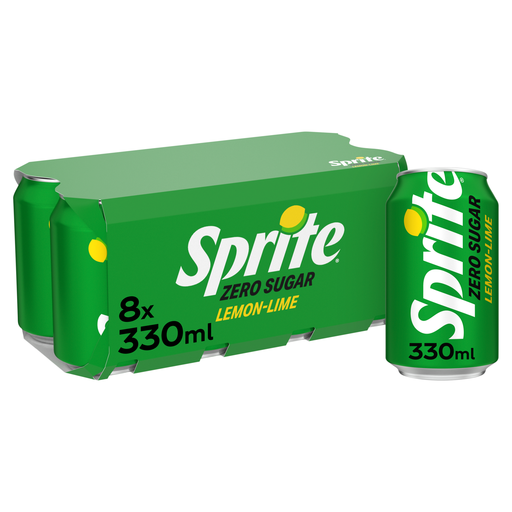
Sprite Zero is a lemon-and-lime soft drink rather than traditional lemonade.
- Coca-Cola Great Britain lists 0 g carbohydrate and 0 g sugars per 100 ml.
- Its ingredients include aspartame, acesulfame K and sucralose, and its label carries a source-of-phenylalanine statement.
7UP
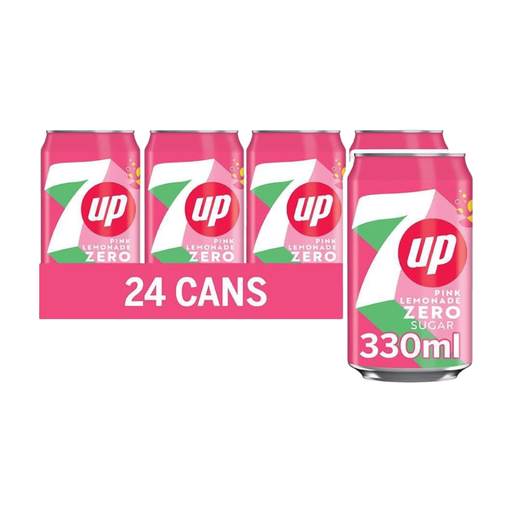
7UP Pink Lemonade Zero Sugar is a lemon, lime and raspberry flavoured option listed by Tesco in a 330 ml can.
- Tesco lists 0 g carbohydrate and 0 g sugars per can.
- Tesco lists 0.23 g salt per can and a source-of-phenylalanine statement; this is not a plain lemonade flavour.
Joybuy citrus drink options
These are canned zero-sugar lemonade-style, lemon-and-lime and lemon soda options. Choose by the flavour and pack you want, and check the current nutrition label rather than treating any of them as your long-ride carbohydrate fuel.
 No image available
7 Up Lemonade Zero 24 × 330 ml
A canned lemonade option if a single-serving format suits your plans. The pack contains 24 × 330 ml cans; check the current nutrition panel and ingredients before using it during a ride.
View on Joybuy
 No image available
Sprite No Sugar 8 × 330 ml
A lemon-and-lime choice rather than traditional lemonade. The pack contains eight 330 ml cans; the Joybuy product information for this SKU lists 0 g carbohydrate and 0 g sugars per 100 ml. It does not replace planned carbohydrate for a longer ride.
View on Joybuy
 No image available
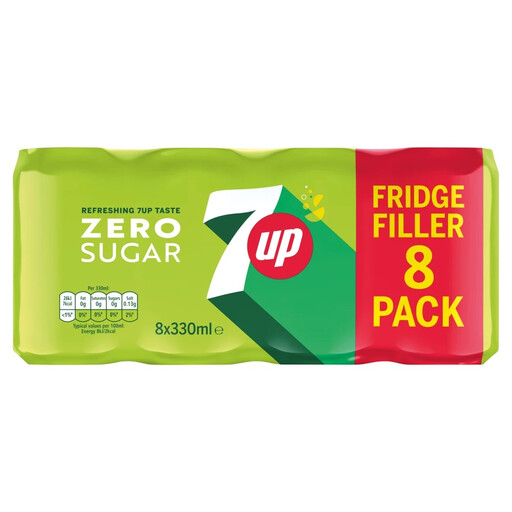
7UP Zero 8 × 330 ml
A canned zero-sugar option for someone choosing a citrus soft drink. The pack contains eight 330 ml cans; check the exact pack’s flavour, carbohydrate panel, sweeteners and warnings before buying.
View on Joybuy
 No image available
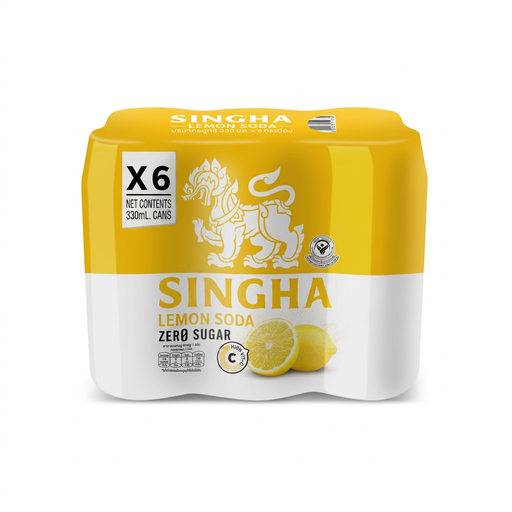
SINGHA Original Lemon Soda Zero Sugar 6 × 330 ml
A lemon soda rather than a traditional lemonade. The pack contains six 330 ml cans; read the current nutrition panel’s measurement basis before comparing it with drinks labelled per 100 ml.
View on Joybuy
Questions about lemonade and cycling
Can no-added-sugar lemonade fuel a ride over 90 minutes?
Do not rely on it as your sole carbohydrate source. British Cycling advises 30–60 g of carbohydrate per hour for sessions over 90 minutes, whereas Tesco lists just 0.2 g per 100 ml for its No Added Sugar Cloudy Lemonade and 0 g per 100 ml for R.White’s Diet Lemonade. Plan carbohydrate food or drink separately.
Does no-added-sugar lemonade make sense for a short session?
It can be a flavoured drink if you do not need carbohydrate during the session. British Cycling says most indoor sessions under an hour need no additional fuel during the activity, while emphasising hydration; that guidance does not mean lemonade is an electrolyte drink.
Does ‘no added sugar’ mean zero carbohydrate?
No. Tesco’s No Added Sugar Cloudy Lemonade lists 0.2 g carbohydrate per 100 ml, and Marks & Spencer’s Diet Cloudy Lemonade lists 0.5 g per 100 g. Read the nutrition panel as well as the front-of-pack wording, and keep those different measurement bases in mind.
Why check for a phenylalanine statement?
It matters if you need to avoid phenylalanine. Coca-Cola Great Britain lists aspartame and a source-of-phenylalanine statement for Sprite Zero, while Tesco’s 7UP Pink Lemonade Zero Sugar listing also carries the statement. Check the warning on the exact pack you choose.
What should I recheck on the pack?
Check carbohydrate and sugars, the per-100 ml or per-100 g measurement basis, ingredients, warnings and container size. That lets you compare the drink you are buying with your flavour preference, carrying plans and separate fuelling plan.


