For a TV dinner, compare the stated sugars, sweeteners and pack size rather than relying on ‘no added sugar’ alone. Waitrose lists R.White's Diet Lemonade at 0 g sugars per 100 ml, while Tesco lists its clear Sparkling Diet Lemonade at below 0.1 g and its cloudy no-added-sugar lemonade at 0.2 g per 100 ml. The Joybuy can multipack below is described as zero sugar; check its current pack if you specifically want a no-added-sugar claim.
Who is choosing the lemonade?
Households sharing a bottle
For a group TV dinner, compare the bottle volume with how much everyone is likely to drink. Waitrose lists the 2-litre R.White's Diet Lemonade as eight 250 ml servings; a 1-litre bottle may be easier to use for a smaller meal.
Shoppers comparing labelled sugars
Look at the sugars figure on the nutrition panel. Tesco lists below 0.1 g per 100 ml for its clear Sparkling Diet Lemonade and 0.2 g per 100 ml for its No Added Sugar Cloudy Lemonade, despite both fitting a lower-sugar shopping brief.
Shoppers checking sweeteners
Read the ingredients on the particular bottle, especially when choosing for guests. Waitrose lists aspartame, acesulfame K and saccharin in R.White's Diet Lemonade, together with a warning that it contains a source of phenylalanine; the cited Tesco lemonades use different sweetener combinations.
What should you compare?
Start with the nutrition panel and ingredients, then choose a flavour style and pack size that suit the meal.
| Priority | What to check | Your needs |
|---|
| Stated sugars |
Compare sugars per 100 ml on bottles using that basis. Waitrose lists R.White's Diet at 0 g; Tesco lists Sparkling Diet at below 0.1 g and No Added Sugar Cloudy at 0.2 g. |
I want to compare the labelled sugar figures, not assume that every ‘no added sugar’ drink has the same amount. |
| Ingredients |
Check the sweeteners and any warnings on the exact pack. Waitrose lists aspartame and a phenylalanine warning for R.White's Diet; Tesco lists sucralose in its cloudy lemonade. |
If someone at dinner needs to avoid a particular ingredient, I need to check the bottle they will actually drink. |
| Pack size |
Compare 1-litre and 2-litre bottles with the number of diners. Check the opened-bottle storage and use instructions; Tesco and M&S specify use within three days for the cited products. |
A larger bottle works for our group only if we can use what remains after dinner. |
| Flavour style |
Choose clear or cloudy by the drink you prefer, then check its own sugar figure. Tesco lists 4% comminuted lemon from concentrate in its cloudy lemonade; its clear Sparkling Diet has a different recipe. |
I might prefer cloudy lemonade, but I would not use its appearance as a shortcut for judging sugars. |
| Acidity |
A no-added-sugar claim does not describe acidity. UK Department of Health and Social Care and NHS England guidance identifies acid-related dental erosion as a form of tooth wear. |
If tooth wear concerns me, I do not want to treat a lower-sugar label as an answer to a separate question about acidity. |
What is easy to overlook?
-
Reading ‘no added sugar’ as ‘no sugars’
A drink can contain naturally occurring sugars: Waitrose says this of its No Added Sugar Lemonade. The front-of-pack phrase does not give you the amount in the drink.
Read the sugars figure on the nutrition panel when that amount matters to your choice.
-
Assuming diet lemonades use the same sweeteners
The cited recipes differ. Waitrose lists aspartame and a phenylalanine warning for R.White's Diet Lemonade, while Tesco lists sucralose in its No Added Sugar Cloudy Lemonade.
Check the full ingredients and warnings on each bottle before serving it to someone with an ingredient-specific requirement.
-
Choosing a bottle without planning for leftovers
A 2-litre bottle may suit several diners but leave more to store after a smaller meal. Tesco and M&S specify a three-day period after opening for the cited lemonades.
Match the bottle size to the group and follow its own storage and use instructions.
-
Taking lower sugar as a statement about acidity
Choosing by sugars does not establish whether a fizzy drink is low in acid. UK Department of Health and Social Care and NHS England guidance describes dental erosion as acid-related loss of tooth mineral.
If tooth wear is a personal concern, do not rely on the sugar claim to answer it; ask a dental professional about individual concerns.
Relevant brand examples
These details concern the named drinks, not every lemonade sold under each brand.
Tesco
Tesco lists both a clear Sparkling Diet Lemonade and a No Added Sugar Cloudy Lemonade in 2-litre bottles.
- Tesco lists below 0.1 g sugars and 1 kcal per 100 ml for the clear drink; the cloudy drink lists 0.2 g sugars and 2 kcal per 100 ml.
- The recipes differ: check the current bottle for ingredients and the nutrition figures that matter to you.
R.White's
Waitrose lists R.White's Diet Lemonade as a 2-litre bottle with eight 250 ml servings.
- The Waitrose listing states 0 g sugars and 2 kcal per 100 ml.
- It lists aspartame, acesulfame K and saccharin, and warns that the drink contains a source of phenylalanine.
M&S
M&S describes its Diet Cloudy Lemonade as a no-added-sugar option in a 1-litre bottle.
- Its nutrition listing states 0.2 g sugars and 4 kcal per 100 g.
- The M&S figure is given per 100 g, so check the label rather than treating it as a per-100 ml figure when comparing bottles.
Joybuy option for a shared TV dinner
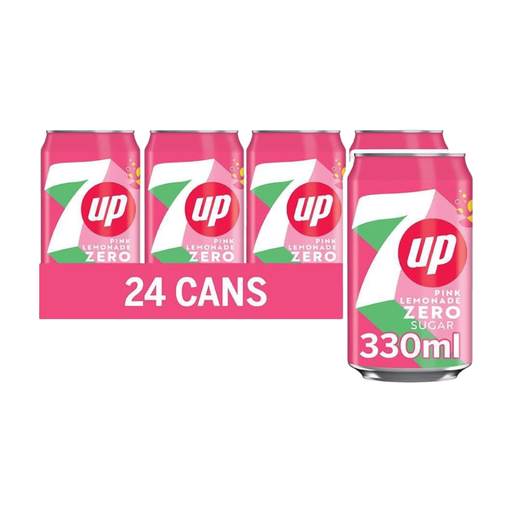
The 7 Up Lemonade Zero multipack contains individual 330 ml cans for a group meal. Check its current packaging if a ‘no added sugar’ claim, rather than zero-sugar wording, is essential to your choice.
 No image available
7 Up Lemonade Zero, 24 × 330 ml
The individual cans can be shared at a TV dinner. Check the current pack for a no-added-sugar claim if that wording matters to you. The listing also warns that the drink contains a source of phenylalanine.
View on Joybuy
Questions about labels and leftovers
Does ‘no added sugar’ mean a lemonade contains no sugars?
No. Waitrose describes its No Added Sugar Lemonade as containing naturally occurring sugars. Check the sugars figure on the nutrition panel rather than treating the claim as a zero-sugar figure.
Which cited lemonade has the lowest stated sugar figure?
Among the cited bottles with figures per 100 ml, Waitrose lists R.White's Diet Lemonade at 0 g sugars, Tesco Sparkling Diet Lemonade at below 0.1 g and Tesco No Added Sugar Cloudy Lemonade at 0.2 g. Check the current label when buying.
What if someone needs to avoid aspartame or phenylalanine?
Check the ingredients and warnings on the exact drink. Waitrose lists aspartame in R.White's Diet Lemonade and states that it contains a source of phenylalanine; the cited Tesco lemonades list different sweeteners.
How should I plan for lemonade left after dinner?
Choose a pack size you can use and follow its storage instructions. Tesco and M&S specify using the cited bottled lemonades within three days of opening; check the instructions on the bottle you buy.
Does no added sugar settle concerns about acidity?
No. The claim concerns sugars, not the drink's acidity. UK Department of Health and Social Care and NHS England guidance identifies acid-related dental erosion as a form of tooth wear; ask a dental professional about individual concerns.


