Brunch shoppers reducing added sugar
For anyone looking for muesli without sugar added during manufacture who also wants to compare the total-sugars line per 100g. UK food-labelling rules distinguish a sugar-free claim from a no-added-sugar claim.


Do not treat no-added-sugar muesli as sugar-free. UK rules published by legislation.gov.uk reserve the sugar-free claim for foods containing no more than 0.5g sugars per 100g, so compare the “of which sugars” figure per 100g and check ingredients and allergens before choosing a brunch bowl.
For anyone looking for muesli without sugar added during manufacture who also wants to compare the total-sugars line per 100g. UK food-labelling rules distinguish a sugar-free claim from a no-added-sugar claim.
For shared Sunday brunches where dried fruit, nuts and wholegrains matter, but the sugars contributed by fruit ingredients also need comparing.
For hosts who need to check each pack carefully: the researched recipes include gluten cereals and nuts, while Alpen No Added Sugar also includes milk ingredients.
Start with the claim on the pack, then compare products on the same per-100g basis before checking whether the ingredients suit everyone at the table.
| Priority | What to check | Your needs |
|---|---|---|
| Sugar-free claim | Check whether the pack is actually labelled sugar-free and whether sugars are no more than 0.5g per 100g. Treat no added sugar as a different claim. | I want a genuinely sugar-free food rather than a recipe with no sugar added during manufacture. |
| Total sugars | Compare “of which sugars” per 100g, then read the ingredients list and stated portion. Dried fruit and milk ingredients can affect the total-sugars figure. | I want to compare the label number across mueslis while keeping a fruit-and-nut brunch option. |
| Ingredients and allergens | Read the current ingredients, allergen declaration and may-contain statement. Check for cereals containing gluten, nuts and milk where relevant. | I need a shared brunch bowl that is suitable for the guests I am serving. |
A no-added-sugar recipe can still contain far more sugars than the legal threshold for a sugar-free claim. The researched products range from 8.3g to 19g sugars per 100g.
Use sugar-free only where the pack and nutrition panel support the UK threshold of no more than 0.5g sugars per 100g; otherwise compare it as no added sugar.
No-added-sugar mueslis can have different total-sugars figures because sugars from dried fruit and milk are included on the label.
Compare “of which sugars” per 100g first, then check the ingredients list and stated serving size.
The researched recipes commonly contain gluten cereals and nuts; Alpen No Added Sugar also contains milk ingredients. A no-added-sugar claim does not indicate allergy suitability.
Check the current pack’s ingredients, highlighted allergen statement and may-contain information before serving guests with diagnosed allergies.
Honey, syrups, smoothies and fruit purées contribute free sugars separately from the dry muesli.
When comparing the whole bowl, account for toppings as well as the nutrition panel on the muesli pack. Whole fruit, nuts and seeds are alternatives to honey, syrup or blended-fruit toppings.
Relevant for no-added-sugar muesli in nut-led or fruit-and-nut formats.
Relevant for a natural muesli with wholegrain cereals, dried fruit and nuts.
Relevant for a mainstream no-added-sugar muesli offered in more than one Tesco pack size.
Relevant for shoppers considering organic, plant-based or ingredient-rich muesli.
Relevant for shoppers considering a specialist lower-sugar cereal range, subject to checking the exact muesli label.
Relevant as a UK grocery retailer and own-label source for no-added-sugar muesli.
Joybuy product options for a no-added-sugar muesli Sunday brunch.
 No image available
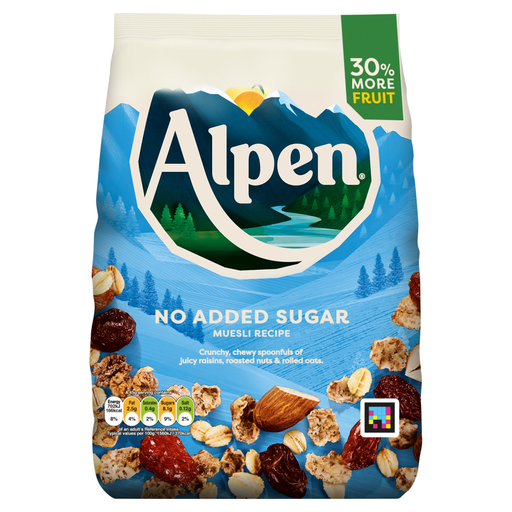
A 950g no-added-sugar muesli for repeat household brunches, with wholegrain wheat, rolled oats, raisins, almonds and hazelnuts.
The nutrition information lists 18g sugars and 8.0g fibre per 100g. It contains almonds, hazelnuts, milk, oats and wheat; check the current pack before serving guests with allergies.
No. Under UK rules published by legislation.gov.uk, a sugar-free claim is limited to products with no more than 0.5g sugars per 100g or 100ml. No-added-sugar muesli can still contain sugars naturally present in ingredients such as dried fruit or milk.
Compare the “of which sugars” figure per 100g, then read the ingredients list. NHS guidance explains that total sugars on labels include sugars from different sources, so the per-100g figure gives a common basis for comparison.
Dorset Cereals Gloriously Nutty had the lowest verified figure in this comparison at 8.3g sugars per 100g, according to its manufacturer nutrition panel. Jordans Natural listed 10.4g per 100g; neither product is sugar-free.
Only after checking the exact current pack. Alpen No Added Sugar contains wheat, milk, hazelnuts and almonds; Dorset Gloriously Nutty contains gluten cereals and several nuts; Jordans Natural contains gluten cereals and nuts.
Not necessarily. NHS guidance classifies sugars in honey, syrups, unsweetened fruit juices, smoothies and purées as free sugars, so consider toppings separately from the dry muesli pack.