Sugar-label-first shoppers
If avoiding added sugar is your priority, the claim on the front of a jar is only part of the choice. Compare the declared sugars per 100g across similar sauces to see what each contains.


For a tomato-based weekend breakfast dish, compare the exact no-added-sugar claim with sugars per 100g: the claim does not mean the sauce contains no sugars. The checked Sainsbury's hidden-veg sauce lists 3.9g sugars per 100g and four servings, while Tesco's bolognese-style sauce lists 4.5g per 100g and a longer stated period for using the jar after opening. Choose by flavour, the amount you will use and the storage instructions as well as the sugar figure.
If avoiding added sugar is your priority, the claim on the front of a jar is only part of the choice. Compare the declared sugars per 100g across similar sauces to see what each contains.
For a dish shared by several people, a smooth texture, vegetable ingredients, flavour and stated serving count may matter alongside the sugar label.
If breakfast uses only part of a jar, check the pack size and how soon the label says to use the remainder after opening.
For a tomato sauce, settle the sugar-label requirement first, then choose a flavour and jar size that fit the dish and the amount your household will use.
| Concern | What to check | Who this matters to |
|---|---|---|
| Sugar wording and amount | Read the exact claim and compare ‘of which sugars’ per 100g across similar ready-to-use sauces. | If avoiding added sugar comes first, I still want to know how much sugar the tomato sauce contains. About 46% of consumers put understanding the claim and sugar figure first. |
| Flavour and portions | Check the ingredients, texture and stated servings against the dish you plan to make. | For a breakfast dish shared with family, I need a flavour and texture people will want to eat, with enough sauce to go round. About 36% of consumers make that fit their primary concern. |
| Using the opened jar | Compare pack size with the amount you will use, and follow the jar's refrigeration and use-within instructions. | When I need only a little sauce, I do not want the remainder to sit open longer than its label allows. Around 18% of consumers put managing leftovers first. |
Tomato sauces with a no-added-sugar claim can still declare sugars. The checked Sainsbury's, Loyd Grossman and Tesco products list 3.9g, 4.0g and 4.5g sugars per 100g respectively.
Read both the claim and the nutrition panel, comparing similar sauce types on a per-100g basis.
The checked jars differ in size and in their stated periods for use after opening. A larger jar is less practical if you cannot use the remainder within its label instructions.
Choose a pack size that fits your plans, then check how the opened jar must be stored and when it must be used.
The checked Sainsbury's, Tesco and Loyd Grossman sauces list different amounts of salt per 100g, from 0.61g to 0.73g. The sugar claim does not settle that comparison.
If salt also matters to your choice, read its per-100g value and consider the portion you intend to use.
A Tesco listing for Dolmio Original Bolognese Pasta Sauce No Added Sugar 500g was marked out of stock when checked; that does not establish its availability now.
Confirm the current listing and read the label on the exact jar before substituting it for another sauce.
Tesco Groceries lists a 500g no-added-sugar tomato, onion and herb bolognese-style sauce.
Sainsbury's lists a 500g smooth tomato sauce with red pepper, carrot and onion, labelled no added sugar or sweetener.
Asda Groceries lists a 350g Loyd Grossman No Added Sugar Tomato & Basil sauce; this is a branded product sold by Asda, not an Asda own-label sauce.
Tesco Groceries has listed Dolmio Original Bolognese Pasta Sauce No Added Sugar 500g.
M&S Classic Tomato Everything Pasta Sauce is a tomato-sauce alternative, not a no-added-sugar substitute.
This carbonara pasta-bake sauce is an option for a cooked weekend dish. It is a different sauce style from the tomato products above, so its sugar figure should not be treated as a like-for-like tomato-sauce comparison.
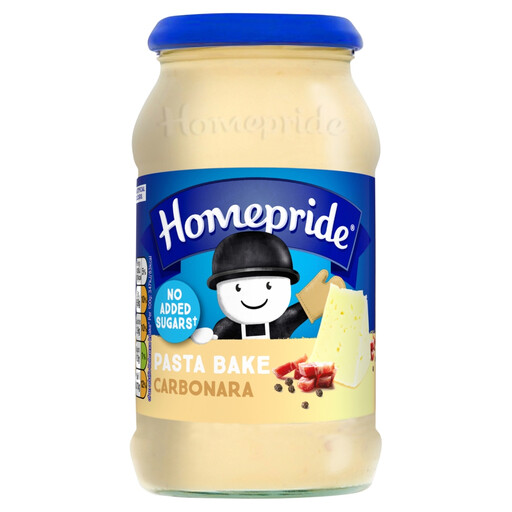 Image unavailable
Consider this 485g carbonara pasta-bake sauce if that flavour fits your cooked dish rather than a tomato sauce. Check the ingredient and allergen information, the nutrition panel and the instructions for using the jar after opening before buying.
No. The checked no-added-sugar tomato sauces from Sainsbury's, Tesco and Loyd Grossman still list between 3.9g and 4.5g sugars per 100g. Read the nutrition panel as well as the claim.
No. If avoiding added sugar is your requirement, look for that exact wording on the product you intend to buy, then read its ingredients and declared sugars per 100g. A sugar figure alone does not establish that nothing was added.
Follow the instructions on the exact jar. The checked Tesco sauce says to consume within 14 days after opening, the Sainsbury's sauce within 7 days and the Loyd Grossman sauce within 3 days; each directs refrigeration after opening.
Check whether the sauce's flavour, ingredients, allergens, pack size and cooking instructions fit the dish you plan to make. If you will use only part of the jar, include its after-opening instructions in that decision.