Low-fat breakfast shoppers
Choose a plain porridge base that lets you control the milk, sweeteners and toppings. Compare sugars and saturated fat per 100g of dry oats rather than relying on a serving prepared with milk.


Choose plain oats with oats only in the ingredients list, or a clearly stated no-added-sugar option, then compare nutrition per 100g rather than prepared-with-milk figures. For a low-fat diet, check saturated fat first and remember that the milk, sweeteners and toppings you add can change the finished bowl substantially; NHS food-label guidance classifies 1.5g saturated fat or less per 100g as low.
Choose a plain porridge base that lets you control the milk, sweeteners and toppings. Compare sugars and saturated fat per 100g of dry oats rather than relying on a serving prepared with milk.
Plain original sachets and quick-cook oats can suit short mornings without requiring flavoured porridge. Check the dry-product ingredients and nutrition panel before choosing a portioned option.
Jumbo oats suit a thicker, more textured bowl. If gluten-free food is required, choose oats explicitly labelled gluten free and still review the allergen statement because oats remain an allergen.
Start with the ingredient list, compare dry products on the same per-100g basis, then choose a format that fits your preparation time and dietary requirements.
| Priority | What to check | Your needs |
|---|---|---|
| Added sugar | Check whether the ingredients are oats only or whether a no-added-sugar claim is stated. Review total sugars per 100g as well as ingredients such as sugar, syrups, honey or sweet flavour mixes. | I want a plain breakfast base without added sweeteners, rather than an oat-based cereal with flavoured or sweet ingredients. |
| Saturated fat | Compare saturated fat per 100g of dry oats. NHS guidance describes 1.5g saturated fat or less per 100g as low; assess milk and toppings separately. | I want the dry oats and the way I prepare them to fit a lower-saturated-fat breakfast. |
| Preparation time | Check the stated cooking method, portion format and preparation time. Original plain Quaker sachets and Mornflake Quick Cook Whole Grain Oats are stated to take two minutes. | I need porridge that works on rushed mornings without moving automatically to sweetened flavours. |
| Gluten and allergens | Look for an explicit gluten-free label where needed, then read the allergen statement. Under Food Standards Agency guidance, a gluten-free claim has a maximum gluten level of 20mg/kg, while oat remains an allergen. | I need clear suitability information and cannot assume that ordinary oats meet a gluten-free requirement. |
Granola and muesli can contain honey, golden syrup, dried fruit or other sweet ingredients even when oats are the main grain.
For a sugar-free or no-added-sugar goal, begin with plain oats or check the exact ingredients and sugars per 100g rather than relying on an oat-based product name.
Milk changes the fat, saturated fat and sugars shown for a prepared serving, so similar dry oat products can appear less comparable.
Compare dry oats per 100g first, then choose the preparation liquid and toppings that fit your diet.
Nutrition panels report total sugars, including naturally occurring sugars, so the ingredients list is needed to identify added sweeteners.
Use a two-step check: look for sugar, syrups, honey or sweet flavour mixes in the ingredients, then compare total sugars per 100g.
Oats can be affected by gluten cross-contamination, and gluten-free status does not remove oat-allergy risk.
Where gluten-free suitability is necessary, choose a product expressly labelled gluten free and still check the allergen statement.
Relevant for shoppers choosing between rolled oats, original microwaveable sachets and portioned porridge formats.
Relevant for a broad porridge-oat range including jumbo, traditional, quick-cook, gluten-free and oatbran options.
Relevant for plain organic oat sachets alongside traditional and quick oat products.
Relevant for own-label plain porridge oats, including Essential, Scottish and gluten-free ranges.
Relevant mainly for oat-based granola and muesli rather than as a plain porridge-oat choice.
These Joybuy options cover plain oats for quick breakfasts, traditional textured porridge and explicitly gluten-free oat choices.
 No image available
A portioned plain-oat option for rushed home or office breakfasts.
 No image available
A flexible plain-oat choice for shoppers who require an explicitly gluten-free product.
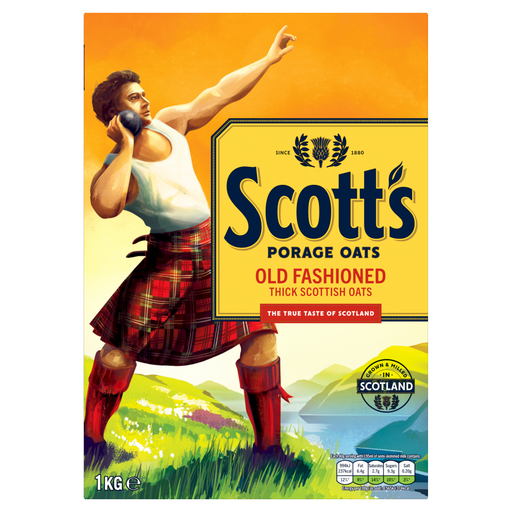 No image available
A traditional rolled-oat option for a thicker bowl when you can allow time to cook it.
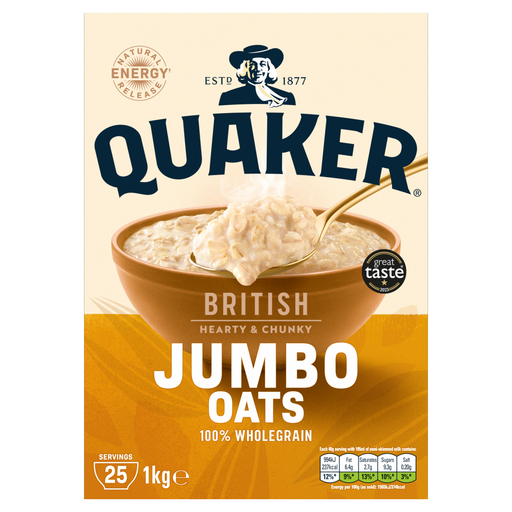 No image available
A larger-flake oat choice for textured porridge, overnight oats or baking.
 No image available
A larger plain-oat supply for home breakfasts where you want full control over additions.
No. “No added sugar” refers to ingredients added during manufacture, while the sugars value on the nutrition panel is total sugars and can include naturally occurring sugars. Check both the ingredients list and the per-100g nutrition panel; NHS guidance describes 5g total sugars or less per 100g as low.
NHS food-label guidance describes 1.5g saturated fat or less per 100g as low, and more than 5g per 100g as high. Compare dry products per 100g, then consider the milk and toppings separately.
Yes, but the final bowl depends on the milk and toppings used. Compare the nutrition of the dry oats first, then check the label of the milk or alternative you plan to add if you are reducing saturated fat.
Do not assume so. Choose oats explicitly labelled gluten free where that requirement applies. Food Standards Agency guidance states that a gluten-free claim is limited to no more than 20mg/kg gluten, while oat must still be highlighted as an allergen.
A product page may show nutrition for porridge prepared with milk alongside dry-oat values. For a like-for-like comparison, use the as-sold per-100g values for the oats, then account for the milk and toppings separately.