Who this is for

Parents choosing plain breakfast ingredients

For households that want to avoid added sugars in a secondary-school morning routine while keeping control over milk, fruit, syrups and portion size. NHS guidance distinguishes free sugars from sugars naturally present in foods such as milk and fruit.

Families needing a quicker school-day routine

For pupils with a practical way to prepare oats before leaving home or at school, where pre-portioned unflavoured sachets may be more convenient than a large bag.

Pupils needing gluten-free oats

For families who need a specifically gluten-free oat product and suitable school allergy arrangements, rather than assuming that ordinary oats meet a medically managed diet.

What to check before buying

Plain rolled oats

Choose this when: You can prepare breakfast at home or have a suitable arrangement for liquid, heating or refrigeration.

Keep in mind: Toppings and liquids determine the finished meal’s ingredients, and standard oats can carry cross-contact warnings.

No-added-sugar sachets or pots

Choose this when: Individual portions solve a real school-morning or supervised preparation need.

Keep in mind: These formats still need the preparation method stated on the pack, and no added sugar does not mean total sugars are zero.

Gluten-free oats

Choose this when: A pupil has been advised to follow a gluten-free diet and the school arrangements call for an appropriate oat product.

Keep in mind: Check the exact pack and individual care arrangements; gluten-free is not a general replacement for every pupil.

Priority What to check Your needs
Added-sugar control Read the ingredient list for sugars, syrups, honey or other sweetening ingredients. Compare total sugars per 100g. Check whether the pack says no added sugar or sugar free. I want to choose the sweeteners and toppings myself. NHS guidance notes that total sugars can include naturally occurring sugars as well as free sugars.
Allergens and gluten Read the allergen statement and any may-contain declaration on the exact pack. For a medically required gluten-free diet, choose a specifically gluten-free product. Confirm the school’s individual arrangements. A standard oat product may not suit a pupil who needs gluten-free oats or has a relevant allergy plan.
Preparation method Check whether the oats need hot water, milk, a microwave, cooking time or refrigeration. Confirm what the school permits and provides. I need a breakfast format that can genuinely be prepared before school or during the school day, rather than dry oats packed without a workable method.

Common buying mistakes

  • Treating sugar free and no added sugar as the same claim

    These claims answer different questions. Under UK retained nutrition rules, a sugar-free claim is limited to foods containing no more than 0.5g sugars per 100g or 100ml, while a no-added-sugar product may still contain naturally occurring sugars.

    Choose a product with a short ingredient list or a suitable no-added-sugar claim, then compare total sugars per 100g. Only describe a product as sugar free when the current pack supports that claim.

  • Assuming all oats suit a gluten-free diet

    Ordinary oat products can carry wheat or barley cross-contact warnings, and a pupil’s individual dietary plan may require a specific product route.

    For a medically required gluten-free diet, select a specifically gluten-free product, read every current pack and confirm the school’s arrangements.

  • Buying instant formats without checking preparation access

    Sachets and pots can simplify portioning, but they still need hot water, microwave access or another appropriate preparation method.

    Choose a sachet or pot only when its stated preparation method fits the pupil’s actual routine; otherwise, portion loose plain oats at home.

Relevant brand references

Quaker

Relevant for plain rolled oats and unflavoured no-added-sugar sachet or pot formats.

  • The checked loose product lists 100% Quaker rolled oats and no added sugar; Original sachets are also labelled no added sugar.
  • Check the exact pack for allergen and cross-contact information before packing for school.

Mornflake

Relevant for households seeking gluten-free porridge oats and a fast-cooking oat option.

  • Mornflake gluten-free porridge oats list 100% oats and 1.0g sugars per 100g.
  • The manufacturer’s separate harvesting, storage, milling and batch-testing statements apply to its dedicated gluten-free range, not every Mornflake oat product.

Flahavan's

Relevant for plain and organic wholegrain rolled-oat buyers.

  • Flahavan’s Organic Oats lists 100% organic wholegrain rolled porridge oats.
  • A manufacturer page uses a Sugar Free label, while a Joybuy listing reports 0.9g sugars per 100g; check the current pack before treating it as a regulated sugar-free product.

Jordans

Relevant for organic plain rolled oats, distinct from the brand’s granola products.

  • Jordans Organic Porridge lists organically produced wholegrain rolled oats.
  • The product may contain other gluten sources and nuts, while the brand’s granola lines can have different ingredients.

Waitrose

A UK retailer route for comparing loose oats, gluten-free oats, sachets and pots.

  • Its porridge category includes several oat formats and brands for product-level comparison.
  • Check the selected product page or physical pack for its exact ingredients and allergen statement.

Joybuy product options

Joybuy product options for plain oats, individually portioned oats and gluten-free oat routes in a secondary-school breakfast routine.

Quaker Oat So Simple Big Bowl Original 6 Pack 231g

Quaker Oat So Simple Big Bowl Original 6 Pack 231g

Six individual sachets can suit a portioned school-morning routine where microwave access is permitted.

Listed ingredients: wholegrain rolled oats only. Each sachet is 38.5g; the listing reports 1.0g sugars per 100g and a 2½-minute microwave method with liquid. It is not a verified regulated sugar-free product; check the current pack for cross-contact information.

Joybuy
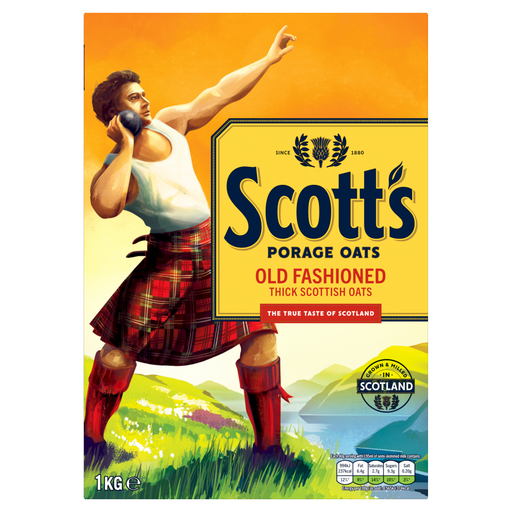
Scotts Porage Oats Old Fashioned Porridge Oats 1kg

Scotts Porage Oats Old Fashioned Porridge Oats 1kg

A loose-oat option for households that want to choose additions and prepare portions at home.

Listed ingredients: 100% rolled oats. The listing reports 1.1g sugars per 100g and stovetop or microwave preparation with water or milk. It may contain wheat and barley, so it is not a confirmed option for a medically required gluten-free diet.

Joybuy
Morrisons Free From Gluten Free Oats 1kg

Morrisons Free From Gluten Free Oats 1kg

A specialist option where a specifically gluten-free oat route is required.

The listing identifies 100% gluten-free oat flakes and gluten- and wheat-free positioning, with 1.1g sugars per 100g. Check the pack instructions and individual school arrangements before packing.

Joybuy

Flahavan's Organic Porridge Oats 2kg, 2 x 1kg

Flahavan's Organic Porridge Oats 2kg (2 x 1kg)

A larger plain-oat supply for households that portion breakfast at home.

The pack contains two 1kg bags. Listed ingredients: 100% organic wholegrain oat flakes; the listing reports 0.9g sugars per 100g. It is not presented as specifically gluten free, and the preparation method should be checked on the pack.

Joybuy

Flahavan's Organic Porridge Oats 1kg

Flahavan's Organic Porridge Oats 1kg

A plain rolled-oat route for choosing toppings and sweeteners separately.

Listed ingredients: 100% organic wholegrain oat flakes. The listing reports 0.9g sugars per 100g and identifies oats as an allergen. It is not presented as specifically gluten free; check preparation instructions before use at school.

Joybuy

Frequently asked questions

Is no added sugar the same as sugar free on UK porridge-oat packaging?

No. Under UK retained nutrition rules, a sugar-free claim is permitted only where a food contains no more than 0.5g sugars per 100g or 100ml. No added sugar means sugars or ingredients used for sweetening have not been added, but naturally occurring sugars can still be present; the checked Quaker Original sachets, for example, are labelled no added sugar and list 1.0g sugars per 100g.

Should I use total sugars or the ingredient list to avoid added sugar?

Use both. The ingredient list identifies added sugar, syrups, honey and other sweetening ingredients, while the nutrition panel allows a like-for-like comparison of total sugars per 100g. NHS guidance explains that total sugars can include naturally occurring sugars as well as free sugars.

Can ordinary porridge oats be packed for a pupil with coeliac disease?

Do not assume so. Choose a specifically labelled gluten-free oat product where medical advice requires it, check the exact allergen statement and follow the pupil’s school arrangements. The Department for Education’s guidance for England says schools must publish an allergy safety policy and support pupils with medical conditions, including allergies.

Can dry oats or instant porridge be eaten at school without preparation?

Usually not as intended. Rolled oats need liquid and either heating for hot porridge or refrigeration for overnight oats, while an instant pot may require hot water. Confirm school rules and available facilities before choosing the format.

Are flavoured porridge sachets automatically unsuitable when avoiding added sugar?

No, but a brand’s plain and flavoured products should not be assumed to have the same ingredients or sugar profile. Check the exact flavour’s ingredient list and front- and back-of-pack claim before buying.