Shoppers avoiding added sugar at breakfast
Choose between a plain, no-added-sugar ingredient list and the stricter legal meaning of sugar-free. Compare dry-product sugars per 100g before deciding.


For a breakfast with no added sugar, choose plain oats with a short ingredient list, ideally 100% oats, and compare the dry product’s “of which sugars” value per 100g. Plain oats are not automatically sugar-free: legislation.gov.uk states that a sugar-free claim requires no more than 0.5g sugars per 100g or 100ml, while the plain-oat examples here list 0.9g to 1.1g per 100g. A fakeaway night does not change the oat choice; check breakfast products and any sweet sauces or toppings separately.
Choose between a plain, no-added-sugar ingredient list and the stricter legal meaning of sugar-free. Compare dry-product sugars per 100g before deciding.
Look beyond the format: check the exact flavour or pot for sugar, syrups and sweetened milk powders when convenience matters.
Select an oat product explicitly labelled gluten free rather than assuming that organic, pure or 100% oats meet this requirement.
Choose this when: you want to control sweetness and toppings yourself.
Keep in mind: plain oats can still contain 0.9g to 1.1g sugars per 100g, and texture and cooking time vary.
Choose this when: speed and a ready-flavoured bowl matter more than excluding added sugar.
Keep in mind: an “original” or fruit variant can still list sugar or sweetened milk ingredients.
Choose this when: you need oats suitable for a gluten-free diet.
Keep in mind: this is a separate suitability check from reducing added sugar.
| Priority | What to check | Your needs |
|---|---|---|
| Avoiding added sugar | Read the ingredients for plain oats or wholegrain oat flakes only. Compare “of which sugars” on the dry product per 100g. A sugar-free claim has a legal threshold of no more than 0.5g per 100g or 100ml. | I want the sweetness of my porridge to be under my control, rather than supplied by sugar, syrup or sweetened dairy ingredients. |
| Checking the exact variant | Inspect the ingredients for each flavour, sachet or pot. Compare dry nutrition values on the same per-100g basis rather than comparing dry oats with milk-prepared servings. | A quick breakfast can still work for me, but I want to know what has been added to the particular product I am buying. |
| Gluten-free suitability | Choose an explicitly gluten-free labelled product where needed. Read allergen and may-contain statements for the individual pack. | If gluten cross-contact matters to me, I need a label that addresses that requirement rather than relying on terms such as organic or 100% oats. |
A sugar-free claim has a specific threshold: no more than 0.5g sugars per 100g or 100ml, according to legislation.gov.uk. Plain oats can contain naturally occurring sugars even when oats are the only ingredient.
When you need a strict sugar-free claim, check the nutrition panel against that threshold. When avoiding added sugar is the aim, look first for a single-ingredient plain oat product.
Milk changes the sugar value of the finished bowl, so a prepared serving is not directly comparable with a dry oat product.
Use the dry nutrition panel per 100g to compare oat products, then account separately for the milk, yoghurt, fruit, syrup or other toppings you plan to add.
Flahavan’s Quick Oats Pot – Original lists sugar and skimmed milk powder, while Quaker Apple & Blueberry sachets list sugar and state 21g sugars per 100g.
Read the ingredient list for the exact flavour or pot, including products described as original, fruit, protein or quick.
Coeliac UK explains that standard oats can be contaminated where wheat, barley or rye are handled, and that “100% oats”, “pure” and “organic” do not establish gluten-free status.
For coeliac disease or a medically necessary gluten-free diet, choose oats explicitly labelled gluten free and follow individual clinical advice where needed.
Relevant for traditional rolled oats, jumbo oats and convenience sachets or pots in the UK.
Relevant for plain rolled, jumbo and quick-cook oat formats, including a distinct gluten-free oat range.
Relevant for organic plain porridge oats and several convenience porridge formats.
Relevant for organic porridge oats as well as granola products.
Relevant as a UK retailer own-label option with plain essential porridge oats and a separate free-from oat range.
The supplied range material is mainly relevant for muesli and granola rather than plain porridge oats.
Joybuy product options for plain, no-added-sugar breakfast oats and for gluten-free labelled oats where that separate requirement applies.
 No image available
A plain oat option for shoppers who need explicitly gluten-free labelled porridge oats.
Ingredients: gluten-free oat flakes. Dry sugars: 1.1g per 100g. It is not a sugar-free product under the 0.5g-per-100g threshold.
 No image available
Individual plain-oat sachets for a quick breakfast where you choose the toppings.
Ingredients: Quaker wholegrain rolled oats. Dry sugars: 1.0g per 100g. The supplied listing states a 2½-minute microwave preparation time; it is not explicitly labelled gluten free.
 No image available
A larger supply of plain oats for households that want to add their own toppings.
100% organic wholegrain oat flakes. Dry sugars: 0.9g per 100g. The product is not explicitly labelled gluten free, and cooking directions should be checked on the pack.
 No image available
A plain organic oat base for controlling sweetness and toppings.
100% organic wholegrain oat flakes. Dry sugars: 0.9g per 100g. It is not a sugar-free product and is not explicitly labelled gluten free.
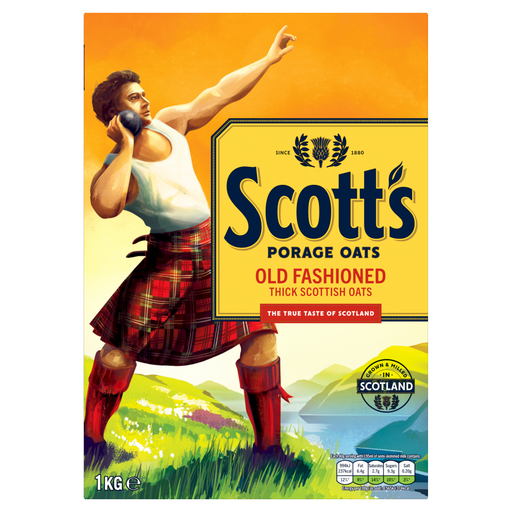 No image available
A traditional plain oat choice for cooked porridge.
Ingredients: 100% rolled oats. Dry sugars: 1.1g per 100g. The listing gives 4–5-minute stovetop and 2–3-minute microwave directions, and notes possible wheat and barley presence.
Usually not. Under UK nutrition-claim rules, a sugar-free product contains no more than 0.5g sugars per 100g or 100ml; the plain oat examples discussed here list around 0.9g to 1.1g per 100g. Where the ingredient list contains only oats, they are better described as plain oats with no added sugar rather than sugar-free oats.
Check the exact product’s ingredients first. A plain option should list oats or wholegrain oat flakes without sugar, syrup, honey or sweetened milk powder; then compare “of which sugars” per 100g on the dry product rather than relying only on a prepared-with-milk serving.
Do not assume so. Coeliac UK says standard oats can be contaminated through production alongside wheat, barley and rye, and terms such as 100% oats, pure oats and organic do not establish gluten-free status. Choose oats explicitly labelled gluten free when that requirement applies.
No: choose breakfast oats according to the breakfast goal, such as avoiding added sugar or meeting a gluten-free requirement. NHS guidance notes that sweet-and-sour dishes, sweet-chilli dishes and some curry sauces can be high in sugar, so check the fakeaway meal’s sauces and toppings separately.