What to check before buying
Check the ingredient list first, then use the nutrition and allergen information to decide whether the format fits the breakfast routine.
| Priority |
What to check |
Your needs |
| Added sugars |
Look for plain, unflavoured oats and a short ingredient list. Check sugars per 100g if “sugar-free” wording matters; UK legislation sets a maximum of 0.5g sugars per 100g or 100ml for that claim. |
I want a plain oat base without honey, golden syrup or sweetened flavouring, so I can decide what to add at serving. |
| Fibre suitability |
Check whether oats fit the current dietary plan. The NHS identifies oats as a fibre source, but porridge may not suit a clinically advised low-fibre diet. |
I need a breakfast that fits existing dietary guidance rather than relying on a general fibre message. |
| Gluten and allergens |
For a gluten-free requirement, choose a pack explicitly labelled gluten-free. Read the current allergen and may-contain statement on every pack. |
I need confidence that the oats meet a gluten-free requirement, rather than assuming a plain or organic pack is suitable. |
| Preparation format |
Check the stated cooking method and timing. Compare bulk oats, quick-cook oats and portioned sachets by the preparation routine and packaging format that suit the household. |
I want a warm breakfast that is manageable to prepare, whether that means a quick microwave option or a larger everyday pack. |
Joybuy porridge oat options
Joybuy product options for plain porridge breakfasts where reducing added free sugars is a priority, including a gluten-free choice and microwave-friendly formats.
 No image available
Morrisons Free From Gluten Free Oats 1kg
A plain option for breakfasts where a gluten-free oat designation is required.
The listed ingredient is gluten-free oat flakes (100%), and the stated sugars value is 1.1g per 100g. This supports a plain no-added-sugar approach, not a legal sugar-free claim.
Check the pack instructions if microwave preparation speed is important.
Joybuy
 No image available
Quaker Oat So Simple Big Bowl Original 6 Pack 231g
A portioned plain-oat option for a quick warm breakfast routine.
The listing names Quaker wholegrain rolled oats as the ingredient and gives a 2½-minute microwave method. Its stated sugars value is 1.0g per 100g, so it is not a legal sugar-free product.
Verify current gluten-free labelling and allergen information if that requirement applies.
Joybuy
 No image available
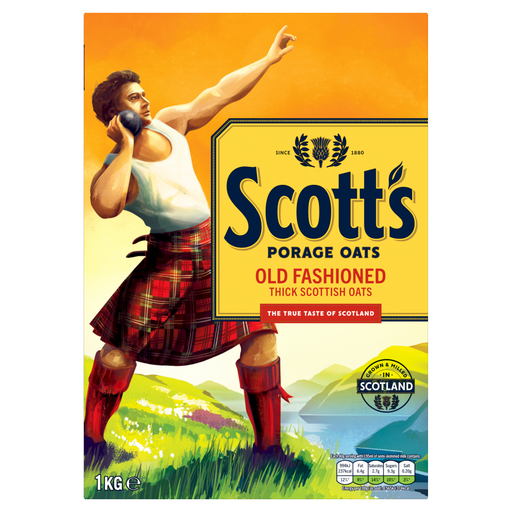
Scotts Porage Oats Old Fashioned Porridge Oats 1kg
A plain rolled-oat breakfast base with stated hob and microwave preparation routes.
The listing gives 100% rolled oats as the ingredient and a 2–3 minute microwave method. It states 1.1g sugars per 100g and may contain wheat and barley.
This is not appropriate where an explicitly gluten-free oat product is required.
Joybuy
 No image available
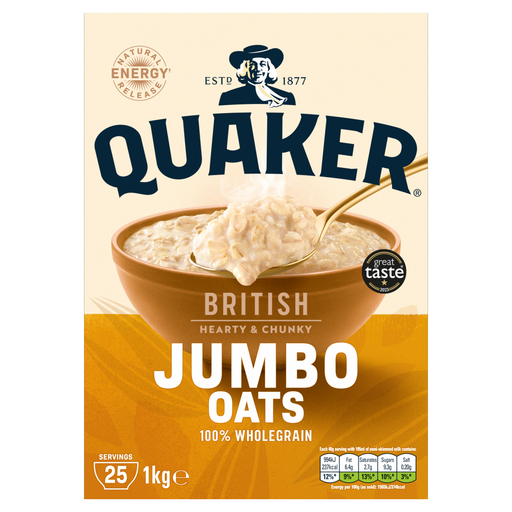
Quaker Jumbo Rolled Oats 1kg
A plain jumbo-oat choice for everyday porridge or overnight oats.
The stated ingredient is 100% wholegrain oat flakes and the nutrition table lists 1.0g sugars per 100g. The listing also says it may contain traces of wheat.
Check the pack directions if rapid preparation is needed.
Joybuy
 No image available
Flahavan's Organic Porridge Oats 1kg
A plain organic oat option for regular porridge breakfasts.
The listing states 100% organic wholegrain oat flakes and 0.9g sugars per 100g. It identifies oats as containing gluten.
Do not use organic or 100% oats wording as a substitute for gluten-free designation.
Joybuy
Frequently asked questions
Are plain porridge oats actually sugar-free?
Not necessarily. Under UK nutrition-claim rules published on legislation.gov.uk, a food may be called sugar-free only when it contains no more than 0.5g sugars per 100g or 100ml. Plain oats can contain naturally occurring sugars, so “no added sugar” or “100% oats” is often the more accurate shopping criterion.
What should I choose when reducing sugar at breakfast?
Choose plain oats without sweetened flavouring, then read both the ingredient list and nutrition panel. Diabetes UK advises avoiding porridge products with added free sugars such as honey and golden syrup when this is the dietary aim.
Do I need gluten-free oats for coeliac disease?
Choose oats explicitly labelled gluten-free rather than relying on “organic”, “pure” or “100% oats”. Coeliac UK explains that standard oats can be contaminated with wheat, barley or rye; discuss ongoing symptoms with a health professional.
Are higher-fibre oats always the right choice for an older shopper?
No. The NHS identifies oats as a fibre source in a general balanced diet, but porridge may be unsuitable when a low-fibre diet has been medically advised. Follow the clinician or dietitian’s plan in that situation.
What if an older person is losing weight without trying?
Seek medical advice rather than automatically making sugar reduction or high-fibre volume the only priority. Derbyshire County Council’s guide for older people experiencing unintentional weight loss notes that an enriched, higher-calorie dietary approach may be needed after an underlying cause has been considered.


