What matters when choosing?
Start with whether the older person is eating enough. Then compare sauces on a consistent label basis and consider the complete meal, rather than treating a front-label claim as the answer.
| Concern |
What to check |
Who this matters to |
| Added sugars |
Read the no-added-sugar wording, ingredients and total sugars per 100g and per intended serving. Naturally occurring tomato sugars can remain. |
If I eat adequately but want a familiar pasta meal with less added sugar, the sauce claim helps me narrow my choices without assuming the product is sugar-free. About 31% of consumers put reducing added sugars first. |
| Enough food and protein |
Consider appetite, unintended weight loss and the energy and protein provided by the complete meal. Seek individual advice if intake is a concern. |
When appetite is poor or weight is falling, I need a meal I can eat that provides adequate nourishment, not simply a reduced-sugar sauce. For about 39% of consumers, sufficient intake is the primary concern. |
| Salt, ingredients and allergens |
Compare salt and sugars on the same per-100g basis; read the ingredients and allergen declaration on the pack. |
If an ingredient restriction affects the meal, I cannot choose from a sugar claim alone; I need to check the particular recipe. About 15% of consumers primarily need this broader label comparison. |
| Preparation and portions |
Check the cooking instructions, pack size and stated servings against the amount likely to be eaten. |
For a small household or a carer preparing a quick meal, manageable cooking steps and an acceptable portion can determine whether the meal gets eaten. Ease and acceptance come first for about 15% of consumers. |
Brands and retailers to consider
These names offer different starting points for comparing pasta and sauces; the relevant claim belongs to the individual product, not to every item from a brand or retailer.
Dolmio
A branded tomato-sauce route for shoppers seeking a no-added-sugar pasta sauce.
- Dolmio describes its no-added-sugar sauce as a blend of tomatoes, herbs and spices.
- Compare the particular pack's total sugars, salt, ingredients and serving size rather than treating the claim as a judgment on the full meal.
Tesco
An own-label route: Tesco Groceries lists a No Added Sugar Bolognese Pasta Sauce 500g.
- The named product gives shoppers a specific sauce to look for when comparing no-added-sugar options.
- Use its current pack to compare sugars, salt and allergens with another sauce; the product name alone does not supply those figures.
Sainsbury's
A retail route for a branded option: Sainsbury's lists Loyd Grossman No Added Sugar Bolognese Pasta Sauce 350g.
- The listing states that the sauce contains naturally occurring sugars, clarifying why “no added sugar” need not mean no total sugars.
- This is a Loyd Grossman product sold by Sainsbury's, not a Sainsbury's own-label sauce.
Asda
A retailer to check when comparing pasta-sauce recipes and pack formats.
- Confirm any no-added-sugar wording and compare the current product's nutrition panel and ingredients before choosing it.
M&S
A route for comparing pasta, sauces and prepared-meal portions.
- Check an individual sauce's label rather than assuming the wider food range includes a suitable no-added-sugar option.
Barilla
A brand to consider for the pasta component, separately from the sauce choice.
- A Joybuy listing describes Barilla spaghetti made with durum wheat and water.
- Choosing that pasta does not establish whether a separately selected sauce meets a reduced-sugar goal.
A Joybuy pasta-sauce option
This no-added-sugar pasta bake sauce is relevant when reducing added sugar is the main sauce-selection goal. Judge its place in an older person's meal alongside the portion eaten and the meal's overall energy and protein.
 No image available
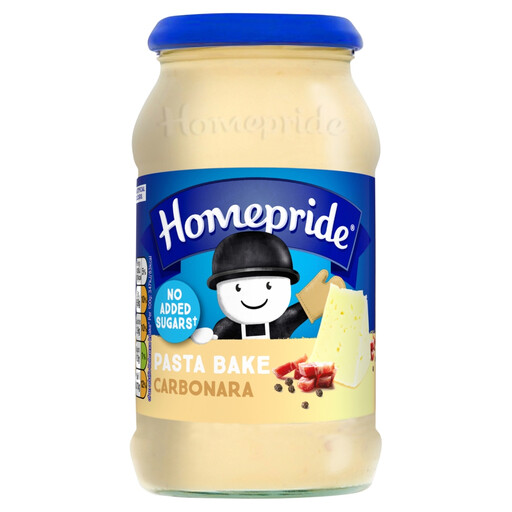
Homepride No Added Sugar Carbonara Pasta Bake 485g
A pasta bake sauce to consider when a no-added-sugar option fits the meal plan. The pack is 485g; check its total sugars and salt against the intended serving, and read the current allergen declaration. The sauce alone does not establish whether the complete meal provides enough energy or protein.
View on Joybuy
Questions about reduced-sugar pasta meals
Does “no added sugar” mean a pasta sauce contains no sugar?
No. Naturally occurring sugars can remain and appear in the total-sugars figure. Sainsbury's listing for Loyd Grossman No Added Sugar Bolognese Pasta Sauce, for example, also states that it contains naturally occurring sugars; compare the nutrition panel rather than relying on the front-label phrase.
Should every older person choose a reduced-sugar pasta sauce?
No. If the person is eating adequately and wants to reduce added sugars, it can be an appropriate sauce to compare. If appetite is poor or weight is falling, NHS guidance on malnutrition and food-first advice from Cornwall and Isles of Scilly Integrated Care Board make adequate energy, protein and overall intake a more immediate consideration.
What else should I compare on pasta-sauce labels?
Compare salt and total sugars on the same per-100g basis, then consider the amount likely to be eaten. Read the ingredients and allergen declaration too; GOV.UK notes that front-of-pack traffic lights, where present, help with quick comparisons but do not replace the full label.
When should appetite or weight concerns take priority over the sugar claim?
Unintended weight loss, a marked loss of appetite or concern about malnutrition calls for individual advice rather than a blanket switch to reduced-sugar foods. The NHS identifies adults aged 65 and over as particularly at risk of malnutrition; a GP can assess the concern and consider a dietitian referral.
Is a no-added-sugar sauce automatically suitable for someone with diabetes?
No. The claim alone does not show how the sauce and complete pasta meal fit an individual's diabetes plan. If dietary changes made because of a small appetite affect blood glucose beyond the person's target range, Cornwall and Isles of Scilly Integrated Care Board advises contacting a GP or diabetes nurse.


