Hosts avoiding added sugar
You want a sauce with a clear no-added-sugar claim while recognising that tomatoes can still contribute sugars. Compare the nutrition panel and ingredients of the exact product you plan to serve.


Choose a ready-made no-added-sugar sauce if you want less preparation, but use the exact pack’s serving guidance to work out how much your dinner party needs. Choose passata if you would rather control the added ingredients and seasoning yourself, allowing time to make the sauce. Neither route makes the finished dish sugar-free: compare sugars per 100g and check every ingredient against your guests’ requirements.
You want a sauce with a clear no-added-sugar claim while recognising that tomatoes can still contribute sugars. Compare the nutrition panel and ingredients of the exact product you plan to serve.
You need enough sauce for every guest. The pack’s stated servings matter alongside your planned additions, such as mince, pulses or vegetables.
You would rather choose the seasoning and added ingredients yourself. Napolina describes its passata as a base for pasta sauce, though the finished recipe still needs checking ingredient by ingredient.
Decide whether a ready-made sauce or a passata-based recipe fits your preparation plans, then check the exact products and ingredients you will use.
Choose it when: You want a labelled sauce with less preparation before guests arrive.
Allow for: Smaller stated serving yields and less control over the ingredients already in the jar.
Choose it when: You want to season and build the sauce around your menu.
Allow for: Preparation time and checks on every ingredient added to the passata.
| Concern | What to check | Who this matters to |
|---|---|---|
| Added sugar and total sugars | Check the exact no-added-sugar claim and compare the sugars figure per 100g on products you are considering. | If avoiding added sugar is my starting point, I still want to know how much sugar the tomato sauce contains. About 40% of consumers would make that distinction their primary concern. |
| Enough sauce for guests | Use the exact pack’s stated servings and account for any mince, pulses or vegetables you plan to add. Sainsbury's lists the Loyd Grossman 350g no-added-sugar Bolognese as serving 2–3. | When I am cooking for a table of guests, running short of sauce matters more than choosing a particular jar size. Roughly 30% of consumers would put serving enough people first. |
| Ingredients and allergens | Ask about guests’ requirements, then check the current sauce label and every addition to the meal. | If a guest has an allergy or dietary restriction, I need to assess the whole dish rather than rely on the sauce name. Around 20% of consumers would make ingredient suitability their main priority. |
| Preparation | Check whether the sauce is ready to heat or needs cooking with other ingredients, and allow for the stated method. | With other dishes to prepare, I may want a sauce that needs less work close to serving time. About 10% of consumers would put that convenience first. |
A tomato sauce can contain naturally occurring sugars even when it has no added sugar. The front-of-pack claim does not tell you the total sugars value.
Compare the sugars figure per 100g and read the ingredients of the exact sauce you intend to buy.
Serving yields vary. Sainsbury's states that the Loyd Grossman 350g no-added-sugar Bolognese serves 2–3, while Dolmio describes its no-added-sugar pasta sauce as a meal for two.
For eight guests using the stated Loyd Grossman yield, allow three jars at three servings each or four at two servings each, adjusting for your portions and other ingredients.
A sauce described as suitable for vegetarians is not thereby suitable for someone with an allergy. Other components of the meal also affect suitability.
Ask guests about their requirements and check the current sauce pack, pasta, toppings and any added protein separately.
Passata is a base ingredient; additions determine the ingredients and sugars in the finished sauce.
Check the full recipe, including prepared add-ins, before describing the dish as having no added sugar.
Dolmio UK describes a no-added-sugar tomato pasta sauce made with herbs and spices as a meal for two.
Sainsbury's lists a 350g no-added-sugar Bolognese sauce with a stated yield of 2–3 servings.
Napolina describes its passata as a base ingredient for pasta sauce, rather than a ready-made no-added-sugar sauce.
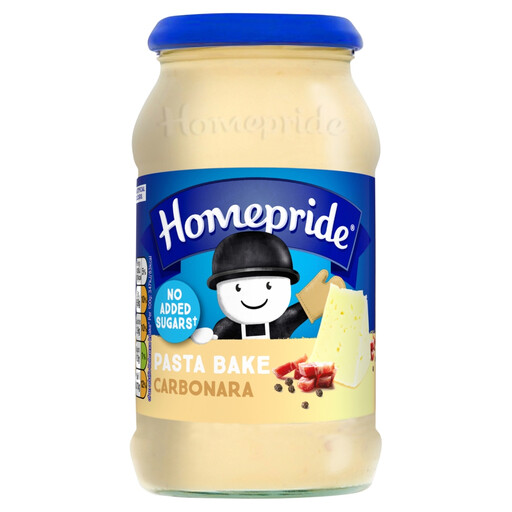
This ready-made no-added-sugar pasta-bake sauce is a choice for hosts planning a baked pasta dish rather than a stirred-through tomato sauce or a passata-based recipe.
 No image available
Consider this 485g sauce if your dinner-party main is a pasta bake and you want a product labelled no added sugar. Check the exact pack’s cooking method and serving yield before deciding how many you need. The product information names bacon and flags barley, celery, eggs and milk, so check the current label against your guests’ requirements.
No. A no-added-sugar sauce can still contain naturally occurring sugars, as the Sainsbury's listing for Loyd Grossman no-added-sugar Bolognese notes. Read the nutrition panel for the sugars value per 100g if you are comparing sauces.
For the Loyd Grossman 350g no-added-sugar Bolognese listed by Sainsbury's, the stated yield of 2–3 servings per jar means three jars at three servings each or four at two servings each. Use the serving guidance on your exact sauce and consider the portions and other ingredients in your dish.
Read the ingredient and allergen information on the exact current pack, then check the pasta and every topping or ingredient added to the sauce. Do not assume that another flavour from the same brand has the same ingredients.