Top-up shoppers avoiding added sugar
If you are picking up one or two tins, distinguish a no-added-sugar claim from the total sugars declared on the nutrition panel.


For a small top-up shop, compare tinned soups by their declared sugars and salt per 100g, then check the stated serving. A no-added-sugar claim may suit an aim to avoid added sweetening, but it does not mean the soup contains no sugar; check the total sugars, ingredients and allergens on the exact tin before choosing.
If you are picking up one or two tins, distinguish a no-added-sugar claim from the total sugars declared on the nutrition panel.
If both figures matter to your choice, compare the same quantity of soup and check how much the stated serving contains.
If you need a quick meal that meets particular dietary requirements, check the exact product’s allergens, dietary information and preparation directions.
Start with the sugar claim and nutrition panel, then check the portion, preparation directions and ingredients before putting a tin in your basket.
| Priority | What to check | Your needs |
|---|---|---|
| Sugars | Read any no-added-sugar claim alongside total sugars per 100g. Check the ingredients and the stated serving. | I want to avoid added sweetening, but I also need to know the soup’s total sugar content. |
| Salt | Compare salt per 100g alongside sugars, then check the amount in the stated serving. Traffic-light labelling, where present, can help you compare tins at a glance. | A lower-sugar choice still needs to fit the amount of salt I want in a bowl. |
| Preparation | Check whether the soup is ready to heat or condensed. For condensed soup, follow the preparation directions and check the resulting serving. | I may need a quick bowl today, rather than a condensed soup to prepare or use in cooking. |
| Ingredients | Read the current pack’s allergen information and any vegetarian or vegan statement. Do not assume suitability from the flavour name. | I need the particular tin I buy to meet my dietary requirements. |
The claim does not tell you that total sugars are zero; ingredients can contain sugars.
Use the claim to narrow your choice, then compare the declared total sugars per 100g and per stated serving.
Salt can differ between soups. In its 2026 assessment of 481 chilled and ambient soups, Action on Salt reported that 23% exceeded the Government’s voluntary maximum salt target.
Compare the salt figures alongside sugars, using the same per-100g basis before checking the portion.
A low-fat label addresses a different characteristic and does not establish the soup’s sugar content.
If sugars are your priority, read their declared value directly; check fat and other figures separately if they matter to you.
A condensed soup needs preparation, so its pack size is not a direct comparison with a ready-to-heat tin or a prepared bowl.
Check the directions, resulting serving, ingredients and allergens before choosing it for a quick meal or recipe.
These ranges offer different starting points, but a brand name or range label cannot replace the details on the tin you choose.
Tesco lists Heinz No Added Sugar Cream of Tomato Soup alongside other Heinz soup options.
Tesco lists own-label tomato and lentil-and-vegetable tins among its soup options.
Tesco lists Campbell’s condensed cream of tomato, mushroom and chicken soups in 295g packs.
M&S lists tinned soups with vegetarian and vegan shopping filters.
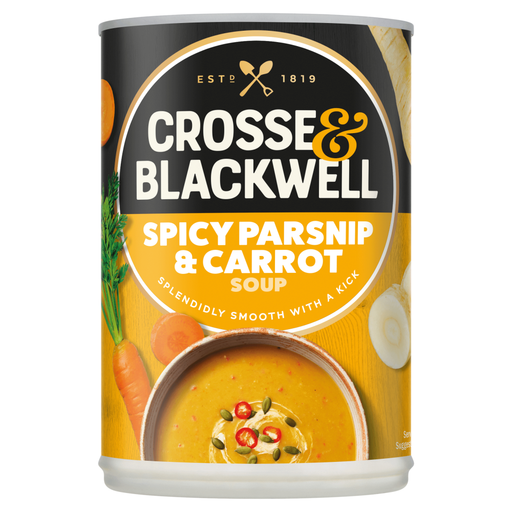
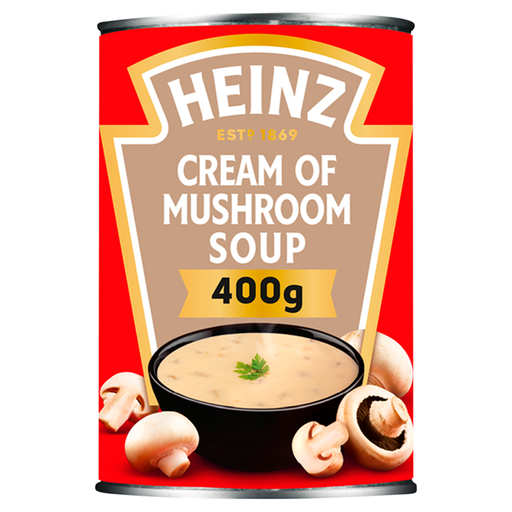
These two 400g tins are options for comparing soup labels during a top-up shop. Check the current pack for a reduced-sugar claim if that is essential to your choice.
 No image available
For a single-tin top-up, compare the sugars and salt on the current pack per 100g, then check its serving information. Check the ingredients if a reduced-sugar claim is important to you.
 No image available
Check the current tin’s sugars and salt per 100g and its stated serving before deciding whether it fits your aim. Its product information identifies milk and wheat allergens; confirm the ingredients and allergen declaration on the pack.
No. A soup can contain sugars from its ingredients even when it carries a no-added-sugar claim. Read the declared total sugars to understand what is in the product.
Compare sugars and salt per 100g first so tins are on the same basis. Then check the stated portion against the amount you expect to serve.
No. Compare the salt declaration alongside sugars, both per 100g and for the serving you plan to have. A sugar claim alone does not describe a soup’s salt content.
Read the ingredients, allergen declaration and any dietary suitability statement on the exact pack. M&S advises shoppers that product information can change, so do not rely solely on an online listing.