What should an office check?
Start with the prepared drink, then check whether the bottle and its ingredients work for a shared space. Figures for concentrate and diluted squash are not directly comparable.
| Priority |
What to check |
Your needs |
| Sugars and energy |
Read the “of which sugars” and energy values for a stated amount of diluted drink. Follow each bottle’s dilution instructions before comparing figures. |
I want to know what is in the glass, not just whether the concentrate says “no added sugar”. |
| Ingredients |
Check the current sweetener list and any allergen or phenylalanine notice. The researched Robinsons Orange, Vimto and Ribena Blackcurrant products list different ingredients. |
If several people share the bottle, I need its label available so each person can check whether it suits them. |
| Shared preparation |
Compare bottle size, stated servings, dilution ratio and post-opening instructions. Sainsbury’s lists 40 servings and a 1:9 ratio for Robinsons 1L Double Strength Orange. |
Our kitchen needs a bottle people can prepare consistently and use within its storage guidance. |
Brand and product-line references
These examples show why the exact flavour and format matter more than a brand name alone; check the current pack before buying.
Robinsons
The researched Orange range includes single-strength and double-strength no-added-sugar bottles with different preparation instructions.
- Sainsbury’s lists 40 servings from the 1L Double Strength Orange bottle at a 1:9 dilution.
- Check the exact variant’s sweeteners and sulphite information; do not apply one Orange bottle’s nutrition figures to another strength.
Vimto
The researched No Added Sugar mixed-fruit squash comes in a 2L bottle.
- Tesco lists 5kcal and 0.8g sugars per 250ml prepared serving for that 2L product.
- Its listed ingredients include barley, sucralose and acesulfame K; check the label before sharing it.
Ribena
The researched Blackcurrant No Added Sugar squash is an option for offices choosing that flavour.
- Its preparation instructions specify 50ml of squash with at least four parts water.
- Sainsbury’s lists aspartame, sodium bisulphite and a phenylalanine notice for the researched product.
M&S
M&S describes its researched Orange Squash as double strength, made with 20% orange from concentrate and no added sugar.
- M&S states that this product has no artificial colours or flavourings.
- Check its sucralose and sulphite information. Compare nutrition only after confirming that it uses the same prepared-drink basis as another bottle.
Joybuy squash options
These no-added-sugar fruit squash options offer different flavours and pack formats for an office drinks area. Check each current label for the preparation and ingredient details that matter to your team.
 No image available
Ribena No Added Sugar Blackcurrant Squash 1.5L
A blackcurrant choice for a shared drinks area, with instructions to mix 50ml concentrate with at least four parts water. Its nutrition figures are for undiluted concentrate, so use a prepared-drink basis for comparisons. Check the current label for its sweeteners and sodium bisulphite information; the product guidance says to refrigerate after opening and use within four weeks.
View on Joybuy
 No image available
Robinsons No Added Sugar Orange Squash 1L
An orange squash with nutrition stated for a diluted drink: Sainsbury’s lists 3kcal and 0g sugars per 250ml serving for the 1L no-added-sugar product. Check this bottle’s dilution instructions for shared preparation and its current sweetener and sulphite information. The product guidance advises refrigeration and use within four weeks of opening.
View on Joybuy
 No image available
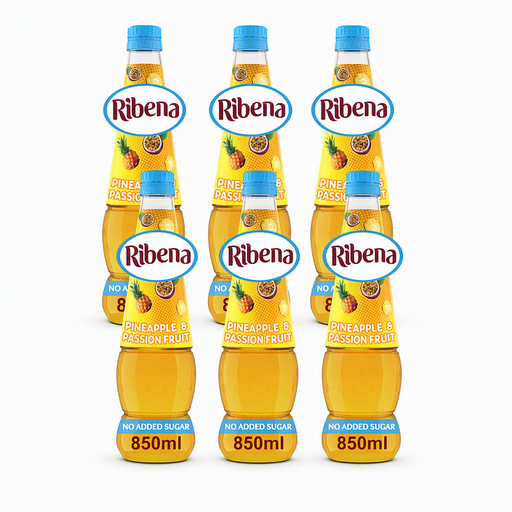
Ribena No Added Sugar Pineapple and Passion Fruit Squash, 6 x 850ml
The six-bottle pack offers a tropical-fruit flavour for a shared drinks area. The product description says to dilute to taste and gives nutrition for undiluted squash, so check the prepared drink before comparing it with other flavours. Its guidance says to refrigerate an opened bottle and use it within 21 days; check the current label for aspartame, acesulfame K and sulphite information.
View on Joybuy
 No image available
Robinsons No Added Sugar Summer Fruits Squash 1L
A 1L Summer Fruits option if the team wants a different flavour. Check the current pack for its dilution instructions, sugars in the prepared drink and post-opening guidance before making it the shared bottle; the supplied nutrition figures have conflicting energy units. Review its sweetener and sulphite information as well.
View on Joybuy
Common questions
Does “no added sugar” mean squash is sugar-free?
No. Check total sugars in the drink prepared according to the label. Sainsbury’s lists 0g sugars per 250ml diluted serving for Robinsons Orange No Added Sugar Squash 1L, whereas Tesco lists 0.8g per 250ml prepared serving for Vimto No Added Sugar Squash 2L.
Does an office need to provide squash?
Squash is optional, not a replacement for drinking water. Regulation 22 of the UK Workplace (Health, Safety and Welfare) Regulations 1992 requires an adequate supply of wholesome drinking water for people at work.
How can a buyer check whether a squash suits a shared kitchen?
Read the current pack’s ingredients and warnings, and keep it available for colleagues. The researched Vimto product lists barley, while the researched Ribena Blackcurrant product lists aspartame and sodium bisulphite and carries a phenylalanine notice; do not assume another flavour has the same ingredients.
How should staff dilute squash consistently?
Use the instructions on the particular bottle and put them where staff prepare drinks. Sainsbury’s gives a ratio of one part squash to nine parts water for Robinsons 1L Double Strength Orange; that ratio should not be applied to other strengths or flavours without checking their labels.
Can nutrition figures for two squash bottles be compared directly?
Only when the figures describe comparable amounts of prepared drink. A value per 100ml of undiluted concentrate is not the same basis as one per 250ml diluted serving; follow each bottle’s preparation directions before comparing sugars or energy.


