Families changing their breakfast drinks
If the household wants a flavoured drink without added sugars, the useful comparison is the squash as served, not just the claim on the bottle. Check the dilution directions before comparing nutrition panels.


Choose no-added-sugar squash if your household wants a flavoured drink without added sugars alongside weekend breakfast. Compare sugars in the prepared drink, fruit-juice content, sweeteners and dilution directions: Waitrose lists negligible sugars per diluted serving for Robinsons Orange, while Sainsbury’s lists 2.4 g per prepared serving for its 50% juice Orange High Juice squash. Neither the front-of-pack claim nor bottle size tells you all of that.
If the household wants a flavoured drink without added sugars, the useful comparison is the squash as served, not just the claim on the bottle. Check the dilution directions before comparing nutrition panels.
Check the selected bottle’s ingredients and child-specific preparation advice. Waitrose’s Robinsons Orange listing calls for one part concentrate to four parts water and advises adding extra water for toddlers.
A higher fruit-juice content and a smaller sugar figure are different priorities. Sainsbury’s lists 50% fruit juice and 2.4 g sugars per prepared 250 ml serving for its Orange High Juice squash; compare that serving figure with alternatives mixed as directed.
Start with the prepared glass, then check whether its ingredients and the amount of concentrate needed suit your household.
| Priority | What to check | Your needs |
|---|---|---|
| Label meaning | Read the sugars figure for the prepared drink and the ingredient list. “No added sugar” does not mean sugar-free or sweetener-free. | I want to know what is in the glass, not rely on the claim on the front of the bottle. |
| Prepared-serving nutrition | Compare the same serving size after dilution. Waitrose lists negligible sugars per diluted 250 ml serving for Robinsons Orange and 0.8 g for Vimto; Sainsbury’s lists 2.4 g per prepared 250 ml serving for Orange High Juice. | For breakfast, I would compare the drink as I serve it rather than judge by concentrate or bottle size. |
| Fruit and ingredients | Check the stated juice percentage, named sweeteners and allergen information on the current pack. Sainsbury’s lists 50% fruit juice for its Orange High Juice squash. | Fruit-juice content matters to me, but I also want to check the sugars and ingredients in the finished drink. |
| Dilution | Follow the selected bottle’s concentrate-to-water ratio and any advice for toddlers. The Waitrose listings for Robinsons Orange and Vimto specify one part concentrate to four parts water and advise extra water for toddlers. | When serving children, I want clear mixing directions rather than estimating the amount of concentrate. |
| Bottle size | Check how many prepared servings the bottle makes and its storage instructions after opening. Sainsbury’s Ribena Blackcurrant listing says to refrigerate it after opening and use it within 21 days. | A larger bottle only suits us if we expect to finish it within its stated use-up period. |
Fruit juice can contribute sugars, and the Waitrose listings for Robinsons Orange and Vimto name sweeteners in their ingredients.
Check both the prepared-drink nutrition panel and ingredient list if either sugars or a particular sweetener affects your choice.
Concentrate strength and mixing directions affect what ends up in a serving. Waitrose and Sainsbury’s list different sugar figures for their prepared 250 ml squash servings.
Mix each product as directed and compare nutrition figures on the same prepared-serving basis.
Post-opening instructions affect whether a bottle size works for an occasional weekend drink. Sainsbury’s Ribena Blackcurrant listing specifies refrigeration and use within 21 days of opening.
Read the selected pack’s storage and use-up directions before deciding on a larger format.
An unfinished bottle may go to waste if the household cannot use it within the stated period.
These references help distinguish product types; nutrition and ingredients should still be checked for the particular bottle.
Its no-added-sugar squash includes Orange and double-strength fruit flavours.
Its Orange High Juice no-added-sugar squash offers a different fruit-juice profile from the Robinsons Orange example.
Its no-added-sugar squash category includes branded products and Waitrose own-label options.
These Joybuy options cover Robinsons orange and summer-fruit squash, plus Ribena blackcurrant and pineapple-and-passion-fruit flavours. Use the prepared-drink label to compare them for breakfast, particularly where dilution directions differ.
 No image available
For a flavoured breakfast drink, Waitrose lists negligible sugars and 3 kcal per diluted 250 ml serving for this Robinsons Orange squash, mixed one part concentrate to four parts water.
Its listed ingredients include acesulfame K, sucralose and sodium metabisulphite. Check the pack’s child-serving directions before preparing it for young children.
 No image available
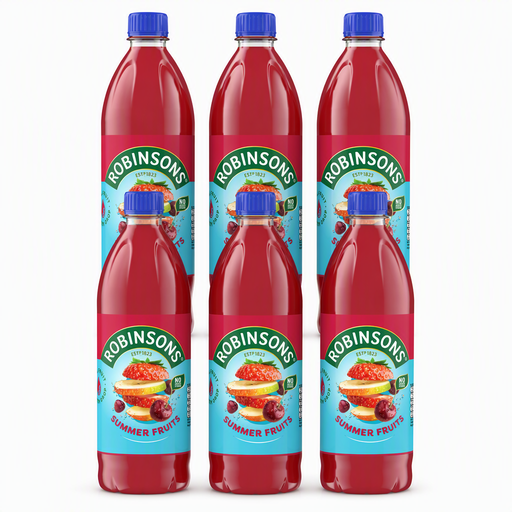
The six-bottle format may suit a household that uses summer-fruit squash regularly rather than only at an occasional breakfast.
Before comparing its sugar figure with other flavours, check the current pack’s nutrition for the prepared drink, dilution directions and instructions after opening.
 No image available
This 1.5L blackcurrant option is worth considering if that is the flavour your household wants with breakfast.
Check the pack’s dilution and child-serving directions, then use nutrition figures for the prepared drink when comparing it with another squash.
 No image available
The single 1L bottle is a summer-fruit alternative to the six-bottle Robinsons format if you want to start with fewer bottles.
Check its own prepared-serving sugars, dilution directions and ingredient list rather than applying the Orange flavour’s figures to it.
 No image available
The 850ml pineapple-and-passion-fruit flavour offers a different breakfast drink choice from orange, summer fruits or blackcurrant.
Read its current mixing directions and prepared-drink nutrition before comparing sugars with those other flavours; check the ingredient and allergen statements too.
No. A no-added-sugar squash can still contain sugars from fruit juice. For example, Waitrose lists 0.8 g sugars per diluted 250 ml serving for Vimto No Added Sugar; read the prepared-serving panel for the bottle you choose.
Yes. The Waitrose listings for Robinsons Orange and Vimto name sweeteners, as does Sainsbury’s Orange High Juice listing. Check the current ingredient list if your household prefers to avoid a particular one.
Follow the directions on the selected bottle. Waitrose lists one part concentrate to four parts water for Robinsons Orange and Vimto, with extra water advised for toddlers; another product may have different instructions.
No. Sainsbury’s describes its Orange High Juice squash as a concentrated drink with 50% fruit juice, to be diluted before serving. Its prepared 250 ml serving lists 2.4 g sugars, so compare it as a drink rather than treating the juice percentage as a whole-fruit serving.
Check sugars for the prepared serving, ingredients and allergen information, dilution directions, and storage instructions after opening. If serving young children, read any age-specific or toddler advice on that particular pack.