Adults swapping sugary drinks
If you want a flavoured no-added-sugar option, NHS guidance includes diet, sugar-free and no-added-sugar drinks as alternatives for adults. The bottle’s dilution directions help you judge how many drinks it will make.


For an adult replacing sugary drinks, NHS guidance includes no-added-sugar drinks as an option. When shopping on a budget, compare stated servings and dilution directions rather than judging by bottle size alone, then check the ingredients and nutrition information for the prepared drink.
If you want a flavoured no-added-sugar option, NHS guidance includes diet, sugar-free and no-added-sugar drinks as alternatives for adults. The bottle’s dilution directions help you judge how many drinks it will make.
Stated yields differ between concentrates. Waitrose lists 20 servings for Robinsons single-strength orange squash and 60 for its Essential double-strength summer-fruits squash; check the serving size and dilution directions when comparing bottles.
A no-added-sugar claim does not describe every ingredient. Read the current bottle if you avoid particular sweeteners or need to check allergens, including sulphites where listed.
Start with the drink you intend to prepare, then check the bottle’s stated yield and its ingredients.
| Priority | What to check | Your needs |
|---|---|---|
| Prepared yield | Check the stated serving count, serving size and dilution ratio. Waitrose lists 20 servings at 1:4 for Robinsons single-strength orange squash and 60 at 1:9 for Essential double-strength summer fruits; the bottles are different sizes, so compare their serving definitions too. | I use squash regularly and want to know how many drinks the bottle is intended to make. |
| Added sugar | Check the exact variant’s no-added-sugar claim and its nutrition information for the diluted drink. Follow the bottle’s dilution directions. | I want a flavoured alternative to sugary drinks without assuming that every squash has the same formulation. |
| Ingredients | Read the current ingredient and allergen statements, including any named sweeteners or sulphites. A front-of-pack no-added-sugar claim is not a complete ingredient list. | Some ingredients matter to me, so I need to check this flavour and bottle rather than rely on the brand name. |
| Pack and flavour | Check the bottle or multipack size, flavour and storage directions against how often you will use it. | I want a pack size and flavour my household is likely to use as directed. |
Concentration and stated yield differ: Sainsbury’s lists 40 servings at 1:9 for Robinsons double-strength orange squash, while Waitrose lists 20 at 1:4 for its single-strength orange version.
Check the serving size and dilution instructions on each bottle before comparing how long they may last.
Product formulations can include sweeteners and sodium metabisulphite. The Food Standards Agency identifies sulphites as relevant to people with sensitivity and notes a higher risk of reaction to sulphur dioxide for people with asthma.
Read the current ingredient and allergen information for the exact flavour you choose.
The NHS frames swaps to diet, sugar-free or no-added-sugar drinks as advice for adults and recommends water and milk for children.
If preparing squash for a child, check the product’s age-related and dilution directions rather than relying on its no-added-sugar label.
These examples show why the exact variety matters; a brand name alone does not establish its dilution yield or ingredients.
Robinsons no-added-sugar orange squash appears in single-strength and double-strength formats in the Waitrose and Sainsbury’s listings.
Tesco lists Stockwell & Co no-added-sugar squash in apple and blackcurrant and double-strength orange varieties.
Waitrose lists an Essential no-added-sugar summer-fruits squash with a suggested 1:9 dilution and 60 stated servings.
Sainsbury’s lists own-label and Stamford Street Co squash alongside branded products.
These listed concentrates cover several flavours and pack sizes for shoppers considering a no-added-sugar squash. Use each bottle’s current directions and serving information to judge its fit for regular use.
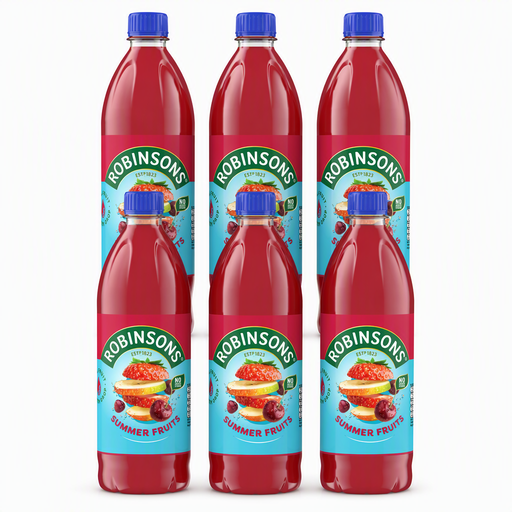 No image available
A six-bottle pack for households considering summer-fruits squash for regular use. Check the current bottle’s preparation directions and ingredients before choosing it.
 No image available
A blackcurrant concentrate for shoppers who want a 1.5L no-added-sugar option. Read the current dilution, nutrition and age-related directions on the pack.
 No image available
An orange-flavoured 1L option. Check its own dilution directions and serving information rather than applying the yield of a different Robinsons orange bottle.
 No image available
A single 1L summer-fruits bottle rather than the six-bottle pack above. Use this bottle’s own preparation and ingredient information when comparing the two pack formats.
 No image available
An 850ml option if pineapple and passion fruit appeal more than orange or blackcurrant. Check the current nutrition panel for the prepared drink and follow the bottle’s dilution directions.
No. The Robinsons and Waitrose product listings describe no-added-sugar squash that contains naturally occurring sugars. Check the nutrition information for the diluted drink if that distinction matters to your choice.
Compare their stated number and size of prepared servings alongside the dilution directions. A 1:4 single-strength bottle and a 1:9 double-strength bottle do not make equivalent amounts of drink simply because their concentrate volumes look similar.
Do not assume it applies in the same way. The NHS discusses swaps to diet, sugar-free and no-added-sugar drinks for adults and recommends water and milk for children; also check any age-related preparation directions on the squash bottle.
Yes. The Waitrose Essential summer-fruits and listed Robinsons orange varieties include sweeteners. Read the current ingredients for the particular flavour and format you intend to buy.
Read the current package’s ingredient and allergen information for the exact product. The listed Waitrose Essential and Robinsons orange examples include sodium metabisulphite, so a no-added-sugar claim alone cannot answer that question.