Families stocking everyday drinks
For households that use squash regularly and need to balance bottle yield with dilution and after-opening instructions.


For a regularly used pantry bottle, compare no-added-sugar squash by its nutrition after dilution, stated number of servings and instructions for use after opening. Robinsons Double Strength Orange is worth considering when stated yield matters; Vimto No Added Sugar offers a mixed-fruit 2L option, while M&S Pink Grapefruit High Juice is an option when its stated 50% fruit content is the priority. Each choice still calls for a check of the exact bottle’s sweeteners, allergens and dilution instructions.
For households that use squash regularly and need to balance bottle yield with dilution and after-opening instructions.
For anyone switching from a standard squash to a no-added-sugar variant and comparing the nutrition of the prepared drink, rather than assuming the variants have the same recipe.
For shoppers who need to inspect sweeteners, sulphites, barley or other declared ingredients on the particular bottle they plan to use.
Start with the prepared drink and the way your household will use the bottle; then compare the exact variants’ ingredients and storage instructions.
| Priority | What to check | Your needs |
|---|---|---|
| Sugars as served | Check the exact variant’s sugars and energy per stated volume of diluted drink. Follow its dilution ratio before comparing figures. | I want to compare what goes into a prepared glass. Tesco Groceries lists Robinsons Orange No Added Sugar at 0g sugars and 3 kcal per 250ml diluted serving; Waitrose & Partners lists Vimto No Added Sugar at 0.3g sugars and 2 kcal per 100ml diluted drink. Those serving volumes differ. |
| Bottle yield | Read the bottle volume, stated servings and dilution ratio together. Waitrose & Partners lists 70 servings at 1:9 for Robinsons Double Strength Orange 1.75L, versus 40 servings at 1:4 for Vimto No Added Sugar 2L. | Pantry space matters to me, but a larger bottle alone does not tell me how many drinks it makes. I also need a format I can use according to its after-opening instructions. |
| Ingredients | Check the current ingredient and allergen declarations for the precise flavour and pack. The cited Robinsons and M&S examples contain sweeteners and declare sulphites; the cited Vimto No Added Sugar information includes barley malt. | Someone in my household may need to avoid a particular ingredient, so a no-added-sugar label is not enough for my decision. |
| Fruit content | Look for a stated fruit percentage on the named product, then assess its diluted nutrition separately. M&S lists 50% pink grapefruit juice from concentrate in Pink Grapefruit High Juice and also lists sucralose and sulphites. | I may prefer a stated fruit content, but I do not want to mistake it for a measure of the prepared drink’s sugars or serving yield. |
| Serving children | Follow the specific product’s age and dilution instructions. M&S says its cited squash products are not suitable for babies; the cited Robinsons Orange information calls for extra water for toddlers. | If I am preparing squash for a child, I need the instructions for that bottle rather than assuming every flavour has the same guidance. |
Waitrose & Partners lists standard Vimto Squash at 4.4g sugars and 18 kcal per 100ml diluted drink, compared with 0.3g sugars and 2 kcal per 100ml for Vimto No Added Sugar. A familiar flavour name does not identify the variant.
Check the full product name and compare the prepared-drink figures at the same stated volume.
Waitrose & Partners states 70 servings from the 1.75L Robinsons Double Strength Orange bottle at 1:9 dilution, but 40 from the 2L Vimto No Added Sugar bottle at 1:4 dilution.
Use the bottle’s stated servings and mixing instructions alongside its volume when planning pantry space.
The cited no-added-sugar recipes contain sweeteners; some also declare sulphites or barley malt. Their ingredient lists are not interchangeable.
Read the current label for the exact flavour, especially when an ingredient or allergen affects your household.
The cited Robinsons Orange and Double Strength Orange labels advise use within about four weeks of opening. An unopened-bottle stocking plan therefore does not answer how quickly an opened bottle will be used.
Choose a format that fits your likely use, note when you open it and follow that bottle’s storage instructions.
These examples illustrate different labelled formats; the details apply to the named products, not every squash made by each brand.
The cited Orange No Added Sugar products offer single-strength and double-strength ways to stock the same flavour.
The cited No Added Sugar mixed-fruit squash is a 2L option labelled for 40 servings at 1:4 dilution.
The cited Summer Fruits and Pink Grapefruit products offer two different stated fruit-content choices with no added sugar.
These Joybuy options are no-added-sugar squash concentrates in single bottles and multipacks. Compare each one on its own stated preparation and storage instructions rather than treating pack size as serving yield.
 No image available
A single bottle for households comparing nutrition per prepared glass: Tesco Groceries lists 0g sugars and 3 kcal per 250ml diluted serving, 20 servings per bottle and 1 part concentrate to 4 parts water. Contains sweeteners and sulphites. The product information says it is not suitable for children under 36 months and advises extra water for toddlers.
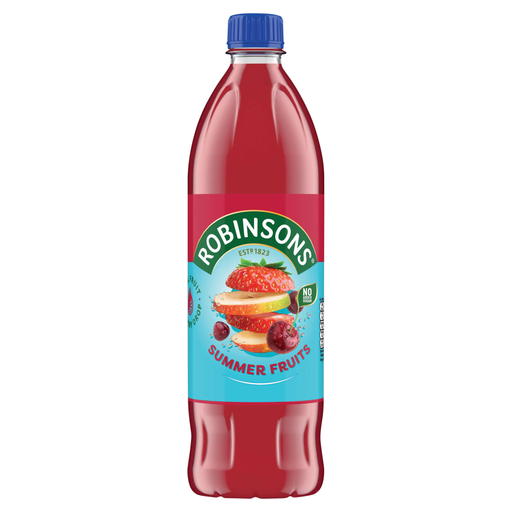 No image available
A 1L summer-fruit option labelled no added sugar, with 10% fruit juice and 2 kcal per 100ml diluted drink in its product information. It contains sucralose, acesulfame K and sulphites. Check the bottle’s dilution and after-opening instructions when planning how quickly to use it; the product information advises extra water for toddlers.
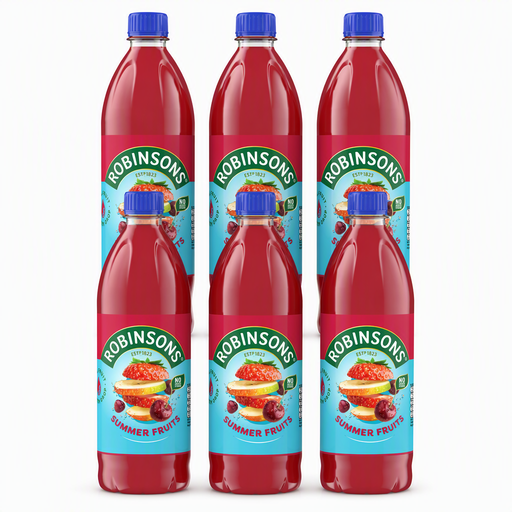 No image available
Six separate 1L bottles suit stocking several unopened concentrates. The product information states 10% fruit juice and 2 kcal per 100ml diluted drink. Its sugar figures for different serving volumes conflict, so check the current bottle before using them for a nutrition comparison. Contains aspartame, saccharin and sulphites, and is identified as a source of phenylalanine.
 No image available
This 1.5L blackcurrant concentrate states 18% blackcurrant juice and instructs you to mix 1 part concentrate with at least 4 parts water. Its product information advises use within four weeks of opening. Check the prepared-drink nutrition on the current label before comparing energy figures: the listed nutrition basis is unclear and conflicts with a calorie-free marketing claim. Contains aspartame, acesulfame K and sodium bisulphite; the product information does not recommend it for children under 3.
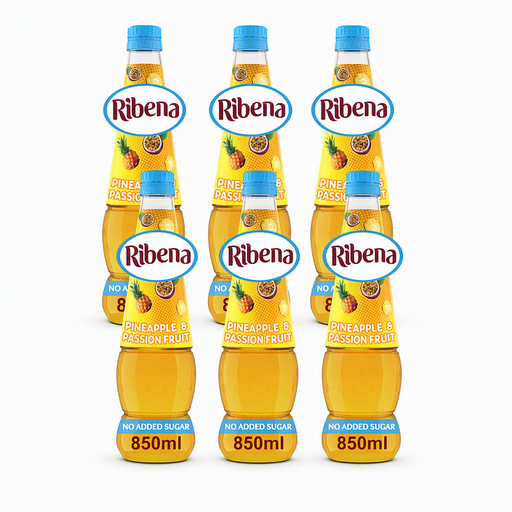 No image available
Six 850ml bottles offer a multipack of pineapple and passion fruit squash. The product information states 10% fruit juice, contains aspartame, acesulfame K and sulphites, and calls for refrigeration and use within 21 days after opening. Its nutrition figures describe undiluted squash, so check the prepared-drink figures before comparing it with diluted-drink labels.
No: check the sugars figure for the prepared drink on the exact variant. Tesco Groceries lists Robinsons Orange No Added Sugar at 0g sugars per 250ml diluted serving, while Waitrose & Partners lists Vimto No Added Sugar at 0.3g per 100ml diluted drink. Those figures also use different serving volumes.
Compare nutrition for the drink prepared according to each bottle’s instructions. Tesco Groceries gives 1 part concentrate to 4 parts water for Robinsons Orange No Added Sugar; Waitrose & Partners gives 1:9 for Robinsons Double Strength Orange and 1:4 for Vimto No Added Sugar. Concentrate volume alone does not tell you the stated number of servings.
Follow the instructions on the exact bottle and choose a format you expect to use within that period. The cited Robinsons Orange products advise use within about four weeks of opening; other products can give different storage instructions.
No. M&S states that its cited Summer Fruits and Pink Grapefruit products are not suitable for babies, while the cited Robinsons Orange information advises extra water for toddlers. Check the age and preparation instructions for the specific bottle rather than applying one product’s guidance to another.
Read the exact product’s ingredient list for the sweetener and any other ingredients your household needs to avoid. The NHS states that aspartame is unsuitable for people with phenylketonuria (PKU); GOV.UK explains the phenylalanine-warning requirement for foods containing aspartame. No-added-sugar squash can also contain ingredients such as sulphites or barley malt, depending on the recipe.