Hosts serving a larger group
Plan from the bottle’s stated number and size of prepared servings, not its volume alone. A more concentrated squash also needs the corresponding amount of water and a way to measure each batch consistently.


For a larger festival gathering, a concentrated squash can cover more drinks if you can follow its dilution instructions and provide enough water: Tesco Groceries lists 100 servings for its Quadruple Strength Tropical at one part squash to 19 parts water, while Waitrose & Partners lists 70 for Robinsons Double Strength Summer Fruits at one part to nine parts water. For a smaller gathering, bottle size and flavour may matter more than the highest stated yield. Whichever format you choose, check the current pack for sugars in the prepared drink, sweeteners and sulphites; “no added sugar” does not mean sugar-free.
The useful format depends on how many drinks you are preparing and who will be using the serving station.
Plan from the bottle’s stated number and size of prepared servings, not its volume alone. A more concentrated squash also needs the corresponding amount of water and a way to measure each batch consistently.
Check the current ingredients and allergen information on every bottle. No-added-sugar squash can contain naturally occurring sugars and sweeteners, and several of the reviewed products list sulphites.
A compact concentrate may be easier to carry than a large bottle, but its dilution and handling instructions still matter. Robinsons Mini, for example, says not to drink it undiluted and is not recommended for use or handling by children under 36 months, according to its listing at Waitrose & Partners.
Start with the number of prepared drinks you need, then check how each squash must be mixed and whether its current label works for the people you are serving.
| Priority | What to check | Your needs |
|---|---|---|
| Prepared-drink yield | Read the stated serving count and serving size together. Tesco Groceries lists 100 servings for its 1.5L Quadruple Strength Tropical; Waitrose & Partners lists 70 for the 1.75L Robinsons Double Strength Summer Fruits. The counts are based on their respective mixing instructions. | I need enough drinks for the group without treating bottle litres as the amount ready to serve. |
| Dilution | Check the squash-to-water ratio and how you will measure it. Tesco Tropical specifies one part squash to 19 parts water; Robinsons Double Strength Summer Fruits specifies one part to nine parts water, according to their retailer listings. | At a self-service table, I want clear instructions so each batch is mixed to the ratio on its bottle. |
| Sugars and sweeteners | Read the ingredients and nutrition information for the drink as prepared, noting its serving size. “No added sugar” is not the same as “no sugars”: Sainsbury’s lists 2.0g sugars per prepared 250ml serving for its Pink Grapefruit High Juice squash. | I want to know what guests will drink once the squash is diluted, including any sweeteners or naturally occurring sugars. |
| Ingredients and serving directions | Check the current pack for sulphites and other allergen declarations. Follow any product-specific instructions for toddlers; the Robinsons Mini listing at Waitrose & Partners warns against drinking it undiluted and against use or handling by children under 36 months. | Guests have different ingredient needs, and I need to keep concentrated bottles where they can be prepared as directed. |
A larger bottle does not necessarily make more drinks. Retailer listings state 100 servings for Tesco Quadruple Strength Tropical 1.5L and 70 for Robinsons Double Strength Summer Fruits 1.75L, using different dilution ratios.
Work from each bottle’s stated serving count and size, then plan the water and serving vessels. Do not assume two products define a serving in the same way.
Fruit ingredients can contribute sugars to a no-added-sugar squash. Sainsbury’s lists 2.0g sugars per prepared 250ml serving for its Pink Grapefruit High Juice product.
Check the prepared-drink nutrition information alongside the ingredient list if sugars or particular sweeteners affect your choice.
Several reviewed squashes list sodium metabisulphite. The Food Standards Agency notes that sulphites can occur in soft drinks and that people with asthma have a higher risk of reaction to sulphur dioxide.
Keep the current bottle labels available at the serving area so guests can check the ingredients. Plain water gives guests another drink option.
A small bottle is still a concentrate. The Robinsons Mini listing at Waitrose & Partners says not to drink it undiluted and says it is not recommended for use or handling by children under 36 months.
Use mini concentrates for adult-managed preparation and follow the directions on the bottle rather than treating them as ready-to-drink squash.
These examples show how serving yield, fruit content and bottle format can differ between specific squashes; check the exact variant before applying a figure to your shopping list.
The reviewed Summer Fruits products include standard, double-strength and Mini formats for different ways of preparing drinks.
The reviewed own-label Quadruple Strength squashes use a one-part-squash-to-19-parts-water dilution instruction.
The reviewed Pink Grapefruit High Juice no-added-sugar squash offers a labelled fruit-juice content for shoppers comparing ingredients as well as yield.
The reviewed No Added Sugar Orange is a double-strength option with a stated yield for planning group drinks.
The reviewed no-added-sugar squash is a mixed-fruit option with its own dilution and serving basis.
These no-added-sugar squash bottles and multipacks offer different flavours and pack sizes for a festival drinks table. Check each pack’s mixing directions and ingredients when planning how many drinks to make.
 No image available
A 1.5L blackcurrant concentrate for a shared drinks station. Check the pack’s mixing directions to plan prepared servings, and read its current ingredients if guests need to check sweeteners or sulphites.
 No image available
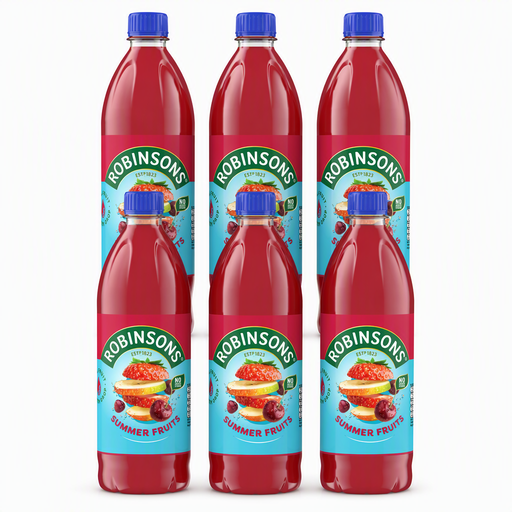
The six-bottle pack is an option when you need several bottles of the same summer-fruit squash. Follow the mixing directions on these bottles rather than applying a ratio from another Robinsons format, and check the current allergen declaration before serving.
 No image available
A single 1L orange squash bottle for a smaller supply or an additional flavour. Use its own dilution and serving information when estimating drinks, and check the current ingredients for guests with sensitivities.
 No image available
A single 1L summer-fruit bottle if you want that flavour without choosing the six-bottle pack. Check this bottle’s dilution, prepared-serving nutrition and ingredients rather than assuming they match another Summer Fruits variant.
 No image available
The 850ml bottle adds a pineapple and passion-fruit flavour to a drinks table. Check its stated dilution and prepared yield before counting it towards a group supply, and use the current ingredient label for allergen checks.
No. A no-added-sugar squash can still contain naturally occurring sugars from fruit ingredients. For example, Sainsbury’s lists 2.0g sugars per prepared 250ml serving for its Pink Grapefruit High Juice squash; check the nutrition information for the drink as served.
Plan from the instructions on each bottle and the number of drinks you expect to make. Tesco Groceries specifies one part squash to 19 parts water for Quadruple Strength Tropical, while Waitrose & Partners specifies one part to nine parts water for Robinsons Double Strength Summer Fruits. Bottle volume alone will not tell you how much water to bring.
They should check the current ingredients and allergen information for each squash being served rather than rely on its no-added-sugar wording. Several reviewed products list sodium metabisulphite, and the Food Standards Agency notes that sulphites can occur in soft drinks.
Follow the directions for the particular product and manage highly concentrated mini bottles at the serving station. The Robinsons Mini listing at Waitrose & Partners warns not to drink it undiluted and says it is not recommended for use or handling by children under 36 months.