For a football viewing group, choose standard concentrate if straightforward jug mixing matters most, or double concentrate if you expect frequent refills and can follow its different dilution instructions. If fruit flavour or juice content leads the choice, compare the sugars and calories in the prepared drink, and check the exact bottle’s ingredients before serving guests: no added sugar does not mean sugar-free or allergen-free.
Who is buying?
Hosts expecting repeat refills
If several people will want another glass during the match, consider how much prepared drink a bottle makes. Robinsons says its double concentrate provides twice the servings of its single concentrate, but the two use different mixing instructions.
Shoppers choosing no added sugar
A no-added-sugar label does not tell you how much sugar remains in the diluted drink. Check the nutrition panel at the bottle’s stated dilution, particularly when comparing a standard squash with a high-juice variety.
Hosts checking guests’ ingredients
Look beyond the sugar claim if a guest avoids a particular ingredient. The cited Vimto squash declares barley, while the cited Sainsbury's Pink Grapefruit High Juice lists a sulphite-containing ingredient; check the current label of the bottle you intend to serve.
What should you check?
Choose a flavour the group wants, then check the mixing ratio, prepared-drink nutrition and ingredients on that particular bottle.
| Priority | What to check | Your needs |
|---|
| Prepared-drink nutrition |
Read sugars and calories per prepared serving, using the dilution stated on each bottle. Compare servings of the same size rather than front-of-pack claims alone. |
I want no added sugar, but I also want to know what is in the glass after mixing. ASDA Groceries lists 0.8 g sugars and 5 kcal per 250 ml for its cited Vimto squash. |
| Mixing and yield |
Check the concentrate-to-water ratio and the bottle size together. Robinsons specifies 1 part squash to 4 parts water for its cited single concentrate and 1 part to 9 parts water for its cited double concentrate. |
For a jug and several refills, I need a ratio I can follow and enough prepared drink for the group. A larger bottle alone does not establish the prepared yield. |
| Guest ingredients |
Read the current allergen and ingredient lists for barley, sulphite-containing ingredients and named sweeteners where relevant. |
If someone avoids a particular ingredient, I need to check the squash I will actually serve, not assume that all no-added-sugar varieties have the same recipe. |
| Fruit preference |
Check the named fruits and, if juice content matters, the stated juice percentage. Sainsbury's describes its cited no-added-sugar Pink Grapefruit High Juice as containing 50% fruit juice. |
Some guests may prefer grapefruit, while others want orange, blackcurrant or a fruit blend. I can choose the flavour separately from comparing sugars in the prepared drink. |
Common buying mistakes
-
Reading “no added sugar” as “sugar-free”
Sugars from fruit can remain in the prepared drink, so the front label cannot stand in for the nutrition panel.
Compare sugars and calories for a prepared serving of the same size, mixed according to each bottle’s instructions.
-
Mixing double concentrate like standard squash
The cited Robinsons single and double concentrates have different stated ratios. Using the standard ratio for the double concentrate changes the prepared drink.
Read the bottle’s dilution instructions before making a jug, and use them again for refills.
-
Assuming every bottle has the same ingredients
The cited Vimto squash declares barley, while the cited Sainsbury's Pink Grapefruit High Juice lists a sulphite-containing ingredient. Named sweeteners can differ too.
Check the current label of each bottle against guests’ ingredient requirements before serving it.
-
Comparing bottle litres instead of prepared yield
Different dilution ratios mean bottle volume alone does not tell you how many glasses you can make.
Use the stated ratio or serving information to work out how much prepared drink you need for the group.
Brand and range references
Robinsons
Robinsons offers the cited orange single concentrate and orange-and-pineapple double concentrate as two different mixing options.
- Robinsons says its double concentrate contains twice the servings of its single concentrate.
- The cited bottles have different dilution instructions. Check the particular bottle’s sweeteners and other ingredients before serving guests.
Vimto
The cited No Added Sugar Squash offers a grape, blackcurrant and raspberry fruit blend.
- A mixed-fruit option for a group that prefers that flavour profile.
- The cited product declares barley and contains sweeteners; check its current label if a guest avoids these ingredients.
Sainsbury's High Juice
The cited Pink Grapefruit High Juice is labelled no added sugar and, according to Sainsbury's, contains 50% fruit juice.
- A grapefruit option when the stated fruit content matters to the choice.
- No added sugar does not rule out sugars in the prepared drink. The cited product also lists sucralose and a sulphite-containing ingredient.
Joybuy squash options
These no-added-sugar squash options cover blackcurrant, orange, summer-fruit and pineapple-and-passion-fruit flavours, including a multipack for repeat refills. Check each bottle’s mixing and ingredient information for your group.
 No image available
Ribena Blackcurrant No Added Sugar Concentrate 1.5 L
A blackcurrant choice for serving several viewers from one bottle. Check the bottle’s mixing instructions and prepared-drink nutrition before comparing servings; check its ingredients for guests with restrictions.
View on Joybuy
 No image available
Robinsons Orange No Added Sugar Squash 1 L
An orange option for mixing glasses as needed during the match. Follow this bottle’s dilution instructions rather than assuming the ratio of another Robinsons orange product.
View on Joybuy
 No image available
Robinsons Summer Fruits No Added Sugar Squash 1 L
A summer-fruit choice if the group prefers a fruit blend to orange or blackcurrant. Check the bottle’s dilution ratio and prepared-drink nutrition before estimating servings or comparing it with another squash.
View on Joybuy
 No image available
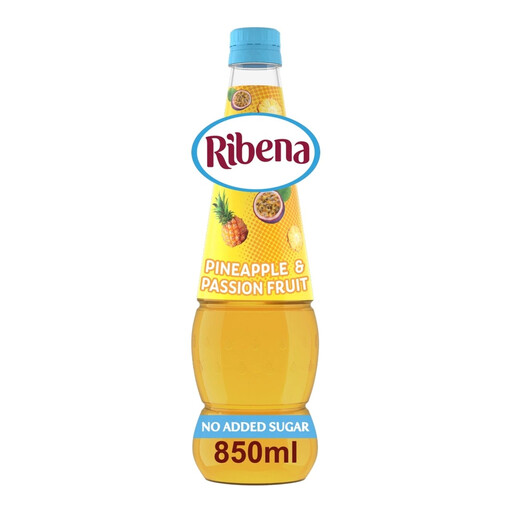
Ribena Pineapple and Passion Fruit No Added Sugar Squash 850 ml
A pineapple-and-passion-fruit option for viewers who want a different fruit blend. Check the current label for mixing, prepared-drink nutrition and ingredients relevant to your guests.
View on Joybuy
 No image available
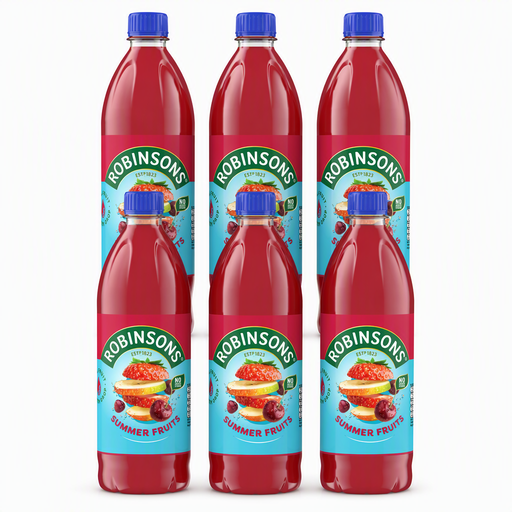
Robinsons Summer Fruits No Added Sugar Squash 6 × 1 L
The six-bottle pack may suit a viewing group expecting repeat refills. Use the bottle’s dilution instructions to plan prepared servings, and check its current nutrition panel before making a sugar comparison.
View on Joybuy
Questions about serving squash
Does no added sugar mean the mixed drink is sugar-free?
No. Sugars from fruit can remain: ASDA Groceries lists 0.8 g sugars per 250 ml prepared serving for its cited Vimto No Added Sugar Squash. Check the nutrition panel at the stated dilution for the bottle you choose.
How should I mix squash for a group?
Follow the ratio on each bottle when making a jug or topping it up. The cited Robinsons orange single concentrate specifies 1 part squash to 4 parts water, while its cited orange-and-pineapple double concentrate specifies 1 part concentrate to 9 parts water; do not transfer either ratio to a different product.
What if a guest avoids particular ingredients?
Check the current label of the exact squash before serving it. The cited Vimto product declares barley, and the cited Sainsbury's Pink Grapefruit High Juice lists sucralose and a sulphite-containing ingredient; a no-added-sugar claim does not answer those ingredient questions.
How should I store an opened bottle?
Follow the storage directions on that bottle rather than applying another brand’s timeframe. For example, the Ribena Blackcurrant No Added Sugar Squash listing cited by Waitrose & Partners says to refrigerate after opening and drink within 21 days.


