Shoppers reducing sugar in an afternoon drink
If you have squash with a snack, compare the sugars and calories in the diluted glass. The word “diet” and the size of the bottle do not tell you what that glass contains.


Choose a no-added-sugar squash if reducing free sugars in your afternoon drink is the priority, but compare sugars and calories for the drink after dilution. Check the exact bottle for sweeteners, sulphites and mixing instructions: no added sugar does not mean zero total sugar or that every recipe suits the same ingredient requirements.
If you have squash with a snack, compare the sugars and calories in the diluted glass. The word “diet” and the size of the bottle do not tell you what that glass contains.
No-added-sugar squash can contain sweeteners and sulphites. Check the current ingredients and allergen information if you need to avoid either; the NHS advises that aspartame is unsuitable for people with phenylketonuria (PKU).
Consider how much concentrate you use for each drink and whether you can follow the bottle’s dilution and opened-storage instructions. Stated serving counts depend on making drinks as directed.
Start with the prepared drink, then check whether the ingredients and mixing instructions fit the way you will use it.
| Priority | What to check | Your needs |
|---|---|---|
| Sugars and calories | Compare the nutrition values for the stated diluted serving, including its glass size. Read “no added sugar” alongside the total-sugars declaration. | I want to reduce free sugars in my afternoon drink without assuming that every no-added-sugar squash contains 0 g total sugars. Tesco Groceries lists 0 g per 250 ml diluted serving for Robinsons Orange No Added Sugar, but 0.6 g per stated 300 ml glass for Tesco Quadruple Strength Apple & Blackcurrant. |
| Ingredients | Read the current sweetener list and allergen information for the exact variant. Check for aspartame if PKU is relevant, and for sulphites if you have a sensitivity. | I need a drink whose ingredients meet my requirements, not just one with a no-added-sugar label. The NHS says aspartame is unsuitable for people with PKU; the Food Standards Agency identifies sulphites as a concern for sensitive people. |
| Dilution | Check the concentrate-to-water ratio and the serving size used for nutrition figures. Tesco Groceries gives 1:19 for its Quadruple Strength Apple & Blackcurrant squash, compared with 1:4 for Robinsons Orange No Added Sugar. | When I make a glass, I want to know how much concentrate the stated nutrition values assume. Mixing it stronger changes the amount of concentrate in my drink. |
| Flavour and routine | Choose the exact flavour and bottle format you will use, then check its stated servings and instructions after opening. A serving count assumes the specified dilution. | If I make squash frequently at home, a concentrated bottle may suit my routine, provided I can measure it as directed and use it within the pack’s opened-life guidance. |
Nutrition figures are only comparable when you know whether they describe concentrate or a diluted serving, and how large that serving is.
Use each bottle’s stated mixing ratio and compare the sugars and calories in the prepared drink.
Product labels published by Tesco Groceries for Robinsons Orange No Added Sugar and Ribena Blackcurrant No Added Sugar list sweeteners and sulphites. The NHS says aspartame, listed in the Ribena example, is unsuitable for people with PKU.
Check the current ingredients and allergen statement for the exact bottle if these ingredients matter to you.
Sainsbury’s lists 10 g sugars and 48 kcal per 250 ml diluted serving for Robinsons Barley Water Orange, which contains sugar and sweetener. Tesco Groceries lists 0 g sugars and 3 kcal per 250 ml diluted serving for Robinsons Orange No Added Sugar.
Compare exact variant names and diluted-serving labels rather than relying on the shared brand.
Storage directions and opened-life periods can differ between squashes, which matters when choosing a bottle for occasional use.
Match the bottle size to how often you make squash and follow its own storage instructions.
Robinsons has no-added-sugar squash variants as well as recipes containing added sugar; the precise variant matters.
Tesco’s own-label Quadruple Strength Apple & Blackcurrant No Added Sugar is a concentrated option for making drinks at home.
Ribena offers blackcurrant no-added-sugar concentrate in different bottle sizes; check the formulation of the size you choose.
These orange, blackcurrant, tropical-fruit, lemon and summer-fruit concentrates are options for a no-added-sugar afternoon drink. Compare the exact bottle’s prepared-drink nutrition and ingredients before choosing.
 No image available
An orange concentrate for an afternoon drink. Tesco Groceries lists 3 kcal and 0 g sugars per 250 ml diluted serving for this variant; follow the bottle’s mixing and ingredient instructions.
 No image available
A blackcurrant concentrate in a 1.5 L bottle. Check the prepared-drink nutrition on the pack rather than relying on calorie-free wording; Tesco Groceries lists aspartame and sulphites in the ingredients for this bottle size.
 No image available
A pineapple and passion fruit concentrate if you prefer that flavour to blackcurrant. Check the bottle’s dilution instructions, prepared-drink nutrition and ingredient list before comparing it with another squash.
 No image available
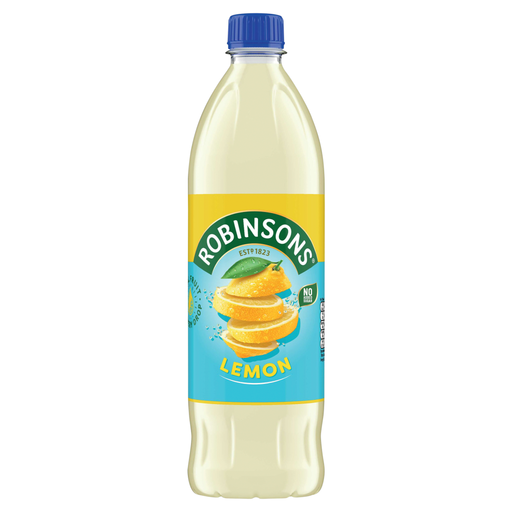
A lemon concentrate for a citrus-flavoured afternoon drink. Check the pack’s sugars for the prepared serving and its ingredients, particularly if aspartame or sulphites matter to you.
 No image available
A summer-fruits concentrate if you want a berry-flavoured option. Read the bottle for its dilution ratio, prepared-serving sugars, ingredients and instructions after opening.
No. Check total sugars for the prepared drink: Tesco Groceries lists 0 g per 250 ml diluted serving for Robinsons Orange No Added Sugar and 0.6 g per stated 300 ml glass for Tesco Quadruple Strength Apple & Blackcurrant No Added Sugar.
Not necessarily. The inspected Robinsons, Tesco and Ribena examples list sweeteners. Check which ones are in your bottle; the NHS advises that people with PKU should avoid aspartame.
Yes. Inspected Robinsons and Ribena products list sulphites. The Food Standards Agency identifies sulphites as an allergen and notes that people with asthma have a higher risk of a reaction; check the current bottle if this is relevant to you.
Compare nutrition for the stated diluted servings and note their sizes, rather than comparing concentrate figures alone. Follow each maker’s mixing ratio: the inspected Robinsons Orange No Added Sugar uses 1:4, while Tesco Quadruple Strength Apple & Blackcurrant uses 1:19.
Follow the instructions on the exact bottle. For example, Tesco Groceries directs shoppers to refrigerate Ribena Blackcurrant No Added Sugar 850 ml after opening and drink it within 21 days; do not apply that period to every squash or bottle size.