Families changing their after-school drinks
If you are replacing a sugary squash, check what the new drink contains once diluted. The NHS notes that naturally occurring sugars are included in the total-sugars figure on food labels.


Choose a no-added-sugar squash by checking the sugars figure for the prepared drink and the ingredients list, rather than relying on the front label alone. A familiar flavour and a dilution routine your household can follow matter for after-school drinks; where an ingredient or age restriction is relevant, check the current bottle before serving.
If you are replacing a sugary squash, check what the new drink contains once diluted. The NHS notes that naturally occurring sugars are included in the total-sugars figure on food labels.
Sweeteners and other ingredients differ between bottles. Anyone needing to avoid a particular ingredient should check the current label, including its allergen and phenylalanine statements where relevant.
Concentration, dilution instructions and serving size affect how a bottle fits your routine. Check the directions for the specific product rather than assuming every squash mixes the same way.
Start with the label for the drink as served, then check ingredients and preparation instructions before choosing a flavour or bottle format.
| Priority | What to check | Your needs |
|---|---|---|
| Sugars | Read ‘of which sugars’ and note whether the figure is for concentrate or the prepared drink. Compare equivalent serving quantities. | I want to know what is in the glass, not just whether the bottle says ‘no added sugar’. The NHS explains that naturally occurring sugars can still appear in the total-sugars figure. |
| Ingredients | Check the sweeteners, allergen statement and any sulphite or phenylalanine wording on the current bottle. | If someone drinking it has a relevant dietary requirement, I need to check this particular recipe. The cited Vimto listing identifies barley, while the cited Ribena Blackcurrant listing carries a phenylalanine warning. |
| Dilution | Follow the product’s mixing directions and any age-specific instructions. Check whether nutrition values describe the diluted drink. | I want a mixing routine I can follow after school. A ratio printed for one product should not be assumed for another. |
| Flavour and format | Compare fruit flavour, declared fruit content, concentration and any stated serving count alongside the prepared-drink label. | A familiar flavour may matter more to my household than a particular fruit percentage. I would still check sugars and ingredients rather than treating fruit content as a shortcut. |
Naturally occurring sugars can still appear in the total-sugars figure, as the NHS explains. A figure for concentrate also cannot be compared directly with one for a diluted drink.
Find the ‘of which sugars’ value and its measurement basis, then compare equivalent prepared quantities.
The cited squash products use different sweeteners; some also list sulphites, barley or a source of phenylalanine.
Read the current ingredients and allergen information for the exact bottle, particularly if anyone drinking it needs to avoid an ingredient.
Squash is served diluted, so bottle volume alone does not tell you how the product fits your usual serving routine.
Use each bottle’s dilution directions and stated serving count, where given, when comparing formats.
The cited products differ in declared vitamins and fruit content, but those details do not replace a check of their sugars, ingredients or preparation instructions.
Use fruit content and declared vitamins as product distinctions after checking that the recipe and serving directions suit your household.
These examples show why it is worth comparing individual squash recipes rather than relying on a brand name alone.
The cited Orange No Added Sugar Squash offers a familiar orange flavour.
The cited no-added-sugar squash is a mixed-fruit option with declared vitamins C and D.
The cited Blackcurrant No Added Sugar Squash is an option for households choosing that flavour.
The cited own-label products include double-strength Orange Squash and Pink Grapefruit High Juice.
Tesco’s cited search results include own-label no-added-sugar squash in different concentration formats.
These orange, blackcurrant, summer-fruit, lemon and tropical-fruit squashes offer different flavour and ingredient choices for an after-school drink. Check each bottle’s directions before serving.
 No image available
An orange squash described for school breaks and family meals. Its product description states 10% orange fruit from concentrate and 3 kcal per 250 ml diluted glass; follow this bottle’s mixing directions rather than assuming a fixed ratio. It lists sucralose, acesulfame K and sulphites, and says it is not suitable for children under 36 months.
 No image available
A blackcurrant choice for households that prefer that flavour. The listing states 18% blackcurrant juice and instructs at least four parts water to one part squash. It lists sweeteners, sodium bisulphite and a source of phenylalanine, and says it is not recommended for children under 3. Check whether nutrition figures refer to concentrate or the prepared drink before comparing them with another squash.
 No image available
A summer-fruit alternative to orange or blackcurrant. The listing describes fruit juices from concentrate and states 2 kcal per 100 ml diluted serving. It lists sucralose, acesulfame K and sodium metabisulphite; check the current bottle for mixing directions and a diluted-drink sugars figure if you need to compare servings.
 No image available
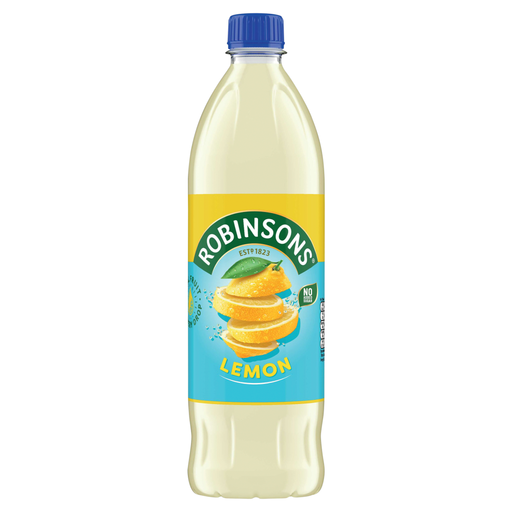
A lemon-flavoured option when that taste is preferred. The listing states 10% lemon juice and identifies the nutrition table as diluted-drink values. It lists aspartame and saccharin and states that it contains a source of phenylalanine. Follow the package dilution directions and use its current nutrition panel if energy values affect your comparison.
 No image available
A pineapple-and-passion-fruit option for a different flavour preference. The listing states 10% fruit juice from concentrate and labels its nutrition values as undiluted, so do not compare them directly with prepared-drink figures. It lists aspartame, acesulfame K and sulphites. Check this bottle’s current ingredient statement and dilution directions before serving.
No. The NHS explains that naturally occurring sugars are included in the total-sugars figure on food labels. Read ‘of which sugars’ and check whether the value describes concentrate or the diluted drink.
Compare figures on the same basis, such as per 100 ml of prepared drink. Do not compare undiluted concentrate directly with diluted squash; follow each product’s mixing instructions when working out what is served.
The cited products use different sweeteners. The Robinsons Orange and Vimto examples list sucralose and acesulfame K, while the cited Ribena Blackcurrant product lists aspartame and acesulfame K. Check the current label of the bottle you choose.
Check the exact bottle’s current ingredients, allergen statement and any relevant warning before serving. The cited Vimto listing identifies barley, and the cited Ribena Blackcurrant listing states that the product contains a source of phenylalanine.
No. Follow the instructions on each bottle, including any age-specific directions. For example, the cited M&S Orange Squash says it is not suitable for babies and directs extra water if given to older children.