For a larger garden party, start with the number of finished glasses rather than the size of the squash bottle: Tesco states 100 servings for its 1.5L quadruple-strength Orange, Lemon & Pineapple squash, while the Waitrose listing for Robinsons Double Strength Summer Fruits 1.75L states 70. Choose a flavour and format your guests can use, then check the exact bottle’s dilution directions, diluted nutrition information, sweeteners and allergen declaration before serving.
Who is this for?
Hosts serving a larger gathering
Plan around finished glasses and the bottle’s stated dilution. Tesco lists 100 servings for its 1.5L quadruple-strength squash; the Waitrose listing for Robinsons Double Strength Summer Fruits 1.75L lists 70. The bottles differ in concentration, so their sizes alone are not a useful capacity comparison.
Hosts looking for no-added-sugar drinks
The NHS suggests no-added-sugar drinks as an alternative to sugary squash. Check the diluted drink’s nutrition information as well as the front label: a no-added-sugar squash can contain naturally occurring sugars and sweeteners.
Hosts checking ingredients for guests
Read the current label for each flavour you intend to serve. The Tesco, Robinsons and M&S examples described here list sweeteners and sulphites; a different flavour or formulation needs its own check.
What should you check before buying squash?
Work out how many glasses you expect to serve, then compare the mixing instructions and the label of the drink as prepared.
| Priority | What to check | Your needs |
|---|
| Finished servings |
Use the stated serving count and glass size. Tesco lists 100 servings for its 1.5L quadruple-strength Orange, Lemon & Pineapple squash; Waitrose lists 70 for Robinsons Double Strength Summer Fruits 1.75L. |
I want enough prepared drink for the expected guests without assuming the larger concentrate bottle makes more glasses. |
| Mixing |
Check the ratio and measure the concentrate. Tesco specifies 1 part squash to 19 parts water; Waitrose gives 1 part to 9 parts water for Robinsons Double Strength Summer Fruits. |
If several people will refill glasses, I want directions that are easy to follow consistently. |
| Sugar information |
Look for the no-added-sugar claim, then read the ingredient list and the “of which sugars” value for the diluted drink or its stated serving. |
I’m choosing a no-added-sugar option, but I don’t want to mistake that wording for a claim that the finished drink contains no sugars. |
| Ingredients |
Check the exact flavour for sweeteners and declared allergens. The Tesco, Robinsons and M&S product examples list sulphites in their ingredients. |
Some guests may need to avoid particular ingredients, so I want the current bottle available when they ask what is in the drink. |
Common buying mistakes
-
Treating “no added sugar” as “sugar-free”
A no-added-sugar squash can still contain naturally occurring sugars from fruit ingredients and can use sweeteners. The Waitrose listing for Robinsons Orange, for example, states that it contains naturally occurring sugars.
Check the ingredient list and compare “of which sugars” on the nutrition information using the diluted drink’s stated basis.
-
Choosing by bottle size alone
Concentration changes how much water is added. Tesco states 100 servings for a 1.5L quadruple-strength bottle, while Waitrose states 70 for a 1.75L Robinsons double-strength bottle.
Estimate the number and size of glasses you need, then follow the chosen bottle’s serving count and dilution directions.
-
Assuming every flavour has the same ingredients
The product examples include different sweeteners and sulphite ingredients. A listing for another flavour is not a substitute for the label of the bottle being served.
Keep the current bottle available so guests can check its ingredients and allergen information.
Brand and retailer references
These examples show how concentration, serving instructions and ingredients can differ between specific no-added-sugar squashes; they do not describe every product in a brand’s range.
Robinsons
The Waitrose listings describe a 1L Orange squash and a 1.75L Double Strength Summer Fruits squash with different mixing ratios.
- Orange states 20 servings at 1 part squash to 4 parts water; Double Strength Summer Fruits states 70 at 1 part to 9 parts water.
- Both listed products contain sweeteners and sodium metabisulphite; check the exact bottle before serving.
Tesco
Tesco lists a 1.5L quadruple-strength no-added-sugar Orange, Lemon & Pineapple squash for concentrated home mixing.
- The product listing states 100 servings, with one tablespoon making a 300ml glass and a dilution of 1 part squash to 19 parts water.
- Its listed ingredients include acesulfame K, sucralose and sodium metabisulphite.
M&S
M&S describes its 1.5L Orange Squash as no added sugar and double strength, with 20% orange from concentrate.
- The orange content and concentration are stated on the product page for this specific squash.
- The listing includes sucralose and E223 sulphites and says this product is not suitable for babies.
Waitrose
Waitrose & Partners lists branded and own-label no-added-sugar squashes, including Apple & Elderflower and Blackcurrant High Juice options under its own label.
- Its range gives shoppers several flavours and bottle formats to compare.
- Check the individual product label for dilution, nutrition and ingredients rather than applying details from one listing to another.
Joybuy no-added-sugar squash options
These Joybuy options include individual bottles and a multipack for different garden-party serving plans. Compare the current pack directions and ingredients for the particular flavour you choose.
 No image available
Robinsons No Added Sugar Orange Squash 1L
For a smaller gathering, the matching Robinsons Orange listing at Waitrose states 20 servings and a dilution of 1 part squash to 4 parts water. The listed ingredients include acesulfame K, sucralose and sodium metabisulphite; check the current bottle for guests avoiding these ingredients.
View on Joybuy
 No image available
Ribena No Added Sugar Blackcurrant Concentrate 1.5L
The 1.5L bottle offers a blackcurrant option for guests. Check its pack directions when planning finished glasses; its listed ingredients include aspartame, acesulfame K, sucralose and sodium bisulphite.
View on Joybuy
 No image available
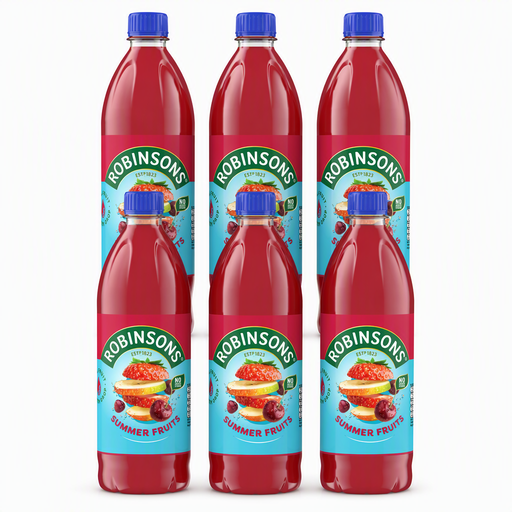
Robinsons No Added Sugar Summer Fruits Squash 6 × 1L
Six separate 1L bottles may be useful when setting out drinks in more than one place. Use the pack’s own mixing directions to plan quantities, and check its label for aspartame, saccharin and sulphites.
View on Joybuy
 No image available
Robinsons No Added Sugar Summer Fruits Squash 1L
This single 1L summer-fruits bottle is an alternative to the multipack. Follow this bottle’s dilution directions rather than those for another Robinsons product; its listed ingredients include sucralose, acesulfame K and sulphites.
View on Joybuy
 No image available
Ribena No Added Sugar Pineapple and Passion Fruit Squash 850ml
The 850ml bottle provides a pineapple and passion-fruit flavour alongside the other options. Check its dilution directions before estimating servings; its listed ingredients include aspartame, acesulfame K and sulphites, with a phenylalanine warning.
View on Joybuy
Frequently asked questions
Does “no added sugar” mean the squash contains no sugar?
No. Fruit ingredients can contribute naturally occurring sugars; the Waitrose listing for Robinsons Orange explicitly notes this. Read the ingredient list and check “of which sugars” for the drink prepared according to its directions.
How can I estimate squash for a garden party?
Start with the expected number and size of glasses, then use the exact product’s stated servings and dilution. Tesco lists 100 servings for its 1.5L quadruple-strength Orange, Lemon & Pineapple squash, with one tablespoon making a 300ml glass; Waitrose lists 70 servings for Robinsons Double Strength Summer Fruits 1.75L at 1 part squash to 9 parts water.
Should I check for sweeteners and sulphites?
Yes, if those ingredients matter to your guests. The Tesco, Robinsons and M&S examples here list sweeteners and sulphite ingredients. Read the current label of every bottle served rather than relying on the name of the range.
Is no-added-sugar squash suitable for babies?
Do not infer suitability from the no-added-sugar wording. The M&S Orange Squash 1.5L product page specifically says it is not suitable for babies; follow the directions and age-related information on the exact product you are considering.


