Snackers comparing diluted drinks
If you want a flavoured drink with crisps or popcorn, compare sugars and energy for the glass you will actually prepare. A no-added-sugar label does not mean that every squash has the same nutrition values.


For a drink alongside TV-night snacks, choose by the prepared glass rather than the claim on the front of the bottle. A standard orange squash may suit you if you want lower stated sugars and energy per diluted serving; a high-juice orange squash offers a different fruit-juice formulation, while a stronger concentrate is worth considering when you make several glasses. Check each bottle’s dilution instructions, nutrition panel and ingredients before deciding.
The useful distinction for a TV-night drink is whether you care most about the prepared glass, the fruit-juice formulation or the number of glasses a bottle makes.
If you want a flavoured drink with crisps or popcorn, compare sugars and energy for the glass you will actually prepare. A no-added-sugar label does not mean that every squash has the same nutrition values.
Check the fruit percentage on the particular bottle. Sainsbury’s High Juice Orange lists 50% fruit juice, alongside 17 kcal and 2.4 g sugars per 250 ml prepared serving.
Look at the suggested mixing ratio and stated servings, not just bottle volume. Waitrose & Partners lists 60 servings for its 1.5 litre Essential Summer Fruits squash at a suggested ratio of one part squash to nine parts water.
Start with the prepared drink, then check how you will mix it and whether its ingredients suit everyone who will be drinking it.
| Priority | What to check | Your needs |
|---|---|---|
| Sugars and energy | Compare values for the prepared serving at each bottle’s stated dilution. Sainsbury’s lists 17 kcal and 2.4 g sugars per 250 ml of its High Juice Orange; its Robinsons Orange listing gives 3 kcal and 0 g sugars per 250 ml diluted. | I want to know what is in the glass I will sip with snacks, rather than treating “no added sugar” as “sugar-free”. |
| Fruit formulation | Read the fruit-juice percentage for the exact product and check its prepared-serving nutrition alongside it. Sainsbury’s High Juice Orange lists 50% fruit juice; M&S describes its Orange Squash as containing 20% real fruit. | A fruit-juice formulation matters to me, and I am happy to compare the figures for the finished drink before choosing a flavour. |
| Dilution and servings | Check parts squash to parts water and any stated serving count. Sainsbury’s Robinsons Orange listing specifies 1:4; Waitrose & Partners suggests 1:9 and states 60 servings for Essential Summer Fruits. | We make several glasses during an evening, so I want a mixing ratio I can follow and a useful indication of how many drinks the bottle makes. |
| Ingredients | Read the current bottle for sweeteners, sulphites and relevant warnings. These vary by product: the listed Robinsons Orange, Sainsbury’s High Juice Orange and Waitrose Essential examples contain sweeteners and sulphites. | Someone drinking it avoids a particular ingredient, so I need to check the exact flavour and bottle rather than assume all no-added-sugar squashes use the same recipe. |
Fruit-based squash can still contain naturally occurring sugars. Sainsbury’s High Juice Orange, for example, lists 2.4 g sugars per 250 ml prepared serving despite its no-added-sugar label.
Use the sugars and energy figures for the prepared drink when comparing bottles.
Concentrates with different mixing instructions do not make the same amount of prepared drink from the same bottle volume.
Check the suggested ratio and serving count: Waitrose & Partners states 60 servings at a suggested 1:9 dilution for Essential Summer Fruits, while Sainsbury’s Robinsons Orange listing specifies 1:4.
Sweeteners and sulphites differ between products. An aspartame-containing squash may also carry a phenylalanine warning, as shown on the Ribena Blackcurrant No Added Sugar listing from Waitrose & Partners.
Check the current pack for the particular ingredients and warnings that matter in your household before serving it.
These examples illustrate different formulations and formats; a detail about one named squash should not be assumed to apply across its whole range.
An orange no-added-sugar option for comparing a standard diluted squash with other fruit formulations.
Its grocery range includes own-label no-added-sugar concentrates in different flavours and strengths.
Its High Juice Orange No Added Sugar is a named example for shoppers comparing fruit-juice content.
Its Orange Squash offers a double-strength option with a stated fruit percentage.
Essential No Added Sugar Summer Fruits provides a stated serving count for planning repeated drinks.
These Joybuy listings cover no-added-sugar orange, summer-fruits, blackcurrant and pineapple-and-passion-fruit squash for mixing drinks alongside TV-night snacks. Compare the exact bottle’s instructions and prepared-drink nutrition where those details affect your choice.
 No image available
For an orange drink with snacks, this listing states 3 kcal per 250 ml diluted glass; Sainsbury’s listing for the named Robinsons Orange product also states 0 g sugars at that serving size and a 1:4 dilution. The ingredients include acesulfame K, sucralose and sodium metabisulphite. Dilute as directed and check the pack’s age guidance if serving children.
 No image available
A summer-fruits alternative to orange for a TV-night glass, with 10% fruit juices from concentrate stated in the product description. It lists sucralose, acesulfame K and sodium metabisulphite. Check the pack’s mixing instructions and prepared-serving nutrition before comparing it with another flavour.
 No image available
For a blackcurrant-flavoured drink, the product description states 18% blackcurrant juice from concentrate and instructs you to add at least four parts water to a 50 ml portion. Its calorie wording conflicts with its nutrition table, so check the current pack for prepared-serving figures rather than relying on either figure alone. It lists aspartame, acesulfame K and sodium bisulphite, with a phenylalanine warning.
 No image available
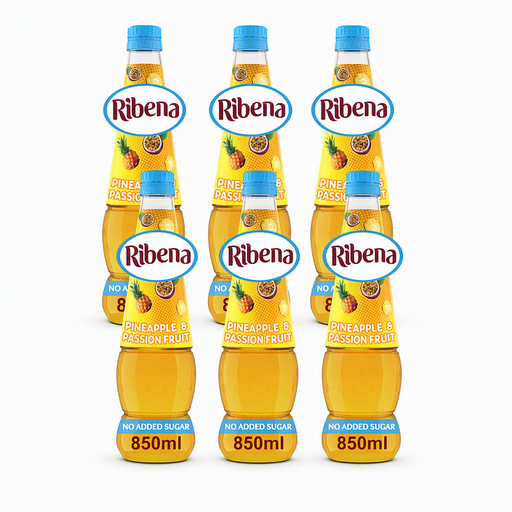
This six-bottle format offers pineapple-and-passion-fruit squash for repeated mixing. The description states 10% fruit juices from concentrate, including 9% pineapple and 1% passion fruit. Its nutrition figures refer to undiluted squash, so use the current pack to check mixing guidance and values for a prepared glass. The listed ingredients include aspartame, acesulfame K and sulphites.
 No image available
The single 850ml bottle suits someone choosing this pineapple-and-passion-fruit flavour without the six-bottle format. It states 10% fruit juices from concentrate, including 9% pineapple and 1% passion fruit. Its calorie wording conflicts with a nutrition table for undiluted squash; check the current pack for mixing instructions and prepared-serving values. It lists aspartame, acesulfame K and sulphites, and identifies a source of phenylalanine.
No. A no-added-sugar squash can contain naturally occurring sugars from fruit. Sainsbury’s High Juice Orange, for example, lists 2.4 g sugars per 250 ml prepared serving. Read the nutrition panel if the amount in your glass matters to your choice.
Compare nutrition for prepared drinks at each product’s stated dilution, then look at the suggested ratio and serving count. Sainsbury’s Robinsons Orange listing specifies 1:4 and 3 kcal per 250 ml; Waitrose & Partners suggests 1:9 and states 60 servings for Essential Summer Fruits. Bottle volume alone does not tell you how much prepared drink each makes.
Yes, if particular ingredients matter in your household. The named Robinsons Orange, Sainsbury’s High Juice Orange and Waitrose Essential Summer Fruits examples list sweeteners and sulphites. Check the current bottle for the exact ingredients and warnings before serving it.
Check its ingredients and phenylalanine warning. GOV.UK describes the warning required for foods containing aspartame, and Waitrose & Partners’ Ribena Blackcurrant No Added Sugar listing carries one. If that warning is relevant to someone drinking the squash, use the current pack information when deciding whether it suits them.