Families making drinks for a shared picnic
Stated servings help you plan how much concentrate to take. They depend on using the bottle’s suggested dilution, so you will also need enough water for the drinks you intend to make.


For a picnic with water available for mixing, choose by the number of drinks you need, then compare fruit content and sugars in the prepared drink. Sainsbury’s lists 40 servings from its Robinsons Double Strength Orange 1L bottle at a 1:9 dilution; its High Juice Orange offers 50% fruit juice but lists 2.4g sugars per prepared 250ml serving. Check the exact bottle’s mixing instructions and ingredients before packing it.
The useful starting point is whether you are mixing drinks for a group, comparing the fruit in each recipe or checking ingredients for someone joining the picnic.
Stated servings help you plan how much concentrate to take. They depend on using the bottle’s suggested dilution, so you will also need enough water for the drinks you intend to make.
A no-added-sugar claim does not tell you the fruit-juice percentage or the sugars in a prepared glass. Compare those figures separately on the labels of the flavours you are considering.
Read the exact variant’s ingredient and allergen statements. The Sainsbury’s and Waitrose product information for the examples discussed here lists sweeteners and sulphites; Sainsbury’s also lists a source of phenylalanine on Robinsons Lemon.
Start with the prepared drink rather than the front-of-bottle claim. Then check how many servings the bottle is intended to make and whether its ingredients suit the group.
| Priority | What to check | Your needs |
|---|---|---|
| Prepared-drink nutrition | Compare sugars for the same prepared serving size and follow each bottle’s dilution instruction. Sainsbury’s lists 2.4g sugars per prepared 250ml serving for High Juice Orange. | I want to know what is in the glass, not assume that “no added sugar” means it contains no sugars. |
| Servings and water | Check the stated servings, bottle size and mixing ratio. Sainsbury’s lists 40 servings at 1:9 for Robinsons Double Strength Orange 1L and 20 at 1:4 for its High Juice Orange 1L; Waitrose lists 60 servings and suggests 1:9 for Essential Summer Fruits. | For a group picnic, I need enough water to make the planned drinks. Pouring a stronger mix will also use the concentrate sooner than the stated yield suggests. |
| Fruit and flavour | Check the juice percentage on the particular bottle rather than using the no-added-sugar claim as a guide to fruit content. Sainsbury’s states 50% fruit juice for High Juice Orange; Waitrose states 20% fruit for Essential Summer Fruits. | If the stated fruit content matters to me, I can compare it alongside the sugars in each prepared drink rather than treating either figure as the whole story. |
| Ingredients and age guidance | Read the exact flavour’s sweetener, sulphite and other ingredient statements. Check its dilution and age guidance if preparing drinks for children; Waitrose advises adding extra water for toddlers on its Essential Summer Fruits bottle. | Someone in our group may need a particular ingredient checked, and I do not want to assume that two flavours have the same recipe. |
Fruit-containing squash can still list sugars in the prepared drink. Sainsbury’s High Juice Orange, for example, lists 2.4g per prepared 250ml serving.
Compare nutrition figures for drinks made as directed, rather than comparing a concentrate figure with a prepared-serving figure.
The stated number of drinks relies on the bottle’s mixing instructions. A stronger pour uses more concentrate per glass and changes the amount consumed in that glass.
Use the stated servings to plan the group’s drinks, and take the water needed to mix them at the picnic.
The product information from Sainsbury’s and Waitrose identifies different sweeteners across the examples, while several list sulphites. Sainsbury’s Robinsons Lemon listing also states that it contains a source of phenylalanine.
Check the current label on the exact flavour and strength when an ingredient matters to anyone drinking it.
Choosing a squash does not address how sandwiches, dairy foods, prepared salads or foods with a use-by date are kept during a picnic.
The Food Standards Agency advises putting these perishable foods in a cool bag or cool box with ice or frozen gel packs. Follow the squash bottle’s own storage directions separately.
These examples show why a brand name alone is not enough to choose a picnic squash: bottle yield, fruit content and ingredient statements vary by product.
Sainsbury’s lists Robinsons Double Strength Orange No Added Sugar in a 1L bottle, with 40 stated servings at a 1:9 dilution.
Sainsbury’s High Juice Orange Squash, No Added Sugar states 50% fruit juice, 20 servings per 1L bottle and a 1:4 mixing ratio.
Waitrose lists 60 servings for its 1.5L Essential No Added Sugar Summer Fruits Squash and suggests mixing one part squash with nine parts water.
Tesco Groceries lists own-label quadruple-strength no-added-sugar squash in Orange, Lime, Orange & Mango and Apple flavours, across 750ml and 1.5L packs.
These are squash concentrates in different flavours and pack sizes for a picnic where water is available for mixing. Check each bottle’s directions before estimating how many drinks it will make; the Robinsons Double Strength Orange and retailer own-label figures above do not describe these products.
 No image available
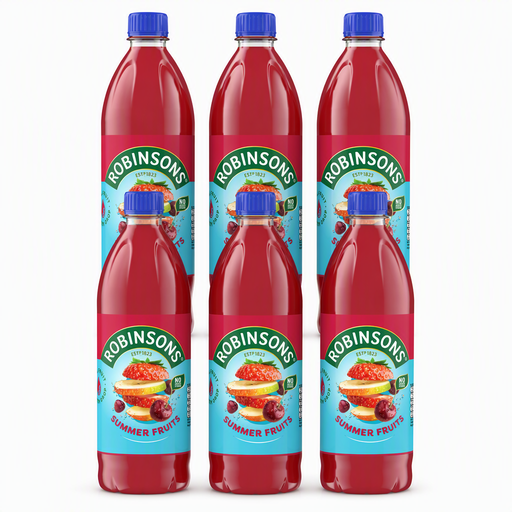
The six-bottle pack is an option to consider when preparing squash for a shared picnic. Check the individual bottle’s dilution directions to plan the water and concentrate needed, and read its ingredient statement if sweeteners, sulphites or phenylalanine matter to your group.
 No image available
This blackcurrant concentrate is for mixing with water at the picnic. Follow the bottle’s mixing directions, check its age guidance if serving children, and compare nutrition only on the label’s stated preparation basis.
 No image available
This 1L orange squash can be mixed as drinks are needed. Use this bottle’s own dilution and serving information when planning quantities; do not apply the figures for the separate Double Strength Orange product to it. Check its ingredient statement if sweeteners or sulphites matter.
 No image available
This single 1L bottle offers a summer-fruits flavour without committing to the six-bottle pack above. Check its own mixing directions for picnic quantities and its exact ingredient statement for anyone avoiding particular sweeteners or sulphites.
 No image available
The 850ml bottle offers a pineapple-and-passion-fruit flavour for drinks mixed at the picnic. Follow its label when diluting, and check the exact ingredients if sulphites or a phenylalanine statement matter to anyone drinking it.
No. A no-added-sugar claim does not establish that fruit-derived sugars are absent. Sainsbury’s lists 2.4g sugars per prepared 250ml serving for its High Juice Orange squash, so compare the nutrition panel using the drink’s stated dilution.
The NHS identifies water and milk as the preferred drinks for children. If you choose squash for the picnic, follow the exact bottle’s age and dilution guidance; Waitrose advises adding extra water for toddlers when preparing its Essential Summer Fruits squash.
Follow the squash bottle’s storage directions, and plan separately for perishable food. The Food Standards Agency advises keeping foods such as sandwiches, dairy products, prepared salads and foods with a use-by date in a cool bag or cool box with ice or frozen gel packs.
Read the ingredient and allergen information on the exact bottle you intend to serve. Sainsbury’s lists a source of phenylalanine and sodium metabisulphite for Robinsons Lemon; its Robinsons Double Strength Orange listing also names sodium metabisulphite. Do not assume the statement is the same across flavours.