Organisers choosing a no-added-sugar option
If avoiding added sugar matters for the event, check the prepared drink’s sugars as well as its sweeteners and ingredients. A no-added-sugar label does not settle every dietary question.


For a mixed conference audience, no-added-sugar squash can be a practical flavoured option when avoiding added sugar is the priority, but it will not meet every ingredient requirement. Compare the prepared drink’s sugar content, sweeteners and allergens on the exact product, then use a measured dilution recipe and keep current ingredient information available wherever it is served.
If avoiding added sugar matters for the event, check the prepared drink’s sugars as well as its sweeteners and ingredients. A no-added-sugar label does not settle every dietary question.
Decanting removes the bottle from delegates’ view. Catering teams need a repeatable dilution recipe and a way for staff to access the selected drink’s ingredient and allergen information.
Where attendees have identified ingredients they need to avoid, check the exact product rather than its flavour or no-added-sugar claim. The cited squash examples include products listing sulphites, barley or aspartame.
Start with the prepared drink and its ingredient list, then plan how the same information and dilution recipe will be used at service.
| Priority | What to check | Your needs |
|---|---|---|
| Sugar and sweeteners | Check whether the claim is no added sugar, then read sugars per diluted serving and the named sweeteners. Do not treat the claim as meaning sugar-free or unsweetened. | I want to avoid added sugar, but I also need to know what is in the glass. Tesco Groceries lists 0g sugars per 250ml diluted serving for Robinsons Orange No Added Sugar; Sainsbury’s lists 2.0g for its Pink Grapefruit High Juice squash. |
| Ingredients and allergens | Read the current label for the exact product, including declared allergens and any phenylalanine warning. Keep that information accessible when the bottle is out of sight. | If someone has an ingredient restriction, I need to check the squash being served rather than assume all no-added-sugar varieties are interchangeable. |
| Dilution and servings | Use the product’s concentrate-to-water instruction and serving size. Calculate bottle requirements using that recipe rather than an unmeasured pour. | I need each jug to be made the same way so the prepared-drink nutrition and planned number of servings remain meaningful. |
| Opening and storage | Check the chosen bottle’s refrigeration and post-opening directions; record when bottles are opened. | For a conference running over several days, I need a bottle-use plan that follows the selected product’s label. |
| Flavour choice | Compare the actual ingredients of any additional flavour. Keep plain water available alongside squash. | I want a flavoured choice without making an ingredient-restricted attendee depend on a squash they cannot use. |
No-added-sugar squash may still contain fruit-derived sugars or sweeteners. The cited product listings also include sulphites in several varieties, barley in Vimto and an aspartame-related phenylalanine warning on Ribena.
Check the current pack of the exact variety against attendees’ stated requirements before choosing a flavoured option.
Delegates cannot read a bottle that has been removed from the drinks station. Food Standards Agency guidance for England, Wales and Northern Ireland, and Food Standards Scotland guidance, say food businesses must provide allergen information for both prepacked and non-prepacked food and drink.
Keep the current bottle or its ingredient-and-allergen information accessible at service, and ensure staff know where to find it.
An unmeasured mix makes the served drink inconsistent with a nutrition figure stated for a particular dilution. The cited Tesco Groceries and Waitrose & Partners listings specify one part concentrate to four parts water for their respective Robinsons, Vimto and Ribena examples.
Measure each selected product according to its own label, and use that recipe when planning jugs and servings.
Post-opening directions differ by product: the cited Waitrose & Partners Ribena listing says to refrigerate and consume within 21 days, while the cited Tesco Groceries Robinsons listing gives a four-week period for the drink to taste its best.
Check each bottle’s directions, mark its opening date and plan when it will be used.
Opening more bottles than the event can use within their product-specific directions can leave concentrate unused.
These examples show why a familiar flavour, a higher juice percentage and a no-added-sugar claim still call for product-specific checks.
Its Orange No Added Sugar 1L squash is an example with prepared-drink nutrition and a stated dilution recipe.
Its cited Blackcurrant No Added Sugar squash offers a blackcurrant flavour with a specified serving recipe.
Its cited No Added Sugar squash is a mixed-fruit option to assess alongside attendees’ ingredient requirements.
Its cited Pink Grapefruit High Juice No Added Sugar squash illustrates a higher-juice option.
Its cited Orange Squash is a double-strength, no-added-sugar product.
These no-added-sugar squash concentrates cover orange, blackcurrant, summer-fruit and pineapple-and-passion-fruit choices for planned conference drinks service. Check each delivered pack before settling on a recipe or communicating its ingredients.
 No image available
An orange option when the drinks plan calls for squash without added sugar. For the cited Orange 1L product, Tesco Groceries specifies one part concentrate to four parts water; check the delivered pack’s recipe, sweeteners and sulphite declaration before jug service.
 No image available
A 1.5L blackcurrant concentrate for a measured drinks-station recipe. Check this pack’s dilution and prepared-drink nutrition, along with its sweeteners, sulphite declaration and phenylalanine warning, before serving.
 No image available
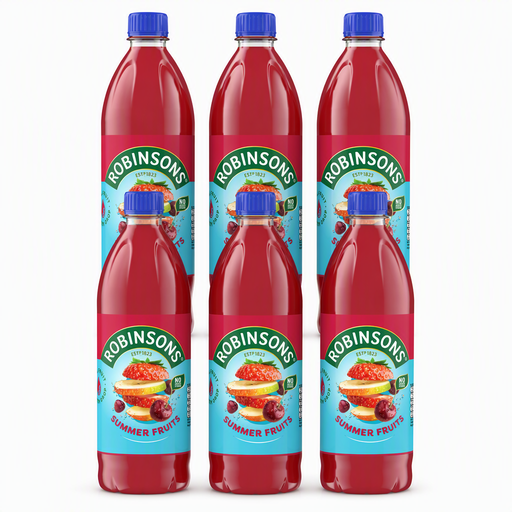
The six-bottle format may suit a planned multi-jug service. Check the exact pack’s dilution and post-opening directions before setting the recipe, and review its sweeteners, sulphites and phenylalanine warning against attendee requirements.
 No image available
A single-bottle summer-fruit option for a smaller planned batch. Read the delivered pack for its measured dilution and post-opening directions, and check the listed sweeteners and sulphites before offering it to an ingredient-sensitive group.
 No image available
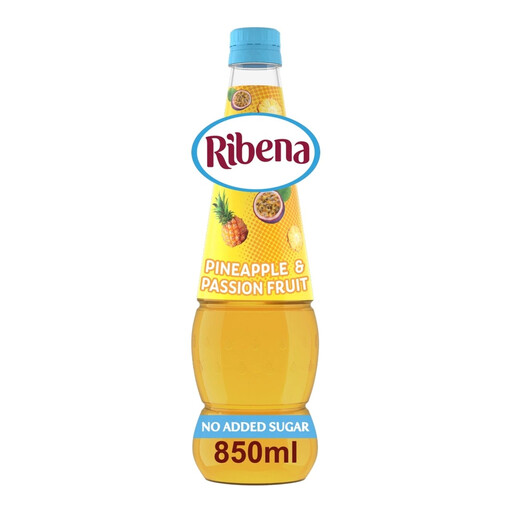
A pineapple-and-passion-fruit alternative for attendees who want a different flavour. Check the exact pack for a suitable measured serving recipe, its post-opening directions, and its sweeteners, sulphites and phenylalanine warning.
No. Fruit ingredients can contribute sugars, and no-added-sugar products can contain sweeteners. Tesco Groceries lists 0g sugars per 250ml diluted serving alongside acesulfame K and sucralose for its cited Robinsons Orange product; Sainsbury’s lists 2.0g sugars per 250ml and sucralose for its cited Pink Grapefruit High Juice squash.
Food businesses must make allergen information available for non-prepacked as well as prepacked food and drink, according to Food Standards Agency guidance for England, Wales and Northern Ireland and Food Standards Scotland guidance. Keep current information for the exact squash accessible at the service point and ensure staff can provide it before a delegate chooses a drink.
Check the exact product for the ingredients relevant to your attendees. The cited Robinsons, Ribena, Sainsbury’s and M&S examples list sulphites; the cited Vimto product declares barley, and the cited Ribena blackcurrant product carries a phenylalanine warning associated with aspartame. Confirm the current pack rather than extending one variety’s ingredients to another.
Use the selected product’s own dilution instruction. The cited Robinsons Orange and Vimto listings specify one part concentrate to four parts water, while the cited Ribena Blackcurrant listing says one part squash to at least four parts water. Measure the recipe used for each drink so any prepared-serving information corresponds to what is served.
Use the current physical pack received for the event, or obtain current supplier or manufacturer confirmation for the exact product, because ingredients can change. Keep that information available to staff when the squash is served without its bottle.