Choose no-added-sugar squash for school-term use by comparing the drink after dilution, rather than treating the front-label claim as a promise of 0g sugars. ASDA Groceries lists 0g sugars per diluted 250ml for Robinsons Lemon, while its 50% Fruit Mango, Apple & Passion Fruit lists 2.5g; check the exact bottle’s ingredients and mixing instructions too. For a routine drink, water or plain milk remains the choice identified in NHS dental guidance.
Who is this for?
Households changing from sugary squash
If you want a no-added-sugar alternative at home, compare sugars in the prepared drink. The NHS lists no-added-sugar drinks among alternatives to sugary squash, but the figures still differ between individual products.
Families planning school-day drinks
If you are deciding what to serve before and after school or put in a bottle, consider the whole drinking routine. North Tees and Hartlepool NHS Foundation Trust identifies water and plain milk as the drinks to choose for teeth.
Households checking ingredients
If sweeteners, sulphites or a phenylalanine warning matter to your household, read the label for the exact flavour and bottle. A no-added-sugar claim does not answer those ingredient questions.
What should you compare?
Start with the prepared drink, then check the ingredients and whether the format fits how often your household uses squash.
| Priority | What to check | Your needs |
|---|
| Prepared-drink sugars |
Compare sugars per prepared serving at each bottle’s stated dilution. Check the fruit content separately from the no-added-sugar claim. |
I want to replace sugary squash without assuming the new drink has 0g sugars. ASDA Groceries lists 0g per diluted 250ml for Robinsons Lemon, but 2.5g per diluted 250ml for its 50% Fruit Mango, Apple & Passion Fruit. |
| Drinking routine |
Decide when squash would be served and follow the bottle’s dilution instructions. North Tees and Hartlepool NHS Foundation Trust identifies water and plain milk as the drinks to choose for teeth. |
Water can stay my usual school-day drink, with squash reserved for a flavoured drink at home rather than something to sip throughout the day. |
| Ingredients |
Read the exact bottle’s sweetener and allergen information, including any sulphites or phenylalanine warning. Recheck when changing flavours. |
Ingredient details matter in my household, so a familiar brand name or a no-added-sugar label is not enough to choose a different variant. |
| Flavour and format |
Check concentration, the mixing ratio and storage instructions after opening. Compare prepared servings rather than bottle volume alone. |
A flavour the family will use matters, but I also want a bottle size that suits how often we make squash. |
Common buying mistakes
-
Reading “no added sugar” as “0g sugars”
Fruit-containing squash can still list sugars in the prepared drink. Waitrose & Partners lists 2.3g per 250ml serving for its No Added Sugar Tropical High Juice.
Compare the sugars line at the stated dilution, then decide how much fruit content matters to you.
-
Comparing bottle sizes without checking dilution
Different concentrations and mixing instructions mean bottle volume alone does not tell you how much prepared drink each makes.
Use each product’s instructions when comparing servings, and measure the concentrate if you want to make the drink consistently.
Pouring more concentrate than instructed uses the bottle faster and changes the drink from the label’s prepared-serving basis.
-
Treating squash like water in a daily routine
A no-added-sugar label does not make squash the same choice as water for a child’s usual drink. North Tees and Hartlepool NHS Foundation Trust identifies water and plain milk as the drinks to choose for teeth.
Keep water available for regular school-day drinking and decide separately when a diluted squash fits at home.
-
Assuming every flavour has the same ingredients
Sweeteners and ingredient warnings can differ between products, even when their front labels make similar claims.
Check the current pack for the exact flavour, particularly if sulphites or phenylalanine are relevant to your household.
Brand and retailer ranges
These ranges offer different formats and fruit contents; compare individual bottles rather than assuming a brand’s recipes are alike.
Robinsons
A branded no-added-sugar squash range that includes the single-strength Lemon bottle listed by ASDA Groceries.
- ASDA Groceries lists 0g sugars per diluted 250ml for Robinsons Lemon when mixed one part squash to four parts water.
- Use the exact flavour’s label for ingredient and age guidance; the Lemon figures do not describe every Robinsons bottle.
Tesco
Tesco lists own-label no-added-sugar squash, including a 1.5L quadruple-strength Cherries & Berries option.
- The listed concentration gives shoppers another format to consider.
- Check that bottle’s dilution instructions and prepared-drink nutrition before comparing it with a single-strength squash.
Sainsbury's
Sainsbury's lists a no-added-sugar High Juice Orange squash made with 50% fruit juice and sweeteners.
- The stated fruit percentage helps identify it as a high-juice option.
- The fruit percentage does not establish the sugars in a prepared drink; check that figure on the exact pack.
Asda
ASDA Groceries lists both Robinsons Lemon and an own-label 50% Fruit Mango, Apple & Passion Fruit no-added-sugar squash.
- Their listings provide different prepared-drink sugars figures: 0g and 2.5g respectively per diluted 250ml.
- Compare the stated dilution and the exact variant; the two figures are not a claim about every product in either range.
M&S
Marks & Spencer describes its Orange Squash as double strength, no added sugar and made with 20% real fruit.
- The stated concentration and fruit content help distinguish this bottle.
- Follow its own mixing instructions and check the prepared-drink label rather than comparing concentrate volumes directly.
Waitrose
Waitrose & Partners lists no-added-sugar high-juice flavours, including Tropical High Juice.
- Its Tropical High Juice listing gives 2.3g sugars per 250ml serving.
- That figure belongs to the Tropical product, not to every Waitrose no-added-sugar squash.
Joybuy squash options
These Joybuy bottles offer orange, blackcurrant, tropical, summer-fruit and lemon flavours for households considering no-added-sugar squash at home. Check each pack’s prepared-drink figures before making a sugars comparison.
 No image available
Robinsons Orange No Added Sugar Squash 1L
An orange-flavoured option for making squash at home. Check the sugars figure for the diluted drink, the mixing ratio and the current pack’s ingredient and age guidance before choosing it.
 No image available
Ribena Blackcurrant No Added Sugar Concentrate 1.5L
A blackcurrant concentrate in a 1.5L bottle for preparing drinks at home. Follow its mixing directions and check the nutrition for the prepared drink, along with the current ingredient and age guidance.
 No image available
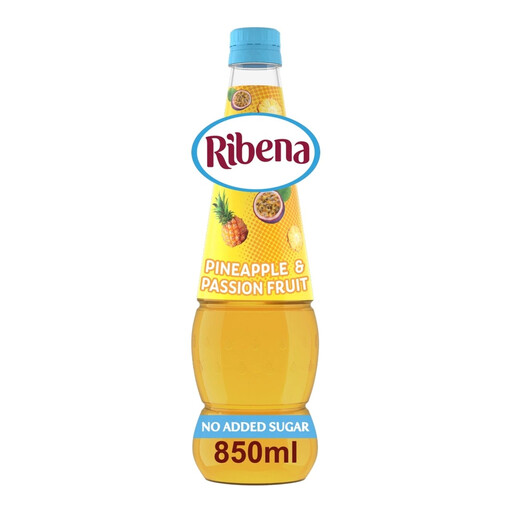
Ribena Pineapple and Passion Fruit No Added Sugar Squash 850ml
A pineapple and passion-fruit choice when the household wants a different flavour. Check the pack’s dilution guidance and prepared-drink sugars, and read any sweetener, sulphite or phenylalanine information that matters to you.
 No image available
Robinsons Summer Fruits No Added Sugar Squash 1L
A summer-fruit flavour for households choosing a berry-style squash. Use the bottle’s mixing and storage instructions, and compare sugars only on the prepared-drink basis.
 No image available
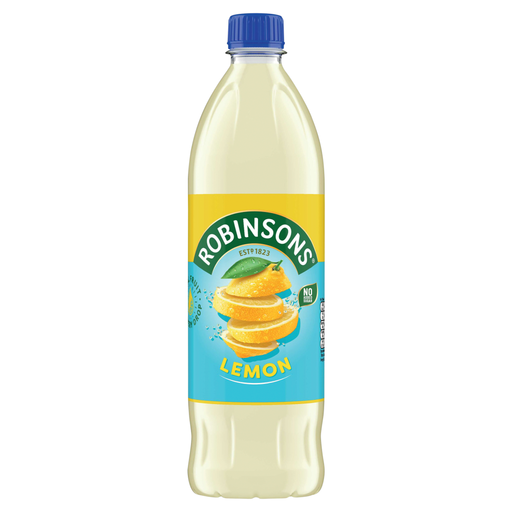
Robinsons Real Fruit Lemon No Added Sugar Squash 1L
A lemon squash option for preparing drinks at home. Read the current bottle for its sweeteners, other ingredients, dilution instructions and prepared-drink sugars, particularly if ingredient warnings matter in your household.
Frequently asked questions
Does no added sugar mean squash has 0g sugars?
No. Fruit sugars can remain in a no-added-sugar drink: ASDA Groceries lists 2.5g sugars per diluted 250ml for its 50% Fruit Mango, Apple & Passion Fruit, while its Robinsons Lemon listing gives 0g per diluted 250ml. Check the prepared-drink figure on the bottle you choose.
Should squash be a child’s usual school-day drink?
Water or plain milk is the choice identified for teeth by North Tees and Hartlepool NHS Foundation Trust. If your household also serves squash, consider when it is offered rather than making it a drink to sip throughout the day.
How can I compare two different concentrations?
Compare their nutrition for the drink prepared according to each bottle’s instructions. Check the mixing ratio and serving basis first; the size of the concentrate bottle alone is not an equivalent measure.
Which ingredient warnings need a closer look?
Check the exact pack for sweeteners, sulphites and any phenylalanine warning relevant to your household. Do not assume another flavour from the same brand has the same ingredients.
Can I send prepared squash to school?
Check your individual school’s drinks policy before putting squash in a school bottle. Rules for drinks provided by a school do not, by themselves, tell you what pupils may bring from home.


