First-home grocery shoppers
If squash is going into a new cupboard, the mixing directions, storage instructions and stated servings help you work out how you will use the bottle.


Choose a no-added-sugar squash by checking the ingredients on the exact bottle, its dilution directions and how many prepared servings it states—not just the front-of-pack claim or bottle size. The claim does not mean sugar-free or sweetener-free, and a different flavour or recipe may not suit the same household needs.
If squash is going into a new cupboard, the mixing directions, storage instructions and stated servings help you work out how you will use the bottle.
The NHS suggests sugar-free, diet or no-added-sugar drinks as alternatives to sugary squash. Water remains its low-cost choice for hydration.
Sweeteners and warnings differ by product. Check the exact flavour for ingredients such as barley or sulphites, or a source-of-phenylalanine warning, where relevant to your household.
Start with the label claim and ingredients, then check how the concentrate is prepared and how many drinks the bottle states it makes.
| Priority | What to check | Your needs |
|---|---|---|
| Label claim | Look for “no added sugar”, then read the sugars figure on the nutrition panel and the sweeteners in the ingredients. | I do not want to mistake “no added sugar” for a promise that the prepared drink has no sugars or sweeteners. |
| Ingredients and warnings | Check the current pack for named sweeteners, allergens and any phenylalanine warning; do not assume two flavours have the same recipe. | Someone in my household needs to avoid a particular ingredient, so the exact bottle matters more than the range name. |
| Prepared servings | Compare stated servings alongside bottle volume and dilution ratio. If comparing cost per drink, divide the current bottle price by its stated servings on the same basis. | I want to know how long a first-shop bottle is likely to last, rather than judging yield from its size alone. |
| Dilution | Follow that product’s mixing directions; check for separate instructions about adding more water for toddlers. The NHS also advises diluting squash well. | I need clear directions so I can prepare the concentrate as intended instead of treating it as a ready-to-drink bottle. |
The claim concerns added sugars; naturally occurring sugars may remain, and products can contain sweeteners.
Read both the nutrition panel and ingredients on the bottle if either matters to your choice.
Different mixing ratios and stated serving counts make concentrate volumes a poor substitute for prepared-drink yield.
Use each bottle’s current directions and stated servings when comparing how many drinks it makes.
Products with the same no-added-sugar claim can have different allergens, sweeteners and dietary warnings.
Check the physical pack when changing product or flavour, especially if an ingredient must be avoided.
Using more concentrate changes the prepared drink and reduces the number of drinks made from the bottle.
Use the labelled ratio as a starting point, and follow any product-specific instruction to add more water for toddlers.
These examples show why the precise flavour and format matter; a brand name alone does not identify its ingredients or mixing ratio.
ASDA Groceries describes its Summer Fruits no-added-sugar squash as a 1.5L bottle with 60 suggested servings at one part squash to nine parts water.
Waitrose & Partners lists its no-added-sugar Summer Fruits squash with 60 servings and a suggested one-to-nine mixing ratio.
The Robinsons Double Strength Orange no-added-sugar bottle listed by Waitrose & Partners states 70 servings at one part concentrate to nine parts water.
The Vimto Double Strength No Added Sugar squash listed by ASDA Groceries directs one part squash to nine parts water.
The Ribena Blackcurrant No Added Sugar squash listed by Waitrose & Partners directs at least four parts water to one part concentrate.
These no-added-sugar Ribena and Robinsons concentrates offer several fruit flavours for a first food shop. Check each bottle’s own ingredients and preparation directions rather than applying one variant’s details to another.
 No image available
A blackcurrant concentrate in a 1.5L bottle. Check the current pack’s dilution and ingredient directions before making it part of your regular shop.
 No image available
A 1L orange squash for shoppers choosing that flavour. The listing says this variant is not suitable for children under 36 months; check its current pack for preparation and ingredient details.
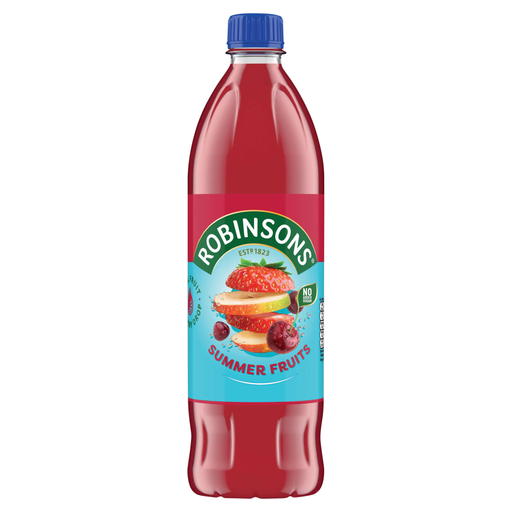 No image available
A 1L summer-fruits alternative to the orange variant. Use this bottle’s own mixing directions and check its ingredients rather than assuming the flavours share a recipe.
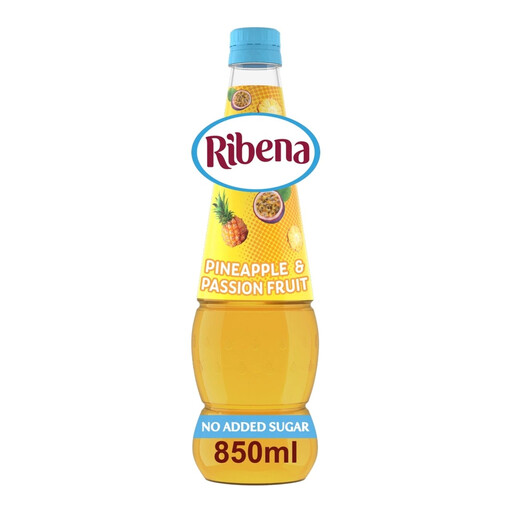 No image available
An 850ml option if pineapple and passion fruit appeal more than blackcurrant. Check the pack’s sweeteners and source-of-phenylalanine warning if relevant to your household.
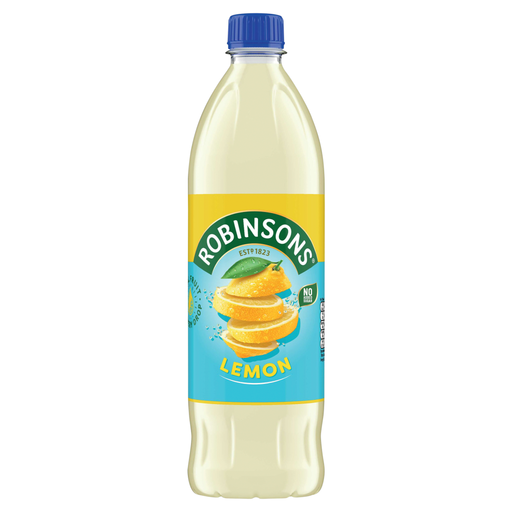 No image available
A 1L lemon-flavoured choice. Check the current physical pack carefully before buying for a specific ingredient requirement: ingredient descriptions for this variant conflict.
No. The claim is not the same as “sugar-free”: naturally occurring sugars can remain. Read the sugars figure on the exact bottle’s nutrition panel, as well as its ingredients.
Use each bottle’s stated servings and dilution ratio rather than concentrate volume alone. For example, ASDA Groceries and Waitrose & Partners each state 60 servings for the cited own-label summer-fruits bottles, while the cited Robinsons Double Strength Orange bottle states 70; those figures belong to those specific products.
Follow the directions for the bottle you bought. The cited ASDA, Waitrose Essential and Robinsons Double Strength Orange examples use one part concentrate to nine parts water, whereas the cited Ribena Blackcurrant example directs at least four parts water to one part concentrate. The NHS advises diluting squash well.
No. The cited Vimto product declares barley, while the cited Ribena Blackcurrant product carries a source-of-phenylalanine warning. Read the current physical pack for the exact flavour if you need to avoid an ingredient.
Water remains the NHS’s low-cost choice for hydration. Its guidance also suggests no-added-sugar drinks as an alternative to sugary drinks and advises diluting squash well.