Households using squash regularly
If several bottles will be kept at home, the dilution instruction and prepared volume help you plan how much to buy. Check the storage instructions too, especially if you expect to have more than one flavour open.


For a bulk purchase, compare how much drink each bottle makes at its stated dilution, then check the ingredients and instructions for opened bottles. A larger bottle does not necessarily make more prepared drink than a more concentrated one. If children will drink it, NHS guidance favours water and milk as their main drinks; NHS dental guidance advises water after bedtime toothbrushing.
If several bottles will be kept at home, the dilution instruction and prepared volume help you plan how much to buy. Check the storage instructions too, especially if you expect to have more than one flavour open.
NHS guidance includes no-added-sugar drinks among swaps for sugary drinks. The claim does not describe every ingredient in the bottle, so check the nutrition panel and sweeteners for the flavour you intend to buy.
Follow the squash’s dilution and age-related instructions. NHS guidance identifies water and milk as the preferred drinks for children, so a no-added-sugar label should not be taken to mean squash serves the same role.
Start with the quantity of prepared drink you are likely to use, then check the exact flavour’s label and whether opened bottles fit your household’s routine.
| Priority | What to check | Your needs |
|---|---|---|
| Prepared volume | Read the bottle’s dilution ratio and serving size; calculate prepared volume from that instruction. Waitrose & Partners lists 1:9 for its 1.5-litre Essential Apple & Blackcurrant squash, giving about 15 litres at that dilution. | For frequent use, I want to know how much drink the bottles will make, not just how much concentrate they hold. |
| Meaning of the label | Check sugars per serving, the preparation basis and the ingredients. The Food Standards Agency explains that a no-added-sugar claim must indicate naturally occurring sugars where they are present. | I do not want to mistake “no added sugar” for a statement that the drink contains no sugars. |
| Ingredients | Read the sweeteners, preservatives and any warnings on the exact flavour and size. The Ribena blackcurrant product listed by Waitrose & Partners contains aspartame and carries a phenylalanine warning. | Before ordering several bottles, I need to check ingredients that matter to people in my household. |
| Opened-bottle storage | Check whether refrigeration is required and how soon to use each bottle after opening. Waitrose & Partners lists four weeks for its Robinsons Orange 1-litre product and refrigerated storage with a 21-day period for its Ribena Blackcurrant 850ml product. | If we use squash slowly or rotate flavours, I want a quantity we can use while following each bottle’s instructions. |
| When it will be served | Follow the dilution instructions and check any age guidance on the pack. NHS guidance identifies water and milk as the preferred drinks for children; NHS dental guidance advises water after bedtime toothbrushing. | For children, I want to choose when to serve squash without treating its no-added-sugar label as a reason to replace water or milk. |
Concentration changes prepared yield. Waitrose & Partners suggests 1:9 dilution for its 1.5-litre Essential squash, while its Robinsons Orange 1-litre product specifies 1:4.
Use each product’s own instruction to work out prepared volume. Do not assume strength descriptions across different ranges use an identical serving basis.
As the Food Standards Agency explains, naturally occurring sugars can still be present. The cited Robinsons and Ribena products also list sweeteners, and the Ribena blackcurrant product carries a phenylalanine warning.
Check the nutrition panel, full ingredients and warnings for the exact bottle before buying several.
Opened-bottle instructions differ: the Robinsons Orange bottle listed by Waitrose & Partners says four weeks, while its Ribena Blackcurrant 850ml bottle says to refrigerate and use within 21 days.
Consider how quickly your household uses each flavour, and follow the storage directions on the bottles you receive.
NHS dental guidance advises water after bedtime toothbrushing and notes that acidic drinks can affect teeth even when advertised as sugar-free.
Offer water after bedtime toothbrushing. For children’s routine drinks, NHS guidance favours water and milk.
These examples show why flavour, dilution and pack instructions need checking product by product; a brand name alone does not establish the details of every variant.
The Robinsons Orange No Added Sugar 1-litre product listed by Waitrose & Partners is a single-strength example with a 1:4 dilution instruction.
Waitrose & Partners lists an Essential No Added Sugar Apple & Blackcurrant 1.5-litre squash with a suggested 1:9 dilution.
The Ribena Blackcurrant No Added Sugar 850ml product listed by Waitrose & Partners specifies one part squash to at least four parts water.
Tesco Groceries lists several own-label no-added-sugar quadruple-strength flavours in 1.5-litre bottles, including lemon and apple & blackcurrant.
These single bottles and multipacks offer different pack sizes and flavours for planning a household squash purchase. Check each pack’s dilution, ingredients and opened-bottle instructions before choosing a quantity.
 No image available
A single 1.5L blackcurrant bottle is an option when you want to plan use one bottle at a time. Check its own dilution, ingredients, age guidance and opened-bottle instructions before buying several.
 No image available
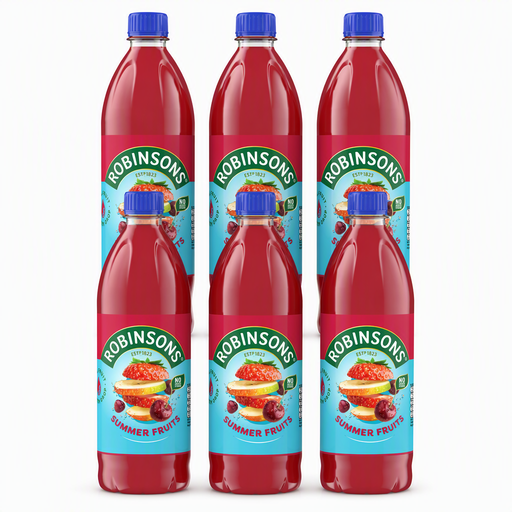
This six-bottle pack provides 6 x 1L of summer-fruits squash for households planning repeat use. Check the pack’s dilution and opened-bottle storage instructions; do not apply instructions from a different Robinsons flavour to this one.
 No image available
The single 1L orange bottle may be easier to plan around if you rotate flavours rather than opening several at once. Check its current dilution, ingredients and storage instructions; details for other Robinsons products should not be assumed to apply.
 No image available
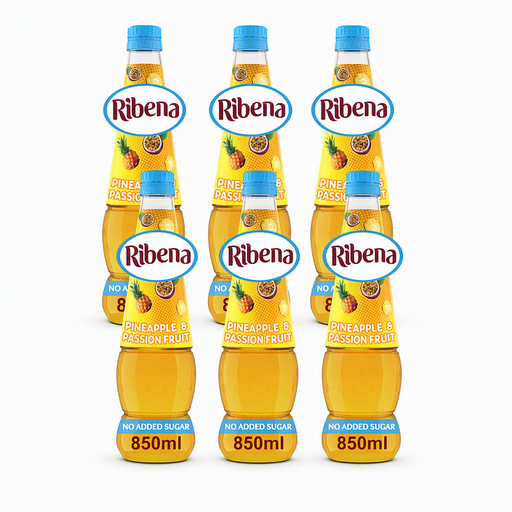
This six-bottle pineapple and passion fruit pack contains 6 x 850ml of squash. Plan how quickly you will use opened bottles, and check the exact pack’s dilution, ingredients and refrigeration instructions before ordering.
No. The Food Standards Agency explains that where sugars are naturally present, a no-added-sugar claim must also indicate their presence. Check the nutrition panel for the exact squash and the serving basis it uses.
Yes. The Robinsons Orange product listed by Waitrose & Partners includes acesulfame K and sucralose; its cited Ribena Blackcurrant product includes aspartame and acesulfame K and carries a phenylalanine warning. Read the ingredients for the particular flavour and pack you are buying.
Work out prepared volume using each bottle’s dilution instruction, rather than comparing concentrate volume alone. At the stated ratios, a 1.5-litre bottle diluted 1:9 makes about 15 litres, while a 1-litre bottle diluted 1:4 makes about 5 litres; the amount of water used also affects flavour strength.
Follow that bottle’s storage and opened-use instructions. Waitrose & Partners lists four weeks for its Robinsons Orange 1-litre product, while its Ribena Blackcurrant 850ml product says to refrigerate after opening and use within 21 days. Check the bottles you receive before opening several flavours.
NHS guidance identifies water and milk as the preferred drinks for children. If serving squash, follow its dilution and age guidance; NHS dental guidance advises water after bedtime toothbrushing.