Households stocking squash for regular use
Compare bottle size and stated servings with how quickly you use squash after opening. Flavour matters too: a larger bottle is less useful if it remains unfinished.


Choose a flavour and bottle size your household is likely to finish, then compare nutrition as the squash will be diluted. A no-added-sugar label does not by itself tell you whether the drink contains naturally occurring sugars or sweeteners; check the ingredients, allergens, dilution directions and storage guidance on the bottle.
Compare bottle size and stated servings with how quickly you use squash after opening. Flavour matters too: a larger bottle is less useful if it remains unfinished.
Read the nutrition values for the drink as prepared, rather than comparing a concentrate with a diluted serving. Products labelled no added sugar can still show different sugar values.
Check the current pack for particular sweeteners and allergens before choosing a larger bottle or multipack. The ingredient declarations differ between the products discussed here.
Start with the prepared drink and the ingredients, then choose a bottle format that fits how often your household uses squash.
| Priority | What to check | Your needs |
|---|---|---|
| Diluted nutrition | Check whether the figures describe concentrate or diluted squash. Compare sugars on the same per 100ml or stated-serving basis, using each bottle’s directions. | I want to know what is in the drink as served, not just what the front label says. Waitrose & Partners lists 0.8g sugars per 250ml diluted serving for Vimto No Added Sugar Squash 2L. |
| Ingredients | Read the sweetener and allergen declarations on the current pack. Check the exact flavour and bottle rather than relying on a brand-wide description. | Specific ingredients may determine which squash I choose. Tesco Groceries lists barley in Vimto No Added Sugar Squash and sulphites in Robinsons Orange No Added Sugar Squash. |
| Bottle format | Compare bottle size, dilution ratio, stated servings and post-opening guidance together. A more concentrated squash should be prepared according to its own directions. | Will we finish an opened bottle? Tesco Groceries lists 20 servings for Robinsons Orange 1L at one part squash to four parts water, and says it tastes best within four weeks of opening. |
| Serving directions | Follow the ratio and any age-specific instructions on the individual bottle; do not assume every squash has the same directions. | If serving children, I need to read the directions for that product. The M&S Orange Squash listing says it is not suitable for babies and advises extra water for older children. |
Fruit sugars may remain, and a squash can contain sweeteners. Waitrose & Partners lists 0.8g sugars per 250ml diluted serving for Vimto No Added Sugar Squash 2L.
Check “of which sugars” for the prepared drink and read the ingredients list if particular sweeteners matter to you.
Stated servings help with pantry planning, but an opened bottle also has product-specific storage guidance. Tesco Groceries says Robinsons Orange 1L tastes best within four weeks of opening.
Compare the expected use rate with the stated servings and the directions for the bottle you intend to buy.
Dilution changes the basis of a per-serving comparison. Directions also differ between products and may include separate advice for children.
Use each bottle’s stated preparation instructions, and compare nutrition on an equivalent diluted basis.
A change to ingredients matters when someone in the household needs to check for barley, sulphites or a particular sweetener.
Read the physical pack’s ingredient and allergen declaration before purchase.
These examples illustrate different labels and formats; check the individual product rather than treating a brand name as an ingredient or dilution specification.
Tesco Groceries lists Robinsons Orange No Added Sugar Squash in a 1L bottle, with one part squash to four parts water and 20 stated servings.
Waitrose & Partners lists Vimto No Added Sugar Squash in a 2L bottle with 40 stated servings at one part squash to four parts water.
The M&S Orange Squash listing describes a 1.5L, double-strength, no-added-sugar product made with 20% fruit.
Tesco Groceries lists several Tesco Quadruple Strength No Added Sugar squash flavours, including Orange and Apple & Blackcurrant.
These no-added-sugar squash bottles and multipacks offer several flavours and sizes for pantry stocking. Use the current product label to compare ingredients, dilution and storage before settling on a format.
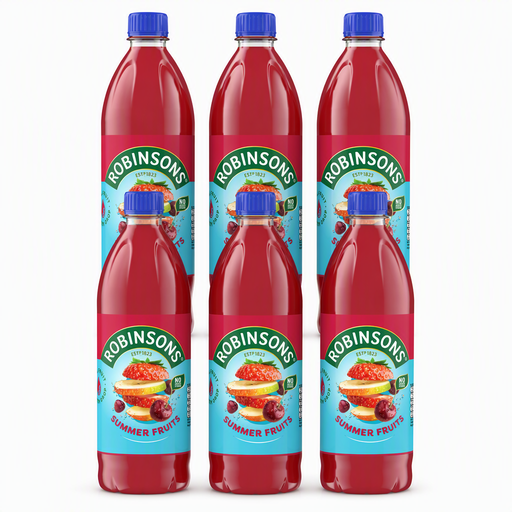 No image available
A six-bottle format to consider if your household uses summer-fruit squash regularly. Check each bottle’s dilution, ingredients and post-opening directions when planning how quickly you will use the pack.
 No image available
An orange option for comparing the drink after preparation. Tesco Groceries lists 0g sugars per 250ml diluted serving, 20 servings at one part squash to four parts water, and acesulfame K, sucralose and sulphites; check the current bottle and its post-opening guidance.
 No image available
A larger single bottle for households considering blackcurrant squash. Follow this concentrate’s own dilution directions, and check whether its nutrition figures describe the concentrate or the prepared drink before comparing them with another bottle.
 No image available
An 850ml tropical-flavour option if your household prefers a smaller bottle. Check the current ingredients and preparation directions; concentrate-only nutrition figures should not be compared directly with figures for diluted squash.
 No image available
A single summer-fruit bottle to consider instead of a multipack. Compare the label’s dilution and post-opening directions with how often you expect to serve it, and check ingredients if particular sweeteners or allergens matter.
No. A no-added-sugar squash can contain naturally occurring fruit sugars. Waitrose & Partners lists 0.8g sugars per 250ml diluted serving for Vimto No Added Sugar Squash 2L, so read the nutrition panel for the prepared drink.
Compare figures for drinks prepared according to their respective directions, preferably on the same per 100ml diluted basis. Do not compare a figure for undiluted concentrate directly with one for ready-to-drink squash.
Yes. Tesco Groceries lists acesulfame K, sucralose and sulphites for Robinsons Orange No Added Sugar Squash, while its Vimto listing declares sweeteners and barley. Check the current pack for the exact product before buying.
Follow the directions on the individual bottle. The checked Tesco Groceries Vimto listing advises more water for toddlers; the M&S Orange Squash listing says it is not suitable for babies and advises extra water for older children.
Use that bottle’s storage and post-opening guidance when choosing a size. Tesco Groceries says Robinsons Orange No Added Sugar Squash 1L tastes best within four weeks of opening; do not apply that period to every squash.