Large households limiting added sugar
Frequent squash buyers can compare no-added-sugar claims alongside bottle size and dilution. A larger concentrate is useful only if its prepared servings fit the household’s routine.


For a large family shop, no-added-sugar squash is a sensible starting point if avoiding added sugar matters, but the claim does not mean the drink contains no sugars or sweeteners. Choose a flavour and pack format the household will use, then compare ingredients, nutrition and the prepared drink using each bottle’s dilution instructions; fruit juice ingredients can still contribute free sugars under UK guidance.
The right bottle depends on how often the household makes squash, who drinks it and which ingredients matter to them.
Frequent squash buyers can compare no-added-sugar claims alongside bottle size and dilution. A larger concentrate is useful only if its prepared servings fit the household’s routine.
Parents can check fruit-juice ingredients, sweeteners and preparation directions rather than assuming every no-added-sugar squash has the same recipe. Age-specific directions on the chosen bottle also matter.
If someone in the household avoids particular sweeteners or needs to check declared allergens, the ingredients on the exact flavour and pack take priority over a front-of-pack claim.
Start with the ingredient and nutrition information, then use the dilution directions to work out how the bottle fits regular household use.
| Priority | What to check | Your needs |
|---|---|---|
| Sugar information | Read the no-added-sugar claim alongside the ingredients and nutrition panel. The Food Standards Agency notes that naturally occurring sugars can be present in products carrying this claim; UK government oral-health guidance counts sugars in fruit juice and juice concentrates as free sugars. | I want to avoid added sugar without overlooking sugars from fruit-juice ingredients. |
| Sweeteners and allergens | Check the exact bottle’s sweeteners and allergen declarations. Marks & Spencer lists sucralose and sulphites in its Orange Squash; the cited Ribena Blackcurrant No Added Sugar ingredient list includes aspartame, acesulfame K and sucralose. | Someone at home may avoid a particular ingredient, so a familiar brand name or flavour is not enough to settle the choice. |
| Pack and dilution | Compare bottle volume with the stated preparation ratio, not volume alone. Tesco lists quadruple-strength options, while the cited Ribena Blackcurrant No Added Sugar directions specify one part squash to at least four parts water. | For frequent use, I want a pack that provides enough prepared drinks and a dilution method we can follow consistently. |
| Children’s directions | Read the age and preparation statements for the chosen product. Marks & Spencer says its Orange Squash is not suitable for babies and advises extra water for older children. | If children will drink it, I need to follow the directions on that bottle rather than prepare every family serving alike. |
The Food Standards Agency notes that naturally occurring sugars can remain in a no-added-sugar product. UK government oral-health guidance also counts sugars naturally present in fruit juice and juice concentrates as free sugars.
Use the claim as an initial filter, then check the ingredients, nutrition panel and amount of concentrate used for a drink.
The cited M&S and Ribena no-added-sugar products list different sweeteners. The M&S Orange Squash label also lists sulphites.
Read the current label for the flavour and size you buy, particularly where an ingredient restriction matters.
Standard, double-strength and quadruple-strength squash call for different amounts of concentrate. Bottle volume alone therefore does not tell you how many drinks a pack will make.
Use each label’s dilution directions to compare prepared servings, and consider whether the household will measure concentrate consistently.
Some products carry specific directions for children. Marks & Spencer states that its Orange Squash is not suitable for babies and advises extra water for older children.
Follow the age and dilution instructions on the exact bottle; do not assume a family-sized squash is suitable for babies.
These examples show how recipes and formats differ; check the selected product rather than applying one label’s details to an entire range.
Robinsons appears in standard and double-strength no-added-sugar squash formats, including 1L and larger bottles in the cited retailer listings.
Tesco’s cited own-label options include 1.5L double-concentrated lemon squash and quadruple-strength no-added-sugar flavours.
Sainsbury’s cited listings include a 2L Robinsons Orange No Added Sugar family pack and Ribena Blackcurrant No Added Sugar 1.5L.
Asda lists an own-label No Added Sugar Lemon Squash.
M&S describes its 1.5L Orange Squash as double strength, made with 20% real fruit and no added sugar.
Waitrose’s cited range includes Essential no-added-sugar 1.5L squash alongside branded Robinsons and Ribena formats.
These no-added-sugar squash options include single bottles and six-bottle packs for a family shop. Compare their flavours, ingredients and preparation directions rather than treating pack size as a measure of prepared servings.
 No image available
A concentrated blackcurrant option for households that will follow a measured dilution: the product directions specify one part squash to at least four parts water. The ingredient information lists fruit juice from concentrate, aspartame, acesulfame K, sucralose and sodium bisulphite. Follow the bottle’s directions for children, including its age-related restrictions.
 No image available
This single bottle is an orange-flavoured option when a six-pack is more than the household wants. The product information identifies orange fruit from concentrate and lists sweeteners and sulphites. Follow the bottle’s dilution directions before estimating how many prepared drinks it will make.
No image available
The six-bottle pack suits a shop planned around repeated use if pineapple and passion fruit flavours appeal. Its product information lists fruit juices from concentrate, aspartame, acesulfame K and sulphites. Preparation is described as dilution to taste, so use the chosen preparation when considering servings.
 No image available
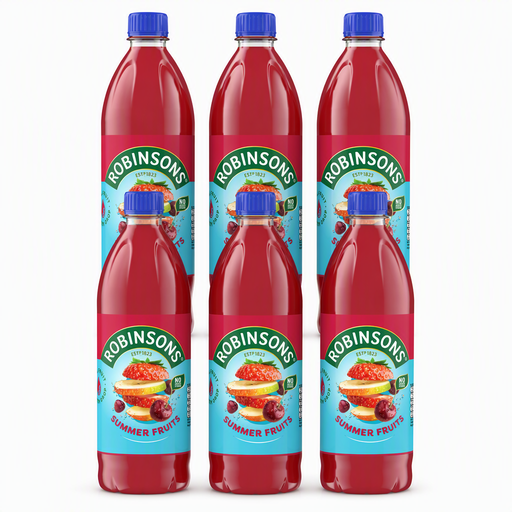
Six 1L bottles provide a multi-bottle option for a household that regularly chooses summer-fruit squash. The product information lists fruit juices, sweeteners and sulphites, and advises extra water when serving to toddlers. Use the bottle’s dilution directions to judge prepared servings.
 No image available
This 1L lemon option identifies lemon juice from concentrate and provides nutrition information for diluted squash. Check the current bottle’s sweetener list before buying, particularly if a specific sweetener matters to your household. Follow its dilution directions when planning servings.
No. The Food Standards Agency notes that a no-added-sugar claim can appear on a product containing naturally occurring sugars, with an accompanying indication of their presence. UK government oral-health guidance counts sugars naturally present in fruit juice and juice concentrates as free sugars, so check both ingredients and nutrition.
Not necessarily. M&S lists sucralose in its Orange Squash, while the cited Ribena Blackcurrant No Added Sugar ingredients include aspartame, acesulfame K and sucralose. Read the current label if a particular sweetener matters to your household.
Use each bottle’s stated dilution directions to compare how much prepared drink it makes. Standard, double-strength and quadruple-strength describe different concentrations; bottle volume alone cannot establish prepared servings, particularly if the household pours different amounts each time.
Do not assume so. M&S says its Orange Squash is not suitable for babies and advises extra water for older children. Check and follow the age and dilution statements on the exact product you choose.
Read the current ingredient and allergen information on the specific bottle. The cited M&S Orange Squash lists sulphites, while the Ribena Blackcurrant No Added Sugar ingredient information lists sodium bisulphite; do not assume another flavour or pack has the same ingredients.