For a first food shop, the NHS lists no-added-sugar drinks as alternatives to sugary squash, but the claim does not mean a drink contains zero sugars: compare the nutrition for the diluted serving. If fruit content matters to you, compare higher-juice options on the same basis, then check each bottle’s dilution instructions, sweeteners and allergens.
Who is each squash choice for?
Shoppers replacing sugary drinks
If you want a sweet-tasting alternative to sugary squash, the NHS suggests considering sugar-free, diet or no-added-sugar drinks. Compare sugars in the drink as prepared, rather than relying on the front-of-pack claim alone.
Households making squash regularly
If one bottle needs to make drinks throughout the week, check its dilution ratio and stated number of servings. Concentrate strength changes how much prepared drink you get from a bottle.
Shoppers checking specific ingredients
If someone in the household avoids an allergen or sweetener, read the current bottle label. Ingredients differ between squashes: Tesco Groceries lists barley in its Vimto No Added Sugar Squash, while Marks & Spencer lists sulphites in its Orange Squash.
What should you check when choosing?
Choose the flavour and format you would use, then compare labels using the prepared drink rather than the concentrate in the bottle.
| Priority |
What to check |
Your needs |
| Sugars per glass |
Read “of which sugars” for the stated diluted serving. Check the serving size and dilution directions before comparing products. |
I want an alternative to sugary squash, but I do not want to mistake “no added sugar” for zero sugars. |
| Fruit content |
Check the stated fruit-juice percentage alongside sugars per prepared serving. Sainsbury’s lists 50% fruit juice and 2.4g sugars per 250ml diluted serving for its No Added Sugar Orange High Juice Squash. |
A fruit-forward flavour matters to me, so I am willing to compare the prepared-drink figures rather than choose by the claim alone. |
| Dilution and servings |
Follow the bottle’s mixing ratio and check its stated servings. Tesco Groceries specifies one part squash to 19 parts water for its Quadruple Strength Orange Squash; Waitrose & Partners suggests one part to nine for Essential Summer Fruits. |
I want to know how many drinks a bottle makes, not just how large the bottle looks. |
| Ingredients |
Read the current sweetener and allergen declarations. Check any age-specific preparation instructions if the drink is for a child. |
Someone in my household avoids a particular ingredient, or I need clear instructions before serving squash to a child. |
Mistakes to avoid when buying squash
-
Reading “no added sugar” as “zero sugars”
Fruit ingredients can contribute sugars. Sainsbury’s lists 2.4g sugars per 250ml diluted serving for its No Added Sugar Orange High Juice Squash.
Compare the sugars figure for similarly sized prepared servings as well as the claim on the front.
-
Comparing concentrate bottles by volume alone
Different mixing instructions change how much drink a bottle makes. Tesco Groceries states 50 servings at a one-to-19 dilution for its Quadruple Strength Orange Squash; Waitrose & Partners states 60 servings and suggests one part squash to nine parts water for Essential Summer Fruits.
Check servings and dilution directions before comparing bottle formats or prepared-drink nutrition.
-
Assuming diet squashes have the same ingredients
Sweeteners and allergen declarations vary by product. Tesco Groceries lists barley in its Vimto No Added Sugar Squash, while Marks & Spencer lists sulphites in its Orange Squash.
If an ingredient matters to your household, check the declaration on the bottle you are buying.
-
Using an online listing instead of the bottle label
The bottle you receive is the one whose ingredients, allergen information and preparation instructions you will use.
Read its current label before purchase and again before serving when an ingredient restriction is important.
Brand and retailer product examples
These examples describe specific listed squashes, not every product made by each brand or retailer.
Robinsons
Waitrose & Partners lists Robinsons Apple & Blackcurrant No Added Sugar as a single-strength squash.
- Its listed instructions say to mix one part squash with four parts water; the bottle states 20 servings.
- Check the particular flavour’s ingredients rather than assuming all Robinsons squashes have the same recipe.
Tesco
Tesco Groceries lists a no-added-sugar Quadruple Strength Orange Squash for shoppers considering a more concentrated format.
- The listing states 50 servings and instructs shoppers to mix one part squash with 19 parts water.
- Use the prepared-glass nutrition and mixing instructions; its bottle volume alone does not describe the amount of drink made.
Sainsbury’s
Sainsbury’s lists a No Added Sugar Orange High Juice Squash with 50% fruit juice.
- The listing gives prepared-drink figures of 17 kcal and 2.4g sugars per 250ml serving.
- Its no-added-sugar claim does not remove the need to check sugars per serving.
M&S
Marks & Spencer describes its Orange Squash as double strength, with 20% fruit and no added sugar.
- The listing identifies sucralose among its ingredients.
- It also lists sulphites and says the product is not suitable for babies.
Waitrose
Waitrose & Partners lists Essential No Added Sugar Summer Fruits Squash with 20% fruit.
- The listing states 60 servings, suggests one part squash to nine parts water and gives 0.5g sugars per 250ml serving.
- Check its ingredients if you need to avoid a particular sweetener or preservative.
No-added-sugar squash options on Joybuy
These no-added-sugar squash options include single bottles and a six-bottle pack in several flavours. Use each bottle’s label to compare the prepared drink and check ingredients.
 No image available
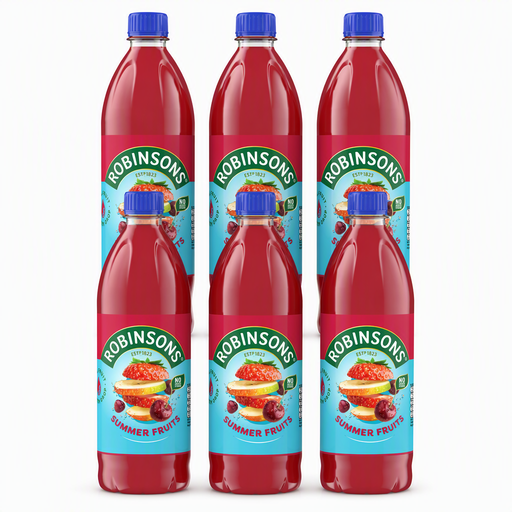
Robinsons No Added Sugar Summer Fruits Squash 6x1L
The six-bottle format may suit a first shop where you want several bottles of the same summer-fruits squash. Check the pack’s dilution directions, prepared-serving sugars and ingredient list.
Joybuy
 No image available
Robinsons No Added Sugar Summer Fruits Squash 1L
This single-bottle summer-fruits option suits a smaller first-shop selection. Read its mixing instructions and current sweetener and allergen declarations before serving.
Joybuy
 No image available
Robinsons No Added Sugar Orange Squash 1L
Choose this 1L bottle if orange is the flavour you want. For a comparison with another squash, use the sugars figure for the drink prepared according to its label.
Joybuy
 No image available
Ribena Concentrated Blackcurrant No Added Sugar 1.5L
This 1.5L blackcurrant concentrate is an option if that flavour and bottle size suit your shop. Follow its dilution directions and check the prepared-drink nutrition and current ingredients.
Joybuy
 No image available
Ribena Pineapple and Passion Fruit No Added Sugar Squash 850ml
This 850ml bottle offers a pineapple and passion fruit flavour. Check its mixing instructions and prepared-serving nutrition before comparing it with other no-added-sugar squashes.
Joybuy
Questions about choosing squash
Does “no added sugar” mean squash contains no sugars?
No. Fruit ingredients can contribute sugars even when none has been added. For example, Sainsbury’s lists 2.4g sugars per 250ml diluted serving for its No Added Sugar Orange High Juice Squash; check the prepared-serving figure on each product.
What should I check about sweeteners?
Read the ingredient list to see which sweeteners a particular squash contains. The NHS says sweeteners used in Great Britain undergo safety assessment before they can be used in food and drink; a “no added sugar” claim alone does not identify the sweeteners in a bottle.
How do I compare squash of different strengths?
Prepare each drink according to its bottle instructions, then compare the stated servings and nutrition for the diluted drink. The listed Robinsons Apple & Blackcurrant squash uses one part concentrate to four parts water, while Tesco Groceries specifies one part to 19 for its Quadruple Strength Orange Squash.
Can I serve no-added-sugar squash to a toddler?
Follow the age and dilution instructions for the specific bottle. Tesco Groceries’ Vimto No Added Sugar listing says to add more water for toddlers, while Marks & Spencer says its Orange Squash is not suitable for babies.
What if someone needs to avoid an ingredient?
Check the current bottle’s allergen and sweetener declarations before serving it. Tesco Groceries lists barley in its Vimto No Added Sugar Squash, and Marks & Spencer lists sulphites in its Orange Squash; those details cannot be assumed for every flavour or brand.


