For a garden party where avoiding added sugar matters, start with tinned fruit in natural juice or water labelled no added sugar, in line with NHS guidance. Fruit in juice can still contain naturally occurring sugars, so compare the figures per 100g and per serving. Choose a larger tin for a shared bowl or individual pots for self-service, then check the usable quantity and storage instructions on the exact pack.
Who is choosing?
Hosts avoiding added sugar
You want fruit for a dessert or snack without assuming that a tin marked “in juice” is sugar-free. The NHS advises choosing canned fruit in natural juice or water with no added sugar; the nutrition panel still matters when comparing total sugars.
Shared-bowl planners
You are preparing fruit for a communal bowl, topping station or dessert table. Drained weight, stated servings, fruit shape and the instructions for leftovers help you plan how much to open.
Self-service hosts
You would rather set out individual portions than serve from one bowl. Fruit pots offer that format, but a no-added-sugar claim does not mean they contain no sugars.
What matters when buying?
Check the packing liquid and sugar figures first, then plan the amount and serving format for your guests.
| Concern |
What to check |
Who this matters to |
| Avoiding added sugar |
Read the packing liquid, ingredients and no-added-sugar wording; compare sugars per 100g and per serving. |
If added sugar is my deciding concern, I want to distinguish fruit in juice from a syrup variant without mistaking naturally occurring sugars for zero sugar. About 36% of consumers put avoiding added sugar first. |
| A shared serving |
Compare drained weight and stated servings, then choose slices, halves or segments to suit the dish. |
For a shared fruit bowl, I need enough usable fruit in a shape that works for serving. Around 29% of consumers make the shared format their primary concern. |
| Usable quantity |
Look beyond the tin’s net weight: check its drained weight and any stated portion count. |
When planning several portions, I do not want the liquid in the container to distort how much fruit I have allowed for. Roughly 21% of consumers prioritise usable yield. |
| Individual portions |
Check the number and size of pots, plus the sugar figure for the portion you will serve. |
If guests will help themselves outdoors, separate portions matter more to me than making one large dish. About 14% of consumers put individual serving first. |
What should you avoid overlooking?
-
Reading “no added sugar” as “sugar-free”
Fruit and its packing juice can contain naturally occurring sugars. A no-added-sugar claim answers a different question from the total sugars figure on the nutrition panel.
Check both the claim and the sugars listed per 100g and per portion on the product you intend to serve.
-
Counting tins instead of usable fruit
The stated container weight includes liquid, while drained weight and portion guidance help with planning a shared dish.
Compare drained amounts where given, and check the fruit shape before deciding how many containers to open.
-
Assuming a brand uses the same packing liquid throughout its range
Princes lists mandarin segments in juice and in light syrup, while Del Monte shows pear variants in juice and syrup. A brand name alone does not identify the liquid in a particular tin.
Read the exact product name and ingredients when avoiding added sugar is your priority.
-
Leaving opened fruit in its tin
Storage directions vary by product. Tesco’s peach slices and M&S grapefruit segments specify use within two days of opening; other products give different periods.
Follow the chosen pack’s instructions for transferring and refrigerating leftovers, and open only what you expect to serve.
Brands and ranges to compare
Del Monte
Its prepared-fruit range includes peach and pear formats that can work in a shared bowl.
- Del Monte peach halves are sold in juice.
- Del Monte also shows pear variants in syrup and light syrup, so check the liquid on the exact tin.
Princes
Princes lists several canned-fruit types, including mandarins and pineapple.
- Its mandarin range includes a juice-packed option.
- A light-syrup mandarin option is also listed; do not treat the range as uniformly no added sugar.
Tesco
Tesco’s peach slices in pear juice offer a sliced-fruit format for a shared dish.
- The 410g tin lists a 250g drained weight, which helps when planning the bowl.
- The product is described as fruit in juice; check its ingredients rather than treating that wording alone as a no-added-sugar claim.
Sainsbury’s
Sainsbury’s lists Nature’s Finest peaches and mandarins in juice.
- The listed Nature’s Finest products are labelled no added sugar while noting naturally occurring sugars.
- Nature’s Finest is the product trademark; these details do not describe every Sainsbury’s tinned fruit.
Asda
Asda offers both peach slices in a tin and individually portioned peach pots.
- The 411g peach tin suggests three servings; the separate multipack contains four 113g pots.
- The pots’ no-added-sugar label does not make them sugar-free: Asda lists 15g sugars per pot.
M&S
M&S grapefruit segments in grapefruit juice offer a citrus option for the table.
- The grapefruit product lists 7.3g sugars per 100g.
- Its product information warns that pips may be present and says to eat refrigerated leftovers within two days.
Joybuy fruit selections
These fruit-in-juice selections cover tins for a shared garden-party dish and a four-pack of peaches for individual serving. Check the exact pack’s ingredients, nutrition panel and usable quantity before settling on a format.
 No image available
Princes Pineapple Chunks With Juice 432g
This 432g tin of pineapple chunks in juice is an option for a shared fruit dish; check how many portions it will provide for your guests.
View on Joybuy
 No image available
Del Monte Fruit Cocktail in Juice 415g
For a mixed-fruit bowl, this 415g fruit cocktail in juice provides a tin format; check its drained weight against the quantity you plan to serve.
View on Joybuy
 No image available
Morrisons Peach Slices in Juice 220g
These peach slices in a 220g tin could go into a topping or smaller shared dish; use the pack’s drained weight when planning portions.
View on Joybuy
 No image available
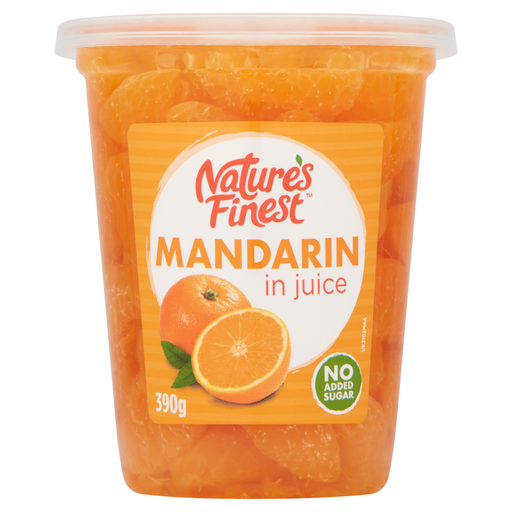
Nature’s Finest Mandarins in Juice 390g
This 390g mandarin product in juice gives the shared table a citrus fruit option; check its packing liquid, drained amount and portion guidance on the pack.
View on Joybuy
 No image available
Dole Peaches in Juice 4 x 113g
This four-pack of 113g peach portions suits individual serving; check the ingredients and sugar figure for the portion before choosing it for an added-sugar-conscious menu.
View on Joybuy
Questions about serving tinned fruit
Should I choose fruit in juice rather than syrup?
If avoiding added sugar is your aim, the NHS advises choosing canned fruit in natural juice or water with no added sugar. Check the exact tin: Princes and Del Monte both list juice-packed fruit alongside syrup or light-syrup variants.
Does “no added sugar” mean sugar-free?
No. Fruit and packing juice can contain naturally occurring sugars. Compare the sugars per 100g and per portion on the nutrition panel; Asda’s no-added-sugar peach pots, for example, list 15g sugars per pot.
How should I keep fruit left over after the party?
Follow the storage directions on the exact pack, including any instruction to move leftovers to a non-metallic container and refrigerate them. Opened-life instructions differ: Tesco’s peach slices and M&S grapefruit segments specify two days, while the Del Monte peach halves information says three to four days.
Should I check tinned fruit for stones or pips before serving?
Yes. Product warnings can mention remaining stones, fragments, seeds or pips; M&S specifically notes that pips may be present in its grapefruit segments. Check the fruit as you transfer it to a shared serving dish.


