Adults cutting back on added sugar at work
Check whether the label says no added sugar or sugar-free, then compare the stated serving with the amount you would eat mid-morning. A whole bar need not be your default portion.


If avoiding added sugar is your aim, no-added-sugar white chocolate may be an occasional mid-morning choice, but it is not automatically sugar-free. The sugar-free claim condition published on legislation.gov.uk is no more than 0.5g sugars per 100g of food; check the pack’s sugars, total carbohydrate, sweeteners and serving size before choosing. If reducing added sugar is not your aim, a portion of conventional white chocolate is another option, while chocolate intended for school provision needs a separate check against the rules for that setting.
Check whether the label says no added sugar or sugar-free, then compare the stated serving with the amount you would eat mid-morning. A whole bar need not be your default portion.
Check total carbohydrate as well as sugars and identify the sweetener. Diabetes UK notes that polyols contain carbohydrate and calories; anyone adjusting insulin should seek individual advice from their healthcare team.
Check the school’s setting, nation and applicable policy before supplying chocolate. Department for Education standards published for the secondary whole school day in England from September 2027 exclude chocolate and products containing chocolate from permitted snacks.
Decide whether you require a sugar-free claim, want to avoid added sugar, or would accept a portion of conventional white chocolate. Then compare the pack information for the portion you would actually eat.
Consider when: Meeting the sugar-free threshold is essential to your choice.
Check: A product title alone does not establish the claim; legislation.gov.uk gives a limit of 0.5g sugars per 100g of food.
Consider when: Avoiding added sugar, rather than meeting the sugar-free threshold, is your aim.
Check: Milk ingredients can contribute sugars, and polyol sweeteners still contribute carbohydrate, as Diabetes UK explains.
Consider when: Reducing added sugar is not a requirement and you want a defined mid-morning portion.
Check: Compare sugars and saturated fat for that portion; Waitrose & Partners, for example, lists 11.3g sugars per square of its Belgian White Chocolate.
| Priority | What to check | Your needs |
|---|---|---|
| Sugar wording | Compare the on-pack claim with sugars per 100g and total carbohydrate. Legislation.gov.uk sets the sugar-free claim limit at 0.5g sugars per 100g of food; no added sugar is a different description. | If I specifically need a sugar-free product, I cannot rely on a search result or a no-added-sugar title. The Pod Chocolates lists an estimated 10.7g naturally occurring sugars per 100g for its white bar. |
| Portion | Find the serving size and compare sugars, energy and saturated fat per serving and per 100g. Tesco lists a 25g serving for Diablo’s 75g bar; Waitrose & Partners gives sugars per square for its Belgian White Chocolate. | A bar may contain more than one serving. I want to compare the amount I plan to eat, not just the pack size. |
| Sweeteners | Read the ingredients for maltitol or other polyols, check total carbohydrate and follow any laxative-effects warning on the pack. | If I count carbohydrates or am concerned about polyol tolerance, a no-added-sugar label does not answer those questions. Diabetes UK notes that polyols contain carbohydrate and calories. |
| Allergens | Read the current ingredient and allergen declarations, including any relevant may-contain statement. The Pod Chocolates and Diablo listings identify milk and soya; The Pod Chocolates also notes possible nut traces. | I need to check the particular bar’s label if milk, soya or nuts affect my choice. |
| School setting | Check the school’s current food policy and the rules for its UK nation and setting. Department for Education secondary whole-school-day standards for England, scheduled for September 2027, exclude chocolate snacks. | If I am supplying a mid-morning school snack, a no-added-sugar description does not establish that chocolate is permitted. |
A no-added-sugar white chocolate can contain sugars from milk ingredients. The Pod Chocolates lists an estimated 10.7g naturally occurring sugars per 100g for its white bar; legislation.gov.uk sets the sugar-free claim limit at 0.5g sugars per 100g of food.
For a strict sugar-free requirement, check the final pack’s claim and sugars declaration per 100g rather than relying on the product title.
Diabetes UK notes that polyols contain carbohydrate and calories. The Tesco listing gives Diablo’s 75g no-added-sugar bar a 25g serving size.
Compare total carbohydrate for the amount you plan to eat, follow any pack warning about laxative effects and seek individual healthcare-team advice if adjusting insulin.
Waitrose & Partners lists 62.6g sugars per 100g and 11.3g per square for its Belgian White Chocolate. Lindt Shop UK lists 42g sugars and 39g saturates per 100g for the LINDOR White Bar.
If reducing added sugar is your aim, do not treat either conventional bar as a no-added-sugar substitute. Otherwise, use its serving information to choose a portion.
Retail promotion rules and school-food standards address different settings. Department for Education secondary whole-school-day standards scheduled for September 2027 in England exclude chocolate snacks, regardless of a no-added-sugar description.
For school provision, confirm the current requirements for that school, nation and setting rather than applying one rule across the UK.
These examples show how differently labelled white-chocolate products compare; they do not imply that every product from a brand has the same ingredients or nutrition.
Its 100g white bar is described as no added sugar and uses maltitol, according to The Pod Chocolates’ product information.
Tesco lists Diablo’s 75g no-added-sugar white-chocolate bar with maltitol and steviol glycosides and a 25g serving size.
The LINDOR White Bar is a conventional filled white-chocolate option, not a no-added-sugar example.
Waitrose Belgian White Chocolate is a conventional bar with nutrition stated per 100g and per square.
M&S White Chocolate Chunks are a conventional baking-format product rather than a no-added-sugar snack.
This white-chocolate-coated confection is an option if a conventional mid-morning treat meets your needs; it is not presented as a sugar-free or no-added-sugar substitute.
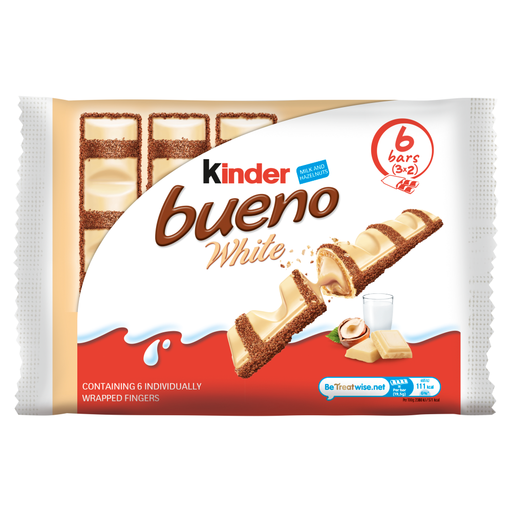 No image available
Consider this three-pack only if conventional, sugar-containing confectionery suits your mid-morning choice. Check the pack’s nutrition for the amount you intend to eat and its allergen declaration before buying.
No. No-added-sugar white chocolate may still contain naturally occurring sugars from milk ingredients. The sugar-free claim condition published on legislation.gov.uk permits no more than 0.5g sugars per 100g of food, so check the pack’s sugars declaration rather than relying on its title.
Check total carbohydrate and the portion you intend to eat, not only the “of which sugars” figure. Diabetes UK notes that polyol sweeteners contain carbohydrate and calories; people adjusting insulin should seek individual advice from their healthcare team.
Maltitol is a polyol sweetener, and excessive consumption of polyols may produce laxative effects. Check the particular bar for a warning and use its stated serving size rather than assuming the whole bar is one portion.
A no-added-sugar label does not establish that it is permitted. Department for Education secondary whole-school-day standards scheduled for September 2027 in England exclude chocolate and products containing chocolate from permitted snacks. Check the current policy for the particular school, UK nation and setting.
Read the particular product’s ingredient and allergen declarations, including any relevant may-contain statement. The Pod Chocolates and Diablo white-chocolate listings identify milk and soya; The Pod Chocolates also notes possible nut traces.