Eating between lectures without a kitchen
A no-drain pack is worth considering if you have nowhere practical to empty a standard tin. Check how the pack opens and whether you can eat its contents immediately.


Choose no-drain tuna when you need to open a pack between lectures without a sink or somewhere to dispose of liquid. If you can drain a tin before leaving home, standard chunks or sandwich-tuna multipacks give you portions for several planned lunches; check the exact pack’s liquid, drained weight, nutrition label and instructions for opened leftovers.
A no-drain pack is worth considering if you have nowhere practical to empty a standard tin. Check how the pack opens and whether you can eat its contents immediately.
Standard chunks and sandwich-tuna multipacks suit sandwiches, wraps or pasta lunches when you can drain a tin at home. Choose a pack size that fits how many portions you plan to use.
Compare nutrition values on the same stated basis, particularly when one label uses drained weight. If certified sourcing matters, look for the MSC ecolabel on the individual product rather than assuming it applies across a brand.
Start with where you will open the tuna, then compare the portion and label information for the packs that fit that plan.
| Priority | What to check | Your needs |
|---|---|---|
| Opening away from home | Look for an explicit no-drain description and check how the pack opens. A standard tin may leave liquid to dispose of. | There may be no sink or draining utensil available between my lectures. |
| Portions | Check the number of tins, their size and any stated drained weight. Compare protein values using each label’s declared per-100g basis. | I’m making several sandwiches or wraps and want portions I can plan around. |
| Packing liquid | Check whether the tuna is in spring water, brine or oil, then read fat and salt values on the exact label. Princes lists 0.9g salt per 100g drained for its Tuna Chunks in Brine. | I want a plain base for a cold lunch, or I’m checking how the tuna fits with the other ingredients I’ll add. |
| Storage and allergens | Check the fish allergen declaration and any warning about bones. Follow the pack’s instructions for transferring, refrigerating and using opened leftovers. | If I won’t finish a tin at lunch, I need a way to refrigerate what remains. |
| Certified sourcing | Look for the MSC ecolabel on the exact pack; it does not establish the pack’s liquid, nutrition or opening format. | Certified sourcing matters to me, but the tuna still needs to work for my lunch. |
Liquid and recipe differ. Princes lists 0.9g salt per 100g drained for its Tuna Chunks in Brine, while M&S lists 0.75g salt and 0.6g fat per 100g for its Tuna Chunks in Spring Water.
Compare the exact labels and note whether a value is based on drained contents before using it to choose a pack.
The instructions for opened tuna differ from storage of an unopened tin. The checked M&S and John West products specify refrigeration and use within two days of opening.
Follow your pack’s instructions, including transferring leftovers to another container if directed.
An MSC label identifies certified sourcing for the product carrying it; it does not tell you whether that tuna is no-drain or packed in your preferred liquid.
Check the label on the individual can, then assess its format and nutrition separately.
These examples illustrate particular tuna formats and labels, not every product made by each brand.
Its No Drain Tuna Chunks in Spring Water 3 x 100g provide a compact option for eating away from a kitchen.
Its chunks and sandwich-tuna formats are relevant when you can prepare lunch where draining a tin is practical.
Tesco’s tinned-tuna range includes own-label and branded options, allowing a comparison of formats in one retailer’s range.
Its 640g Tuna Chunks in Spring Water pack is a store-cupboard option for planned lunches.
These options include no-drain packs for opening away from a kitchen and multipacks for lunches prepared where draining is practical.
 Image unavailable
The no-drain format suits a lunch break without a sink. This pack contains three 100g tins; it contains fish, and opened contents must be refrigerated and consumed within two days.
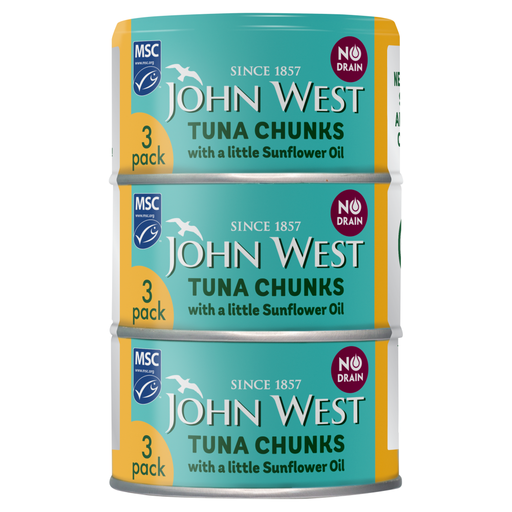 Image unavailable
Choose this no-drain format if you need to open tuna away from a kitchen and want the sunflower-oil variant. The pack contains three 100g tins; it contains fish, bones may remain, and opened contents must be refrigerated and consumed within two days. Check the exact can for an MSC label if certification matters.
 Image unavailable
The six-tin pack suits several lunches prepared where draining is practical. It contains fish; transfer opened leftovers to a non-metallic lidded container, refrigerate and consume within two days. Check the pack instructions if eating without draining is important.
 Image unavailable
This four-tin pack suits planned lunches when you can drain the tuna before use. It contains fish, small bones may remain, and opened leftovers must be refrigerated and consumed within two days. Check the exact label’s salt value when comparing brine-packed options.
 Image unavailable
This four-tin pack suits planned cold lunches using spring-water tuna. Check this variant’s pack instructions if you need to eat it without draining. It contains fish; transfer opened leftovers to a non-metallic container, refrigerate and consume within two days.
It makes sense when you cannot conveniently drain a tin or dispose of its liquid between lectures. The checked John West No Drain spring-water pack is described as ready to eat without draining; if you prepare lunch at home, a standard tin may work just as well for that routine.
Choose according to the liquid you want in your lunch and the nutrition panel on the exact pack. For example, M&S lists 0.6g fat per 100g for its Tuna Chunks in Spring Water, while Princes lists 0.9g salt per 100g drained for its Tuna Chunks in Brine; those figures do not describe every product in either liquid.
Follow that pack’s storage instructions and refrigerate the leftovers. The checked M&S tuna says to move unused contents to a non-metallic container and eat within two days; the checked John West product also specifies refrigeration and use within two days of opening.
Tuna is fish, and the checked product information identifies fish as an allergen or ingredient. The checked John West and M&S products also warn that bones may remain, so read the exact pack and check the food before eating.
The NHS advises people who are pregnant or trying for a baby to have no more than four cans of tuna a week or two tuna steaks a week, because tuna contains more mercury than other fish. That guidance matters when planning repeated tuna lunches; it is not a general limit for every student.