
24/7 Customer Support

Free returns

Same-day & Next-day Delivery

Quality Guaranteed

Unlock Your Welcome Offers: FREE Delivery | Up to 80% OFF | Free 30-day JoyPlus trial
Download the APP
As a Joybuy Product Recommendation Officer, I often hear from UK residents—renters, students and new homeowners alike—who are looking for ways to organise their space without leaving a permanent mark. The appeal of no drill hooks is clear: they promise a simple way to hang towels, coats and decorations without the fuss or finality of a drill and rawlplugs.
However, the market is filled with options that can lead to frustration. Many products fail to live up to their claims, resulting in fallen pictures, damaged paintwork and wasted money. Before you make a purchase, it is crucial to understand the common pitfalls.
To make a smart choice, focus on the fundamental features that determine a hook's performance and longevity. Analysing these three factors will help you find a reliable solution for your home.
The most important decision is matching the hook's mechanism to the surface you plan to use it on.
A hook's stated weight capacity is a maximum figure achieved under perfect laboratory conditions. In a real-world home, factors like humidity, temperature fluctuations and the texture of the surface can reduce its holding power. As a rule of thumb, select a hook with a stated capacity that is at least double the weight of the item you intend to hang. This provides a safety margin and accounts for everyday variables.
In moisture-prone areas like kitchens and bathrooms, the material of the hook is critical. Look for options made from stainless steel, powder-coated steel, or durable plastics. These materials resist rust and corrosion, preventing unsightly stains on your walls and ensuring the hook maintains its structural integrity over time.
Instead of a generic list, we have matched specific products to common UK household needs. This approach helps you find a solution that is genuinely suited to your lifestyle and space.
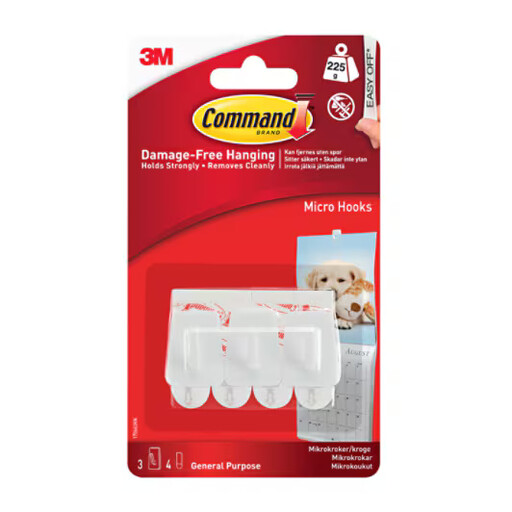
Why This Fits Their Persona: Ideal for students or tenants in flats who need to hang lightweight items like keys, calendars, or fairy lights without risking their security deposit. The application and removal process is straightforward and designed for temporary use.
This product directly counters the "Surface Damage Surprise" with its well-known stretch-release technology, which is specifically engineered for clean removal from suitable surfaces.
No tools are required for application. The hooks can also be reused with replacement adhesive strips, offering good long-term value.
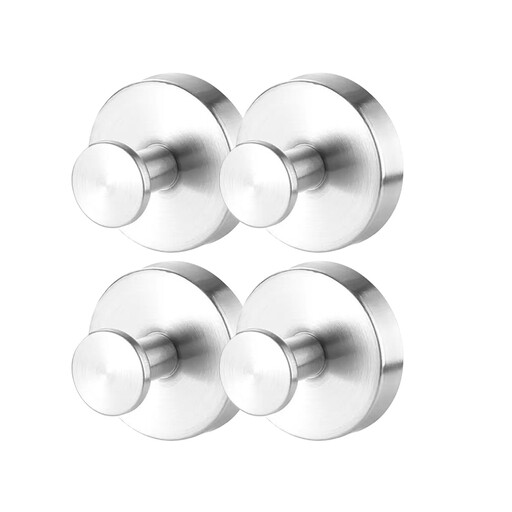
Why This Fits Their Persona: Perfect for anyone needing to hang towels, robes, or loofahs in a bathroom. The suction mechanism is designed for the high-gloss tiles and glass shower screens common in UK bathrooms, where adhesives often fail due to steam and moisture.
It bypasses the adhesive failure trap entirely. By using suction, it avoids issues with humidity and steam, making it a more reliable choice for wet environments than a generic adhesive hook.
These hooks are completely reusable and can be repositioned without any loss of performance or damage to the surface. The brushed silver finish offers a modern aesthetic.
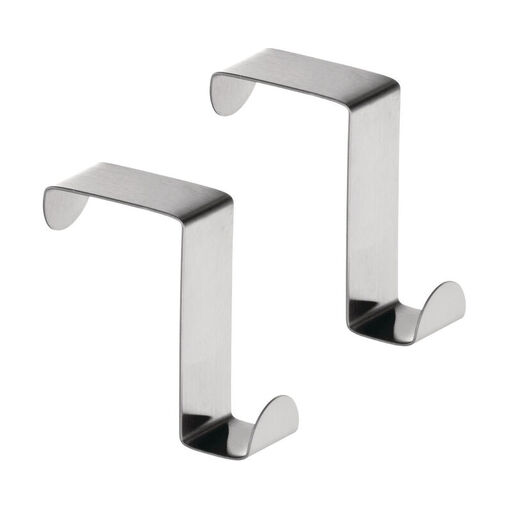
Why This Fits Their Persona: For those wanting to hang tea towels, oven gloves, or utensils inside kitchen cupboards or on cabinet doors. This mechanical solution requires no adhesive and won't damage expensive cabinetry.
It completely avoids the pitfalls of adhesives and suction cups. As a purely mechanical hook, its performance is not affected by surface type, humidity, or temperature, making it a highly reliable choice.
The reversible design fits two standard door thicknesses (2cm and 4cm), offering great versatility. Made from non-corrosive stainless steel, it is built to last in a kitchen environment.
This is almost always due to an unsuitable surface or improper application. Suction cups require a completely smooth, non-porous and airtight surface like glass or high-gloss tile. Before applying, thoroughly clean the surface and the inside of the cup with a lint-free cloth to remove any dust or grease. A tiny amount of moisture on the rim can sometimes help create a stronger seal.
The lifespan of an adhesive hook depends on the quality of the adhesive, the weight it is holding and the environment. A high-quality hook used within its weight limit in a dry, stable environment can last for years. In a bathroom with fluctuating humidity and temperature, its lifespan may be shorter. It is good practice to check the bond periodically.
This depends on the type. Suction cup hooks and over-door hooks are inherently reusable and can be moved as many times as you like. Most adhesive hooks are designed for single use, as the adhesive loses its strength once removed. However, some brands, like Command, sell separate refill strips that allow you to reuse the plastic or metal hook itself.