Campers serving a shared meal
If everyone wants a separate drink, 330ml cans provide individual portions. A shared bottle makes more sense when the group expects to finish it within the time stated on its label.


For a camping meal, choose individual no-sugar cans if people want separate portions or an opened bottle might go unfinished. A 2-litre no-added-sugar bottle suits a group that can share it promptly and follow its storage instructions. If you want to avoid caffeine, choose an explicitly caffeine-free version: a no-sugar claim alone does not establish that.
If everyone wants a separate drink, 330ml cans provide individual portions. A shared bottle makes more sense when the group expects to finish it within the time stated on its label.
Check whether the exact cola says ‘no added sugar’, ‘no sugar’ or 0g sugars per 100ml. Also check caffeine separately; the sugar wording does not answer that question.
For an evening meal or any other occasion when caffeine matters to you, look for an explicitly caffeine-free variant and check the ingredients on the pack.
Start with the sugar and caffeine wording on the exact product, then choose a pack format your group can use and store as directed.
| Priority | What to check | Your needs |
|---|---|---|
| Sugar wording | Compare the front-of-pack claim with the sugars figure per 100ml. Read the ingredients for sweeteners rather than assuming diet-style product names mean the same thing. | I want to know whether this particular cola says ‘no added sugar’ or states 0g sugars, not rely on its name alone. |
| Caffeine | Look for an explicit ‘No Caffeine’ or caffeine-free variant and check its ingredients. Coca-Cola GB and Pepsi UK list caffeine in their standard Coca-Cola Zero Sugar and Pepsi MAX products; Tesco describes its Diet Cola as containing caffeine. | If I am avoiding caffeine with an evening camp meal, a no-sugar claim is not enough to make the choice. |
| Pack format | Compare individually portioned 330ml cans with the number of people drinking. For Tesco Diet Cola’s 2-litre bottle, Tesco says to keep it cool and out of sunlight and consume it within three days of opening. | Separate cans work when people want drinks at different times; a shared bottle works when our group can use it as directed. |
| Pack information | Check the current ingredients, any phenylalanine statement, best-before date and storage instructions on the physical pack. | Sweeteners or phenylalanine may matter to my choice, and I need storage instructions I can follow at camp. |
Standard Coca-Cola Zero Sugar, Pepsi MAX and Tesco Diet Cola list caffeine, despite their sugar-related claims.
Choose a variant explicitly labelled caffeine-free if you need to avoid caffeine, and check the ingredients on the pack.
A shared bottle may go unfinished. Tesco says its 2-litre Diet Cola should be consumed within three days of opening and kept cool and out of sunlight.
Consider individual cans if your group is unlikely to use the bottle within its stated period.
The cited no-sugar and no-added-sugar colas contain sweeteners; several also state that they contain a source of phenylalanine.
Read the declaration on the exact pack if either detail affects your choice.
The physical pack tells you which ingredients, date and storage instructions apply to the drink you are taking.
Check those details before leaving for camp, particularly if you plan to open a shared bottle there.
These examples illustrate the label and format choices; a brand name alone does not identify whether a particular variant contains caffeine.
Coca-Cola Zero Sugar is a no-sugar option for campers considering individual cans; caffeine avoidance calls for a separately labelled variant.
Pepsi MAX and Pepsi MAX No Caffeine offer distinct choices when caffeine is part of the decision.
Tesco Diet Cola is a 2-litre no-added-sugar bottle to consider when a camping group will share it.
These can multipacks cover individual portions for a camping meal, including caffeine-free variants and standard caffeinated no-sugar colas. For a shared-bottle choice, use the pack-format and storage checks above.
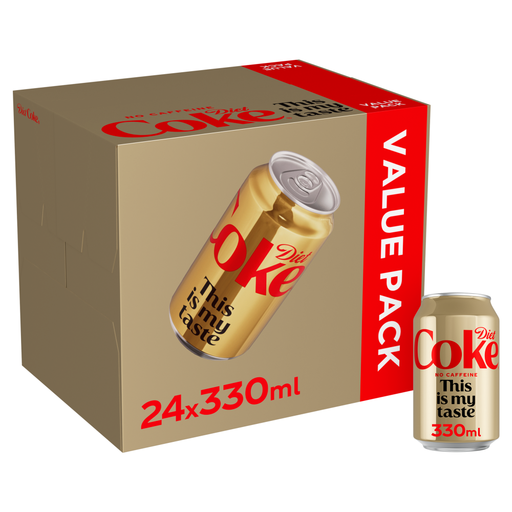 No image available
Separate 330ml cans suit a camping meal when you want a no-sugar, caffeine-free cola. The product information states 0g sugars per 100ml and identifies sweeteners and a source of phenylalanine; check the current pack if these matter to you.
 No image available
This can multipack provides separate portions when the group wants a caffeine-free, no-sugar cola. Its product information states zero caffeine and zero sugar; it also identifies sweeteners and a source of phenylalanine.
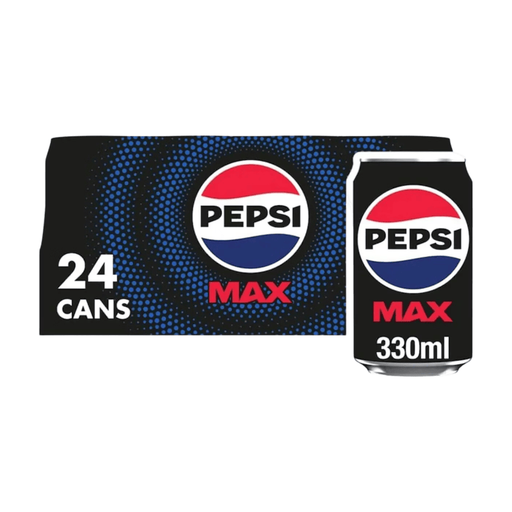 No image available
The 330ml cans provide individual portions when caffeine is acceptable. The product information lists 0g sugars per 100ml, caffeine, sweeteners and a source of phenylalanine; this is not the caffeine-free variant.
 No image available
This 330ml can multipack provides separate servings for a camping meal. Its product information lists 0g sugars per 100ml, caffeine, sweeteners and a source of phenylalanine; choose a specifically caffeine-free variant if you need to avoid caffeine.
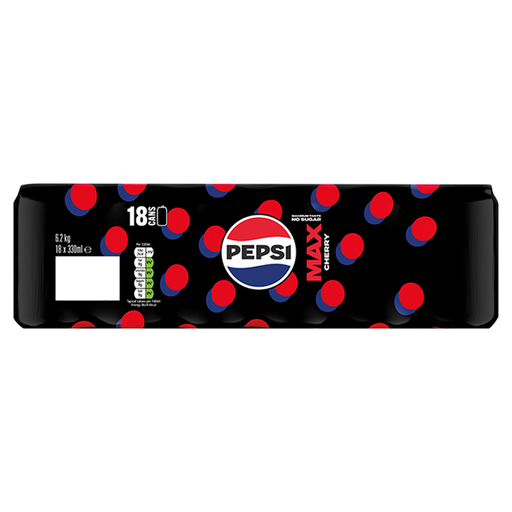 No image available
The 18 x 330ml pack offers individual portions if the group wants cherry-flavoured cola. Its product information lists 0g sugars per 100ml, caffeine, sweeteners and a source of phenylalanine; it is not a caffeine-free option.
Do not treat the phrases as interchangeable: check the exact claim and the sugars figure per 100ml. Tesco describes its Diet Cola as no added sugar and lists sugars below 0.1g per 100ml, while Coca-Cola GB and Pepsi UK list 0g sugars per 100ml for Coca-Cola Zero Sugar and Pepsi MAX.
Not necessarily. Standard Coca-Cola Zero Sugar, Pepsi MAX and Tesco Diet Cola list caffeine. If avoiding caffeine matters to you, look for an explicitly caffeine-free product, such as Pepsi MAX No Caffeine or Diet Coke No Caffeine, and check the current pack.
Choose cans for separate portions or when a shared bottle might go unfinished. A 2-litre bottle suits a group that can use it as directed; Tesco says to consume its Diet Cola within three days of opening and keep it cool and out of sunlight.
Follow the storage wording on the exact pack rather than assuming refrigeration is required. The cited product information includes instructions to store drinks somewhere cool and dry or to keep them cool and out of sunlight; check the pack before your trip.
Check the ingredients and any relevant declarations, the volume, best-before date and storage instructions. UK prepacked-food guidance from the Department for Environment, Food & Rural Affairs and the Food Standards Agency identifies ingredients, quantity and date information among the required label details.