For a workplace canteen, offer clearly labelled zero-sugar cola alongside a non-cola or caffeine-free choice rather than relying on one drink for everyone. Check the exact pack for total sugars, caffeine and ingredients: “no added sugar” does not necessarily mean 0g sugars, and fizzy drinks should be offered alongside accessible drinking water.
Who is choosing?
Canteen buyers planning the lunch range
A buyer can offer no-added-sugar or zero-sugar fizzy drinks without making them the only choice. The Health and Safety Executive says workers must have access to drinking water, so keep it available alongside the soft-drink range.
Diners who want cola without sugar
Zero-sugar cola offers a familiar flavour in an individual can. Coca-Cola Zero Sugar and Pepsi Max are relevant examples, but their standard versions contain caffeine and carry ingredient warnings that matter to some diners.
Diners looking beyond caffeinated cola
A non-cola flavour adds choice, while a specifically labelled caffeine-free drink addresses a separate requirement. Tesco describes Fanta Orange Zero as caffeine free; check each other flavour and variant on its own pack rather than assuming the same applies.
What should the canteen check?
Choose the serving format and flavours, then compare the nutrition panel and ingredients on the exact packs being ordered.
| Priority | What to check | Your needs |
|---|
| Total sugars |
Read “of which sugars” per 100ml as well as any no-added-sugar claim. Compare the exact flavour and pack; Tesco No Added Sugar Cloudy Lemonade is listed at 0.2g sugars per 100ml. |
I want a fizzy option with a clearly stated sugar value, not just a front-of-pack description. |
| Caffeine |
Check the ingredient list and the variant name. Standard Coca-Cola Zero Sugar and Pepsi Max contain caffeine; Pepsi also offers a separately named Caffeine-Free variant. |
For lunch without caffeine, I need a drink explicitly identified as caffeine free rather than another zero-sugar cola by default. |
| Ingredients and warnings |
Keep the current ingredient list and pack warnings accessible. Check for aspartame and its phenylalanine-source warning where phenylketonuria (PKU) is relevant; check other ingredients on each drink separately. |
I need to be able to read the label before choosing, particularly if an ingredient affects which drinks I can have. |
| Flavour choice |
Distinguish cola from lemon-and-lime, orange or other fruit flavours. Check caffeine and sugars for each flavour independently. |
Not everyone wants cola with lunch; a different flavour is useful without assuming it has the same formulation. |
| Serving format |
Compare individual can sizes with shared bottles. For an opened shared bottle, follow its storage and use instructions and leave its label available to diners. |
A can gives me an individually labelled portion; a shared bottle needs clear ingredient information at the point of serving. |
| Drinking water |
Keep drinking water accessible alongside the fizzy-drink offer. The NHS notes that carbonated drinks are associated with dental erosion because of their acid content, whether or not they contain sugar. |
I want water to remain an easy lunchtime choice, with a fizzy drink available if I prefer one. |
Common buying mistakes
-
Treating “no added sugar” as “0g sugars”
A drink can carry a no-added-sugar claim while its nutrition panel still lists sugars. Tesco No Added Sugar Cloudy Lemonade, for example, is listed at 0.2g sugars per 100ml.
If the canteen requires a particular total-sugars value, check “of which sugars” per 100ml on the exact pack before ordering.
-
Assuming zero sugar means caffeine free
Standard Coca-Cola Zero Sugar and Pepsi Max contain caffeine. A cola-only selection would not meet a requirement for a caffeine-free drink.
Include a variant explicitly identified as caffeine free when that choice is needed, and confirm the current pack ingredients.
-
Separating a drink from its ingredient information
A shared bottle or dispenser can make it harder for diners to check sweeteners and pack warnings. Aspartame-containing products carry a phenylalanine-source warning relevant to people with PKU.
Keep the current label available beside shared drinks, or serve the drink in its original labelled can.
-
Using fizzy drinks in place of drinking water
The NHS notes that carbonation and acidity remain relevant even when a drink contains no sugar. The Health and Safety Executive says workers must have access to drinking water.
Make water easy to find in the lunch area and offer fizzy drinks as an additional choice.
Brand and range references
These ranges illustrate different flavours and label checks; a brand name alone does not establish the formulation of every variant.
Coca-Cola
Coca-Cola Zero Sugar is a cola option, while Coca-Cola Zero Sugar Zero Caffeine is a distinct variant.
- An option for a canteen serving familiar zero-sugar cola.
- Check which variant is being ordered: the standard Zero Sugar drink contains caffeine, and its aspartame-containing formulation carries a phenylalanine-source warning.
Pepsi
Pepsi Max provides another zero-sugar cola flavour; Pepsi Max Caffeine-Free is separately identified.
- PepsiCo lists 0g sugars per 100ml for Pepsi Max.
- Standard Pepsi Max contains caffeine and aspartame. Select the Caffeine-Free variant only when its exact pack meets the intended requirement.
Sprite
The Coca-Cola Company describes Sprite Zero as a no-sugar lemon-and-lime drink.
- Adds a non-cola flavour to a lunchtime range.
- Check the exact pack for caffeine and ingredient information rather than treating non-cola flavour as a formulation guarantee.
Fanta
Fanta Orange Zero is an orange-flavoured alternative that Tesco describes as caffeine free.
- Provides a stated caffeine-free fruit flavour for diners who do not want cola.
- Check total sugars on the exact flavour and pack: “zero sugar added” wording does not itself state the finished drink contains 0g sugars.
Dr Pepper
Dr Pepper Zero provides a further zero-sugar flavour option beyond cola and citrus drinks.
- Tesco describes a Dr Pepper Zero listing as zero sugar.
- A UK ingredient listing includes caffeine and aspartame, so check the exact pack where either ingredient matters.
Tesco
Tesco lists no-added-sugar fizzy drinks including Cream Soda and Cloudy Lemonade in shared 2L bottles.
- A shared-bottle format may suit a canteen serving drinks by the glass.
- The listed Cloudy Lemonade contains 0.2g sugars per 100ml and sodium metabisulphite; retain its label for ingredient checks.
Joybuy drink options
These individual-can multipacks cover zero-sugar cola, a caffeine-free cola, lemon-and-lime and apple flavours for a workplace lunch offer. Check each pack’s ingredients before choosing drinks for diners with specific requirements.
 No image available
Pepsi Max Caffeine Free 24 x 330ml
A cola choice for individually served lunches where caffeine avoidance matters. The product information identifies it as caffeine free and lists 0g sugars per 100ml; the pack contains 24 cans of 330ml. It contains aspartame and carries a phenylalanine-source warning, so keep the label available.
Joybuy
 No image available
Pepsi Max 24 x 330ml
Individual cola cans for diners who want a zero-sugar option and are not avoiding caffeine. The product information lists 0g sugars per 100ml in a pack of 24 x 330ml cans. It contains caffeine and aspartame and carries a phenylalanine-source warning.
Joybuy
 No image available
Coca-Cola Zero Sugar 24 x 330ml
Another individually served zero-sugar cola for the lunch range. The product information lists 0g sugars per 100ml and 24 cans of 330ml. This standard Zero Sugar variant contains caffeine and aspartame and carries a phenylalanine-source warning.
Joybuy
 No image available
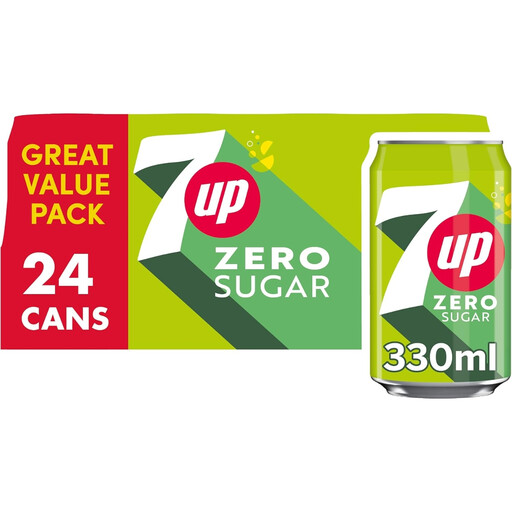
7UP Zero 24 x 330ml
A lemon-and-lime choice for lunches where diners want a non-cola drink without caffeine. The product information identifies zero caffeine and lists 0g sugars per 100ml; the pack contains 24 cans of 330ml. It carries a phenylalanine-source warning, so retain the pack information.
Joybuy
 No image available
Tango Apple Sugar-Free 24 x 330ml
An apple-flavoured option in individual cans for diners seeking a change from cola or citrus. Its nutrition information lists 0g sugars per 100ml, and the pack contains 24 x 330ml cans. Check the current pack for caffeine suitability and its complete ingredient information before ordering.
Joybuy
Questions about serving these drinks
Does “no added sugar” mean a fizzy drink contains no sugar?
No. A drink can have no sugar added yet still list sugars in its finished product. Tesco No Added Sugar Cloudy Lemonade is listed at 0.2g sugars per 100ml, so check “of which sugars” on the exact pack if total sugars matter to your selection.
What should a workplace offer alongside fizzy drinks?
Keep drinking water accessible alongside any fizzy-drink selection. The Health and Safety Executive says workers must have access to drinking water; offering a zero-sugar soft drink does not replace that provision.
What matters when serving drinks containing aspartame?
Keep the ingredient list and phenylalanine-source warning available to diners. The NHS says aspartame is not suitable for people with phenylketonuria (PKU), making pack information particularly important if drinks are poured from shared bottles or dispensers.
Does removing sugar remove the dental consideration?
No. The NHS notes that carbonated drinks are associated with dental erosion because of their acid content whether they contain sugar or sweeteners. Keep water available rather than presenting zero-sugar fizz as an equivalent substitute.
How should a canteen handle an opened shared bottle?
Follow the storage and use instructions on that exact bottle and keep its ingredient information visible. Tesco’s listed 2L no-added-sugar lemonade and cream soda call for consumption within three days of opening; individual labelled cans are another option when separate portions are wanted.


