If avoiding added sugar is essential, check the exact bar’s ingredients and “no added sugar” wording: Montezuma’s Absolute Black and Lindt EXCELLENCE 100% are examples identified as no-added-sugar products by their manufacturers. If you mainly want a less-sweet chocolate with tea, a high-cocoa bar may suit you, but its cocoa percentage does not tell you whether sugar has been added.
Who is each option for?
The deciding question for an afternoon tea break is whether you need to avoid added sugar or simply prefer a less-sweet dark chocolate.
Shoppers avoiding added sugar
Look for “no added sugar” on the exact bar, then check its ingredients and sugars value per 100g. A 100% cocoa bar may fit if you also enjoy a pronounced cocoa taste; a high cocoa percentage on its own is not enough to establish the claim.
Tea-break shoppers reducing sweetness
If avoiding added sugar is not essential, you can consider high-cocoa chocolate alongside tea or coffee. Read the ingredients before choosing: a bar that tastes less sweet can still contain added sugar.
Shoppers checking allergens or sweeteners
Check the current pack’s ingredients and precautionary allergen wording, even if its recipe is described as made without milk. For sweetened sugar-free chocolate, check which sweeteners it contains and follow any warning on the pack.
What should you check before choosing?
Decide first whether added sugar is acceptable; then compare the exact bars for cocoa intensity, format and label details.
No-added-sugar, 100% cocoa
Choose when: Avoiding added sugar matters more to you than having a conventionally sweet chocolate with tea.
Trade-off: The cocoa taste can be intense, and a no-added-sugar claim does not settle allergen or other nutrition questions.
High-cocoa chocolate with sugar
Choose when: You want a high-cocoa bar and do not need to avoid added sugar.
Trade-off: Cocoa percentage is not a sugar claim; Divine 85%, for example, lists Fairtrade sugar as an ingredient, according to Divine Chocolate.
| Priority | What to check | Your needs |
|---|
| Added sugar |
Read the exact bar’s claim and ingredients. Compare the sugars value per 100g; “no added sugar” does not mean the listed sugars value must be zero. |
I need to avoid added sugar, not just choose a dark-looking bar. Montezuma’s Chocolate and Lindt Shop UK describe their respective Absolute Black and EXCELLENCE 100% bars as having no added sugar; Divine Chocolate lists sugar in its 85% bar. |
| Cocoa taste and format |
Check cocoa percentage and bar size separately. Montezuma’s Chocolate lists Absolute Black as a 90g, 100% cocoa bar; Lindt Shop UK lists EXCELLENCE 100% as 50g. |
For a short break, I want a cocoa taste I enjoy and a bar format that suits how I plan to serve it. |
| Allergens |
Read the current pack’s ingredients and may-contain statement, rather than relying on a no-added-sugar or made-without-milk description. Lindt Shop UK lists possible nuts, milk, soya and sesame for EXCELLENCE 100%. |
If an allergen matters to me, I need to check the exact product before sharing it with tea. |
| Sweeteners |
For a sweetened sugar-free bar, identify the sweeteners in its ingredients and read any pack warning. The NHS notes that polyols can have a laxative effect in large amounts. |
I may prefer a sweeter taste, but I want to know which sweeteners the chocolate contains before choosing it. |
Common buying mistakes
-
Reading “dark” or “85% cocoa” as “no added sugar”
A high cocoa percentage does not establish that a bar has no added sugar. Divine Chocolate lists Fairtrade sugar in its 85% bar, while Hotel Chocolat’s “More Cocoa, Less Sugar” description is not a no-added-sugar claim for every product in its collection.
Check the claim and ingredients on the exact bar, then compare its sugars value per 100g.
-
Using one sugar claim to judge the whole nutrition panel
“No added sugar” answers a different question from the bar’s calorie or saturated-fat values. It also does not tell you how much you will eat at one tea break.
Check the nutrition panel and choose a format that works with your usual serving habit.
-
Skipping the may-contain statement
A recipe described as made without milk may still carry a precautionary allergen statement. Lindt Shop UK lists possible nuts, milk, soya and sesame for EXCELLENCE 100%.
If you have an allergy, use the current pack’s full allergen declaration rather than a front-of-pack description alone.
-
Overlooking sweeteners in sugar-free chocolate
Some sugar-free products use polyols. The NHS notes that these can have a laxative effect when consumed in large amounts.
Read the sweetener ingredients and follow any consumption warning on the package.
Relevant brand references
These examples show why the wording and ingredients of an individual bar matter more than a brand-wide assumption about sugar.
Montezuma’s
Montezuma’s Chocolate describes Absolute Black 100% Cocoa as a 90g bar with no added sugar.
- Its published nutrition information lists 0.6g sugars per 100g.
- Its 100% cocoa profile is worth considering if you expect a sweet chocolate with tea; check the current pack’s allergen declaration before purchase.
Lindt
Lindt Shop UK describes EXCELLENCE 100% Cocoa as a 50g bar with no added sugar.
- Lindt lists 0.5g sugars per 100g for this specific bar.
- The product lists possible nuts, milk, soya and sesame. Lindt’s FAQ says it does not offer sugar-free products, so use the exact bar’s wording rather than treating “no added sugar” and “sugar-free” as interchangeable.
Hotel Chocolat
Hotel Chocolat markets a dark-chocolate collection with the phrase “More Cocoa, Less Sugar”.
- The collection includes 70% and 85% cocoa options for shoppers considering high-cocoa chocolate.
- Check an individual bar’s ingredients if avoiding added sugar is essential; a collection-wide description does not establish that every bar meets that requirement.
Divine
Divine’s 85% dark chocolate is a high-cocoa option, not a no-added-sugar substitute.
- Divine Chocolate lists 85% cocoa and 13.9g sugars per 100g for this bar.
- Fairtrade sugar appears in its ingredients. Check the current pack’s allergen wording if relevant.
High-cocoa options on Joybuy
These bars are options for an afternoon break when high cocoa content interests you and avoiding added sugar is not essential. Check the ingredients on the current pack if added sugar is a deciding factor.
 No image available
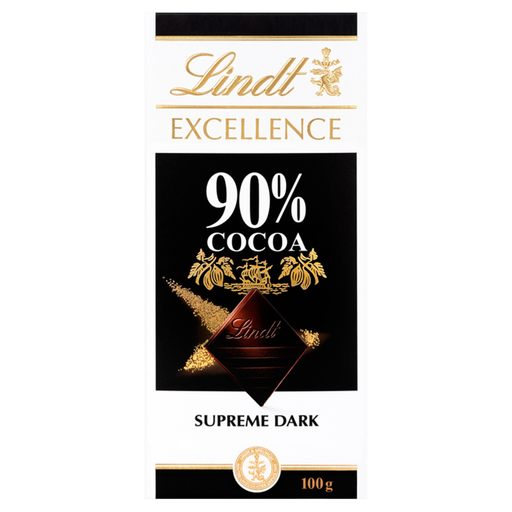
Lindt Excellence 90% Cocoa Supreme Dark 100g
Consider this 90% cocoa, 100g bar if you want a high-cocoa option with tea. The supplied product information lists sugar as an ingredient, so choose a different bar if avoiding added sugar is essential; check the current pack’s allergen declaration if relevant.
View on Joybuy
 No image available
Green & Black’s Dark Chocolate 85% 90g
Consider this 85% cocoa, 90g bar if you prefer a high-cocoa chocolate for your tea break. The supplied product information lists cane sugar, so it does not meet an added-sugar avoidance need; check the current pack’s allergen declaration if relevant.
View on Joybuy
Questions about dark chocolate and sugar
Is 85% dark chocolate automatically sugar-free?
No. Cocoa percentage does not tell you whether sugar has been added: Divine Chocolate lists Fairtrade sugar in its 85% bar. Check the ingredients and nutrition panel of the exact product you are considering.
How is “no added sugar” different from a less-sweet bar?
“No added sugar” describes how the bar is made; it does not mean its nutrition panel must show zero sugars. Montezuma’s Chocolate lists 0.6g sugars per 100g for Absolute Black, and Lindt Shop UK lists 0.5g per 100g for EXCELLENCE 100%. A less-sweet, high-cocoa bar can still list sugar among its ingredients.
Is a chocolate made without milk safe for someone with a milk or nut allergy?
Not necessarily. A recipe description does not replace the current pack’s allergen statement. Lindt Shop UK lists possible milk and nuts, as well as soya and sesame, for EXCELLENCE 100%; check the exact bar against your requirements before buying.
What should I check in chocolate sweetened with polyols?
Read the ingredients to identify the sweeteners and follow any warning on the pack. The NHS notes that polyols can have a laxative effect in large amounts, so this check matters if you are choosing a sweetened sugar-free bar for your tea break.


