
24/7 Customer Support

Free returns

Same-day & Next-day Delivery

Quality Guaranteed

Unlock Your Welcome Offers: FREE Delivery | Up to 80% OFF | Free 30-day JoyPlus trial
Download the APP
Choosing a non-bio laundry detergent is not simply about picking a familiar bottle from the supermarket shelf. UK households need to consider water hardness, wash temperature, fabric type, fragrance preferences, skin sensitivity and the real number of loads a pack can handle.
Families with babies, allergy-conscious shoppers and eco-minded households can also face confusing claims such as “natural”, “gentle” or “plastic-free”. These descriptions may refer to one part of the product only, rather than the complete formula or packaging.
Non-bio products are generally formulated without biological enzymes, but they may still contain perfume, optical brighteners or preservatives. If you are looking for a sensitive skin laundry detergent, check the full ingredient list and consider an unscented option. Fragrance-free does not automatically mean suitable for every individual, so patch-testing washed garments and following care advice remains sensible.
A box marked “60 washes” may require a different dose in hard water or for heavily soiled clothing. UK water hardness varies considerably, particularly between regions. A concentrated laundry liquid, powder or laundry detergent sheets may offer a lower dose, but the useful comparison is cost per correctly dosed wash, not pack size alone.
Terms such as “plant-based”, “biodegradable” and “plastic-free laundry detergent” can be useful indicators, but they do not describe every environmental factor. Check the packaging, ingredients, transport format and disposal instructions. A compact laundry detergent strip may reduce storage space and packaging volume, while a recyclable cardboard box has a different set of practical advantages.
Non-bio washing powder and non-bio laundry liquid are usually selected for everyday clothes, children’s garments and households that prefer to avoid biological enzymes. However, formulas differ. Look for:
Laundry detergent sheets and laundry detergent strips often list surfactants, soap and water-softening ingredients. Some are fragrance-free, while scented versions may contain essential oils or perfume.
Correct dosing affects cleaning, residue and running costs. For example, the supplied directions for Persil Non Bio XL Family Pack recommend 50g for medium soiling in medium-hard water, with adjustments for heavier soiling or different water conditions.
Some products are designed for cold or low-temperature washing. The product listing for OceanSaver Eco Laundry Detergent Sheets specifies use at 20°C, while Fairy non-bio pods are described for cold and quick cycles. Always check the garment label and avoid overloading the machine, as tightly packed clothes may not wash or rinse effectively.
Choose the format that fits your routine:
Keep capsules, powders, liquids and scent beads away from children and pets. Follow the warning label, particularly where a product states that it can cause serious eye damage or irritation.
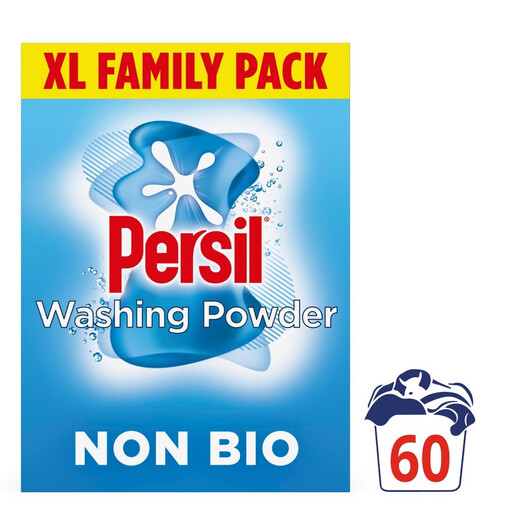
Why This Fits Their Persona: A 3kg family pack is practical for frequent washing and reduces the need for regular replacement trips.
The stated 50g medium-soiling dose makes it easier to calculate actual usage rather than relying only on the “60 washes” headline.
Powder format, recyclable box and directions covering machine and hand washing.
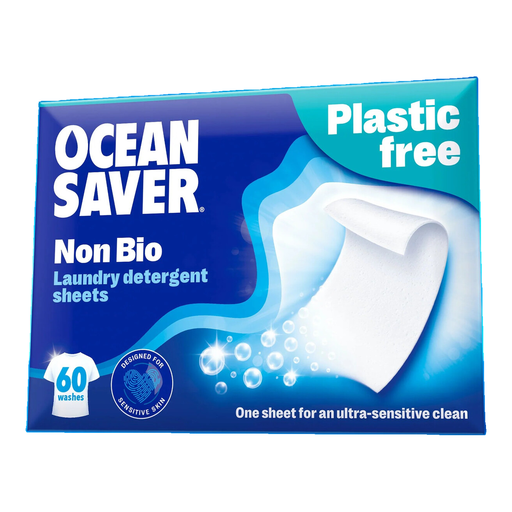
Why This Fits Their Persona: Suitable for shoppers prioritising a compact, pre-measured format and stated plastic-free packaging.
The directions specify half a sheet for lighter loads and one sheet for full loads or hard water, helping avoid careless over-dosing.
60-sheet pack, cold-wash guidance at 20°C and a lightweight sheet format.
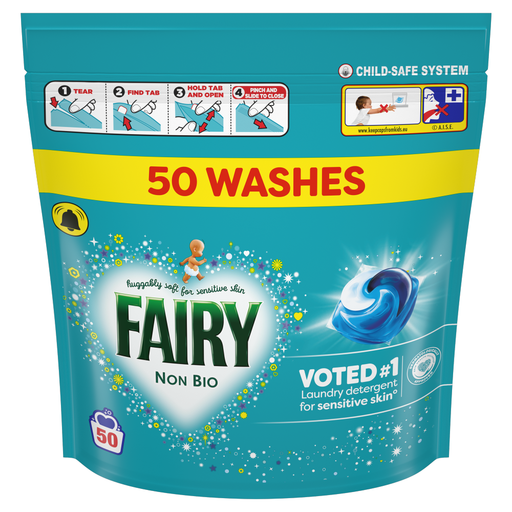
Why This Fits Their Persona: Pods remove measuring from busy family laundry routines and are supplied with load-size guidance.
The product instructions distinguish standard 3–5kg loads from larger or heavily soiled loads, rather than suggesting one pod for every situation.
Designed for low-temperature and quick cycles; pods must be placed at the back of the drum, not the drawer.
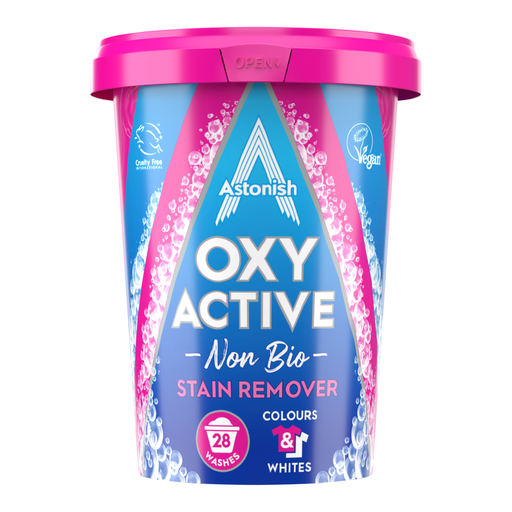
Why This Fits Their Persona: A useful add-on for households dealing with food marks, outdoor dirt, malodour or regularly stained workwear.
It is positioned as a booster to use with normal detergent, so buyers do not mistake a stain remover for a complete laundry detergent.
Oxygen-based bleaching agents; suitable for machine washing, soaking, hand washing and pre-treatment when used as directed.
A fabric conditioner can improve softness and reduce static, but it should be added only during the final rinse. Avoid using it on garments where the care label advises against it, including some technical sportswear and absorbent towels.
For odour-focused care, an in-wash scent booster can be placed in the empty drum before clothing is added. Products such as Fairy In-Wash Scent Booster are designed to work alongside detergent, not replace it. For activewear, a dedicated plant-based sports wash may be more appropriate than repeatedly using a general conditioner.
Non-bio detergent avoids biological enzymes, which some households prefer for sensitive skin. It may still contain perfume, preservatives or other ingredients that cause individual reactions. Check the label, choose fragrance-free where appropriate and follow washing and rinsing instructions.
Some products are specifically labelled for low-temperature washing, including selected non-bio laundry sheets, liquid detergents and pods. Performance depends on the formula, load size, water hardness and stain type. Treat difficult stains before washing and follow the product’s stated temperature guidance.
Not necessarily. Sheets may reduce measuring and storage space, but compare the price per correctly dosed load. Use the recommended half-sheet or full-sheet dosage where applicable and account for hard water or heavily soiled loads.
We have compiled a complete, real-time list of products that fully satisfy these strict selection criteria and UK safety regulations.