
24/7 Customer Support

Free returns

Same-day & Next-day Delivery

Quality Guaranteed

Unlock Your Welcome Offers: FREE Delivery | Up to 80% OFF | Free 30-day JoyPlus trial
Download the APP
Choosing a non bio laundry detergent can feel overwhelming. The shelves are filled with promises of "gentle" formulas and "eco-friendly" credentials. For those with sensitive skin, eczema or young children, the choice is not just about cleanliness—it's about comfort and well-being. Yet, many shoppers find themselves disappointed, having fallen for common marketing tactics that don't deliver.
As a Joybuy Product Recommendation Officer, my role is to help you navigate this landscape. Before you spend your money, let's look at the most common pitfalls to avoid.
To make an informed choice, focus on these three core parameters. They are the non-negotiable checks that separate effective, gentle detergents from the rest.
The fundamental difference between biological and non-biological detergents lies in one key component: enzymes.
For anyone seeking a hypoallergenic laundry detergent in the UK, choosing a non-bio formula is the essential first step.
A brand's own "dermatologically tested" claim is a good start, but independent verification offers a higher level of assurance. In the UK, look for endorsements from reputable organisations such as:
These seals of approval provide objective confirmation that a product is formulated to be kind to skin.
The format of your non bio washing liquid affects its use and efficiency.
Always check the number of washes listed on the bottle against its volume and recommended dosage. A larger bottle isn't always better value if it's less concentrated.
Based on these practical criteria, here are a few non-bio detergents suited to different household needs and priorities.
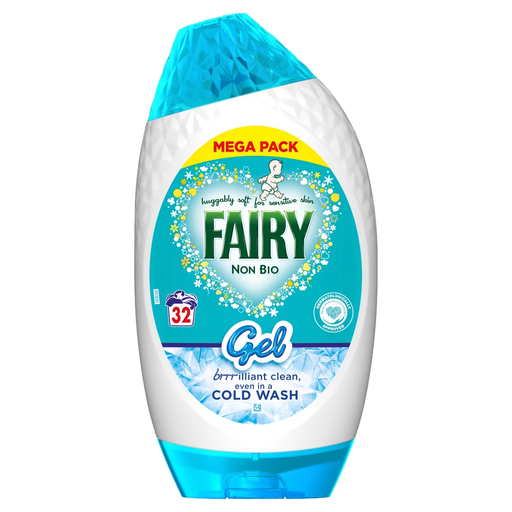
Why This Fits Their Persona: For new parents, trust and gentleness are paramount. This Fairy Non Bio Gel is a household name specifically associated with caring for a baby's delicate clothes. Its formulation is designed to be huggably soft while still providing a brilliant clean.
It moves beyond the vague "hypoallergenic" claim by holding a verifiable Skin Health Alliance seal of approval, offering parents third-party reassurance of its gentle properties.
The gel format is effective even in a cold wash and can be used to pre-treat tough stains, a practical feature for dealing with baby food and spills.
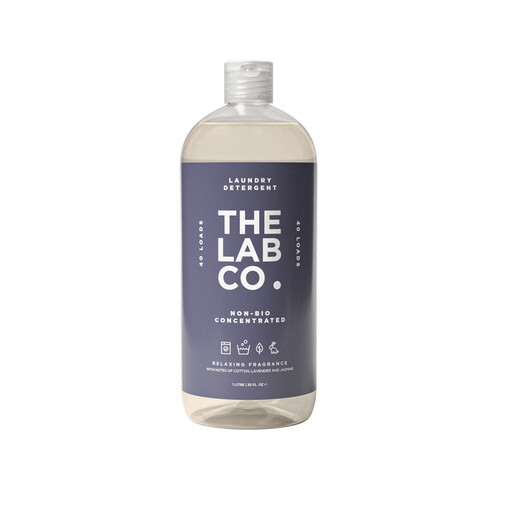
Why This Fits Their Persona: This detergent is ideal for those who prioritise sustainability without sacrificing performance. It is a plant-based washing liquid that is also vegan, cruelty-free and made with biodegradable ingredients, ticking all the boxes for an environmentally aware UK consumer.
It sidesteps the "eco-packaging illusion" with substance. The formula is ultra-concentrated (40 loads in 1L), which reduces packaging per wash, and it is explicitly free from harsh chemicals like parabens and solvents.
The formula is made from naturally derived ingredients, making it suitable for sensitive skin, and it features a sophisticated, non-toxic fragrance of cotton, lavender and jasmine.
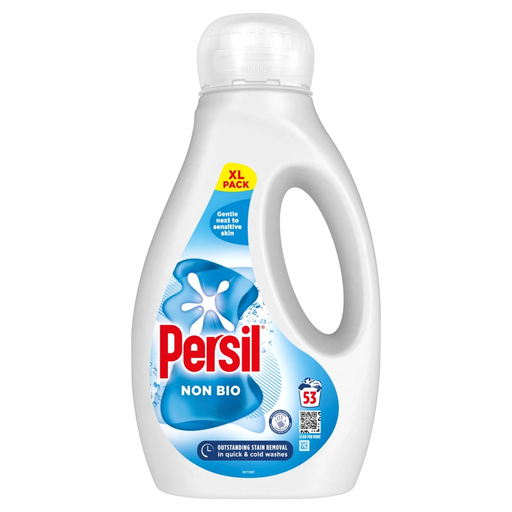
Why This Fits Their Persona: For a busy family, laundry is a constant. This larger, concentrated bottle of Persil Non Bio offers an excellent cost-per-wash, providing powerful stain removal for everything from school uniforms to sportswear, all while being gentle on skin.
It avoids the "specialty formula" trap by being a versatile, all-in-one solution. Its effectiveness on tough stains and its British Skin Foundation recognition mean you don't need separate detergents for different family members or laundry types.
The highly concentrated formula (just 27ml per standard load) makes it very economical. It's also effective in quick and cold washes, helping to save on energy bills.
We have compiled a complete, real-time list of products that fully satisfy these strict selection criteria and UK safety regulations.
Yes, absolutely. Modern non-bio formulas are very effective at cleaning. For tough, set-in stains, the key is pre-treatment. Simply apply a small amount of the non bio washing liquid or gel directly to the stain, rub it in gently with your finger or a soft brush and let it sit for a few minutes before adding the garment to your normal wash. This gives the cleaning agents time to work on the stain before the main cycle begins.
Not automatically, but the two often go hand-in-hand. A detergent's environmental impact is determined by its ingredients and packaging, not just the absence of enzymes. To make an eco-conscious choice, look for a plant-based washing liquid with biodegradable ingredients, a concentrated formula to reduce water and packaging and a bottle that is both recyclable and made from recycled plastic.
Don't be swayed by the upfront price on the bottle. The most important metric is the cost-per-wash. To calculate this, divide the total price of the detergent by the number of washes stated on the packaging. A concentrated formula might have a higher initial cost but can be significantly more economical in the long run because you use less product for each load.