
24/7 全天候客户支持

免费退货

当日/次日达

品质保障

开启新人专享福利: 全场免邮 | 低至 2 折 | 免费试用 30 天 JoyPlus 会员
下载 Joybuy
Choosing a non-bio laundry detergent is not simply a matter of picking the largest bottle or the lowest price per pack. UK households often need to balance sensitive skin, baby clothing, stain removal, hard water, fragrance preferences, storage space and plastic waste.
Marketing language can make that decision harder. A “natural” label does not automatically mean the product is fragrance-free, while a large wash-count claim may depend on small loads and soft water. The practical approach is to check the format, dosage, ingredients and packaging before buying.
Non-bio washing detergent is formulated without biological enzymes, but it may still contain perfume, preservatives or optical brighteners. This matters if you are looking for a genuinely fragrance-free laundry detergent or are washing items for someone who reacts to scented products.
Always check the ingredient list and product description. For example, some non-bio powders and liquids include perfume, while unscented laundry detergent strips are available for shoppers who prefer no added fragrance.
Terms such as eco-friendly laundry detergent, biodegradable laundry detergent and plastic-free laundry detergent can refer to different features. One product may use a recyclable cardboard box but contain a conventional powder formula. Another may use concentrated sheets with less packaging but require two sheets for hard water or heavily soiled loads.
Look at the full format:
A pack advertised for 60 or 64 washes may not deliver that number for every household. Hard water, large drums and heavily soiled clothes can require a higher dose. Under-dosing can leave stains behind, while over-dosing wastes detergent and may increase residue.
Compare cost per recommended wash, not simply pack size. Check whether the stated wash count assumes one strip, a half-sheet or a specific powder measurement.
Non-bio products are commonly selected for sensitive skin, baby clothing and family laundry because they do not contain biological enzymes. However, “non-bio” does not mean that every ingredient will suit every person.
Check for:
No detergent can be guaranteed suitable for every skin condition. Follow garment labels and seek medical advice for persistent or unusual irritation.
Non-bio washing powder is often practical for regular family loads and can come in large cartons. It needs accurate measuring and dry storage. Powder may also be useful for households that prefer recyclable cardboard packaging.
Non-bio washing liquid is convenient for pre-treating some stains and dissolves readily at lower temperatures. It generally comes in a bottle, so check the material and dosing method.
Laundry detergent sheets and laundry detergent strips are lightweight, pre-portioned and convenient for smaller homes, travel or limited storage. They reduce measuring and can help reduce bulky plastic packaging. However, the correct number of sheets still depends on load size, water hardness and soil level.
Reusable alternatives, such as a laundry egg, may appeal to shoppers seeking a refillable approach. Check the product’s refill instructions and whether its fragrance suits your household.
UK washing conditions vary between regions, so dosage guidance is important. A product designed for a 4–5kg load in soft water may require more for a larger load or hard water.
Before purchasing, check:
Lower-temperature washing can reduce energy use, but heavily stained items may still need suitable pre-treatment and the correct cycle.
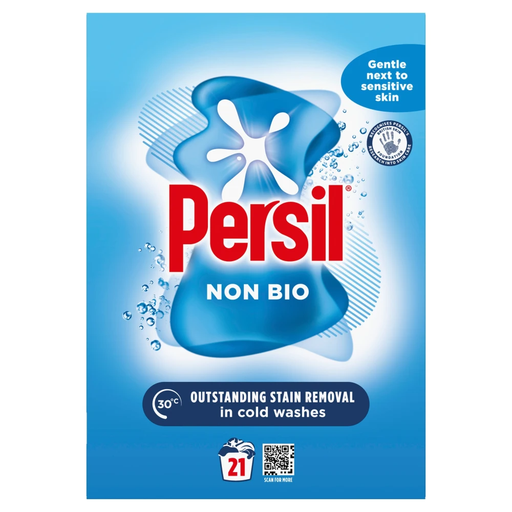
Why This Fits Their Persona: A manageable pack size for smaller households, first-time buyers or anyone wanting to compare a non-bio washing powder before purchasing a larger family pack.
The product gives dosing guidance for medium soiling and medium-hard water, helping shoppers avoid comparing wash counts without context.
Powder format; listed for cold-wash use and supplied in recyclable packaging.
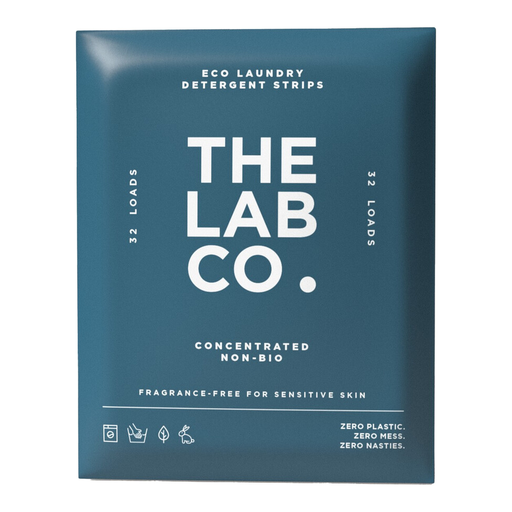
Why This Fits Their Persona: Suitable for shoppers prioritising a compact format and no added scent, particularly in flats, utility cupboards or households that prefer unscented laundry.
The product description specifies a fragrance-free, non-bio formula rather than relying only on broad eco wording.
Pre-portioned strips; listed as plant-based and free from parabens, phosphates, phthalates, chlorine bleach and added dyes.
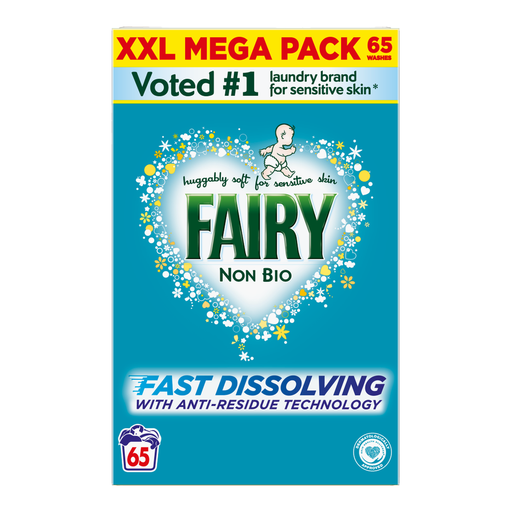
Why This Fits Their Persona: A larger pack for families managing frequent loads of schoolwear, towels, bedding and everyday clothing.
The stated 65-wash capacity and cold-cycle guidance make it easier to assess household usage before buying in bulk.
Quick-dissolving powder; product information lists anti-residue technology and dermatological testing.
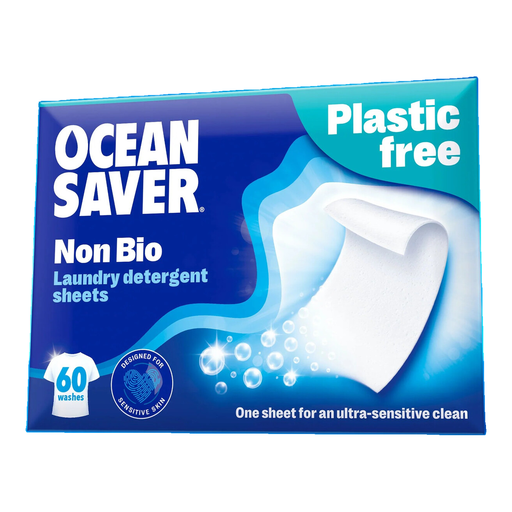
Why This Fits Their Persona: A compact option for households seeking a plastic-free laundry detergent format that is easy to store and portion.
The non-bio version clearly identifies its format and provides half-sheet guidance for lighter loads, rather than presenting one dose as suitable for every wash.
Pre-measured sheets; product information lists a plant-based, vegan and biodegradable formula.
We have compiled a complete, real-time list of products that fully satisfy these strict selection criteria and UK safety regulations.
Non-bio detergent avoids biological enzymes, which is one reason many households choose it for sensitive skin or baby clothing. However, other ingredients such as perfume and preservatives can still matter. Select a fragrance-free option if required, rinse thoroughly and follow the product label. For a diagnosed skin condition, ask a healthcare professional for individual advice.
Not necessarily. Sheets can reduce measuring, storage space and packaging bulk, but the cost per wash varies by pack price and dosage. Work it out using the recommended number of sheets for your usual load, water hardness and soil level. A powder may offer a lower cost per wash in a high-volume family household, while sheets can offer convenience for smaller loads or travel.
Shelf life depends on the manufacturer and packaging. Keep powder dry, close liquid bottles securely and store all detergent away from children and pets. Laundry strips should remain in their packaging and away from moisture. Check the product label for shelf-life information, and avoid buying a large pack if your household will not use it within the stated period.